Why Dental Problems Increase With Age
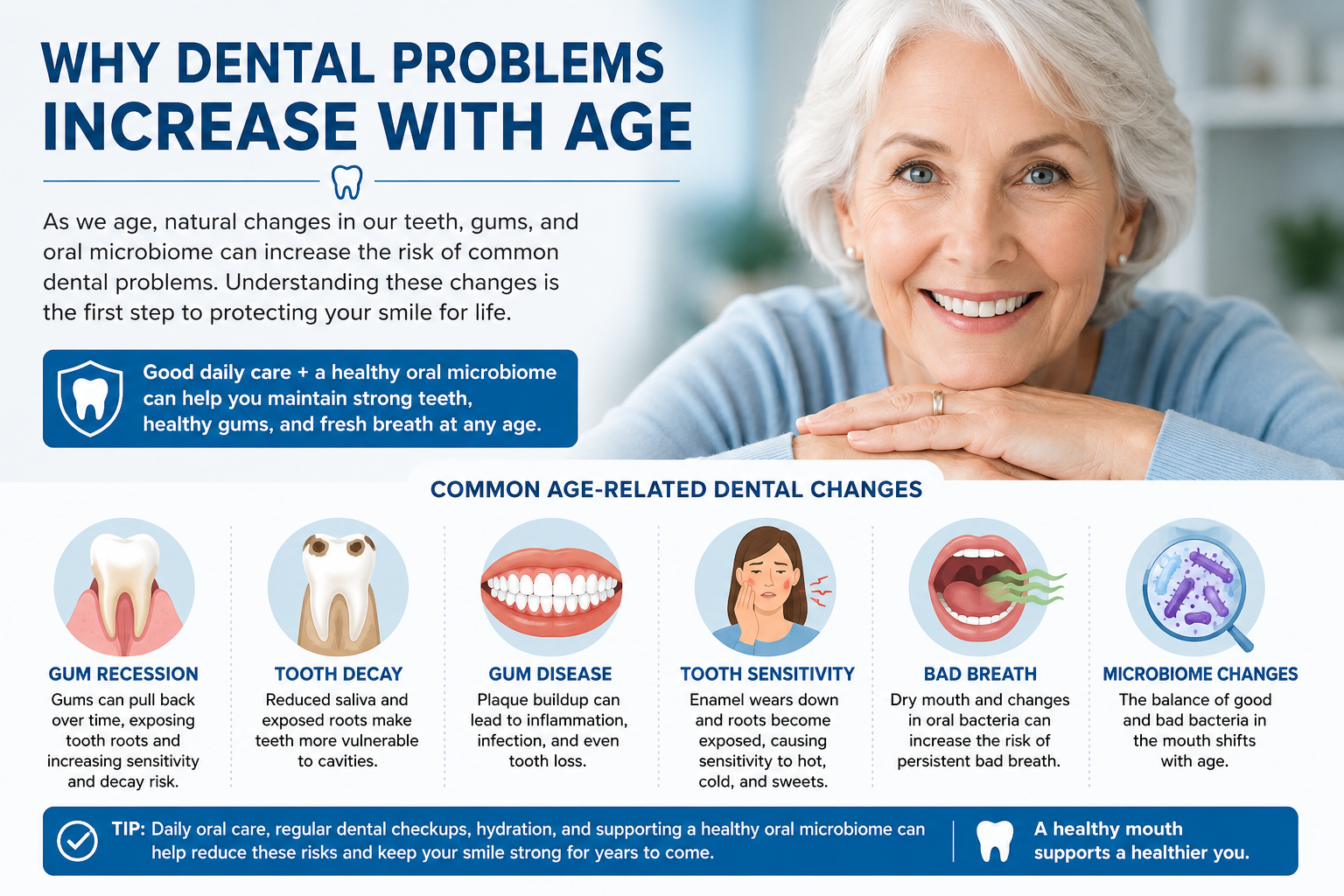
As we age, our bodies undergo many natural changes, and oral health is no exception. While tooth loss and gum disease are not inevitable parts of aging, older adults often face a greater risk of dental issues due to biological changes, medications, and decades of wear and tear. Understanding why dental problems increase with age can help you take proactive steps to protect your smile.
Want to learn how to support healthy gums, fresher breath, and a balanced oral microbiome? Explore our complete guide: The Ultimate Oral Health Guide 2026 .
The Natural Aging Process and Your Teeth
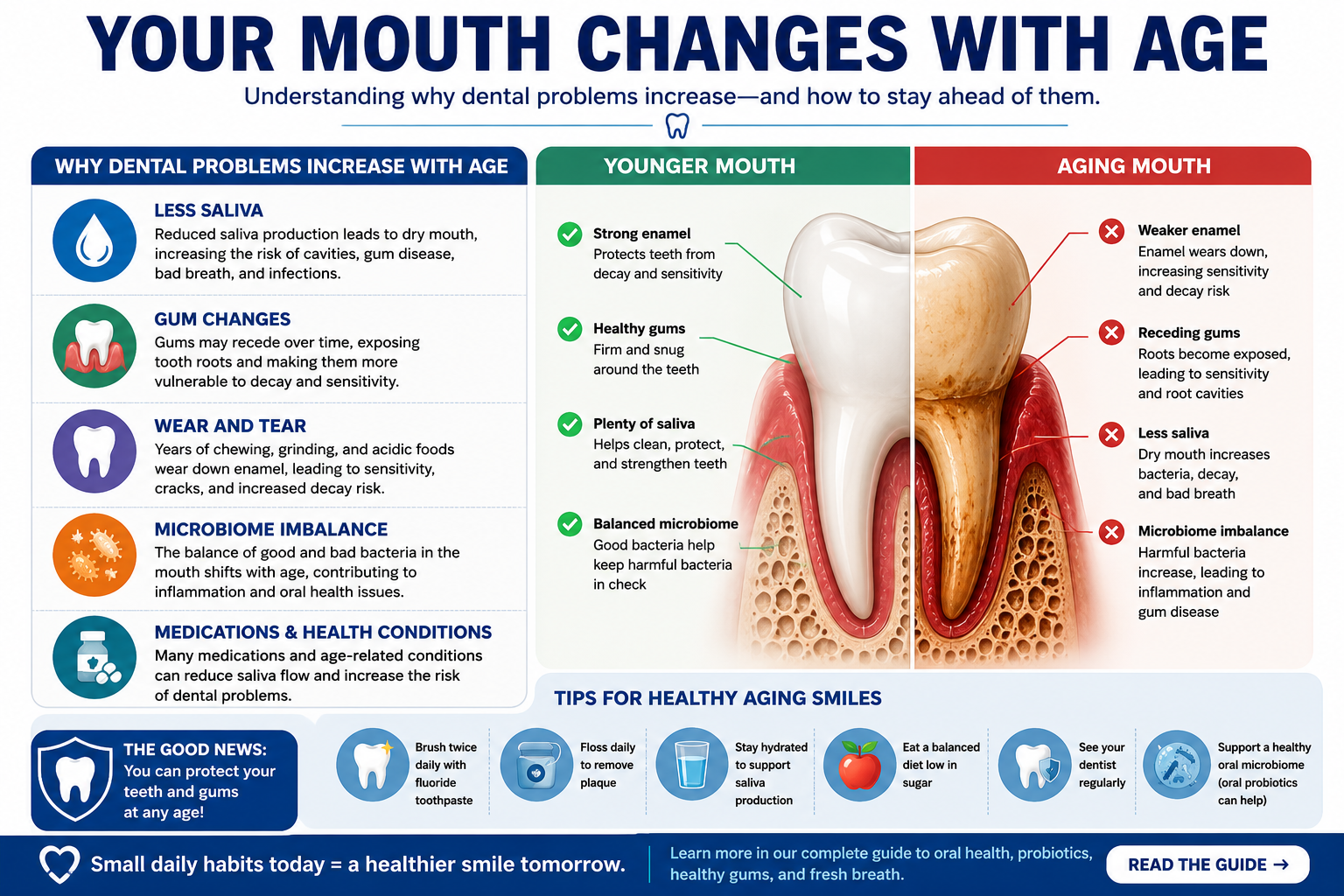
Your teeth are incredibly durable, but years of chewing, biting, and exposure to acids gradually wear down enamel. As enamel becomes thinner, teeth become more vulnerable to cavities, sensitivity, and damage.
At the same time, gums may begin to recede, exposing the roots of teeth. Unlike enamel-covered surfaces, roots are softer and more susceptible to decay.
Dry Mouth Becomes More Common
One of the most significant oral health challenges associated with aging is dry mouth, also known as xerostomia.
Saliva plays a vital role in:
- Neutralizing harmful acids
- Washing away food particles
- Controlling harmful bacteria
- Protecting teeth from decay
- Supporting healthy gums
Many medications commonly prescribed to older adults can reduce saliva production, increasing the risk of cavities, gum disease, and bad breath.
Gum Disease Risk Increases Over Time
Gum disease develops slowly and often progresses without obvious symptoms. Over many years, plaque accumulation can trigger chronic inflammation that damages gum tissue and the bone supporting your teeth.
Warning signs include:
- Bleeding gums
- Swollen or tender gums
- Persistent bad breath
- Receding gums
- Loose teeth
Without treatment, advanced gum disease remains one of the leading causes of tooth loss among older adults.
Root Cavities Become More Common
As gum recession exposes tooth roots, these vulnerable surfaces become targets for bacteria and acid attacks. Root cavities often develop faster than traditional cavities because root surfaces lack the protective enamel found on crowns.
Combined with dry mouth, this creates a higher risk of decay as people age.
Years of Wear and Tear Add Up
Everyday use gradually affects teeth and dental restorations. Years of chewing, grinding, acidic foods, and mechanical stress can lead to:
- Tooth sensitivity
- Enamel erosion
- Cracked teeth
- Worn dental fillings
- Increased risk of fractures
How the Oral Microbiome Changes With Age
The oral microbiome is the community of bacteria that naturally lives in your mouth. Researchers have discovered that aging can alter this delicate balance.
When beneficial bacteria decline and harmful bacteria become more dominant, individuals may experience:
- Bad breath
- Plaque buildup
- Gum inflammation
- Increased cavity risk
- Oral infections
This is one reason why many researchers are exploring oral probiotics and microbiome-supporting strategies as part of modern dental care.
Common Dental Problems Associated With Aging
| Dental Issue | Why It Becomes More Common |
|---|---|
| Tooth Sensitivity | Enamel wear and exposed roots |
| Cavities | Dry mouth and bacterial growth |
| Gum Disease | Long-term plaque accumulation |
| Bad Breath | Reduced saliva and microbiome imbalance |
| Tooth Loss | Advanced gum disease and decay |
Can Age-Related Dental Problems Be Prevented?
While aging creates additional challenges, many dental problems can be prevented through consistent oral care and healthy lifestyle habits.
- Brush twice daily with fluoride toothpaste
- Floss every day
- Stay hydrated
- Limit sugary foods and beverages
- Schedule regular dental checkups
- Address dry mouth symptoms early
- Support a healthy oral microbiome
Take Control of Your Oral Health Today
Getting older does not automatically mean losing your teeth or suffering from chronic dental problems. By understanding the factors that contribute to oral health decline and taking preventive action, you can enjoy healthier teeth and gums for years to come.
Discover Natural Ways to Support Healthy Teeth and Gums
Learn how oral probiotics, beneficial bacteria, and modern oral health strategies can help promote fresher breath and healthier gums.
Read the Complete Oral Health Guide →