How to Restore Healthy Gums Without Harsh Chemicals
July 8, 2026 | by By EnergyFix40 Editorial Team

Natural Gum Health Support
How to Restore Healthy Gums Without Harsh Chemicals
Your gums do more than hold your teeth in place. They protect your smile, support your oral microbiome, and act as an early warning system for deeper oral health problems. The good news? Supporting healthier gums does not always require aggressive chemicals or complicated routines.
Learn how natural oral care, better daily habits, and microbiome-friendly strategies may help support stronger gums, fresher breath, and long-term oral wellness.
What You’ll Discover
- ✅ Why gums become irritated, swollen, or sensitive over time
- ✅ How plaque, biofilm, and oral bacteria affect gum health
- ✅ Gentle ways to support healthier gums without harsh chemicals
- ✅ The role of nutrition, saliva, brushing, flossing, and oral probiotics
- ✅ Simple daily steps that may help protect your smile after 40

Gentle Gum Health Guide
Restoring Healthy Gums Starts With Balance — Not Aggression
If your gums feel tender, look red, bleed during brushing, or seem less firm than they used to be, it is easy to assume that the strongest mouthwash, harshest rinse, or most aggressive routine is the answer. But healthy gums are not restored by attacking the mouth. They are supported by creating the right environment for healing, balance, and long-term oral resilience.
Your gums are living tissue. They respond to bacteria, plaque buildup, inflammation, saliva flow, nutrition, brushing technique, flossing habits, and the condition of your oral microbiome. When this environment becomes unbalanced, the gums may become irritated and sensitive. That does not always mean you need stronger chemicals. In many cases, the better strategy is to support your mouth’s natural defenses while removing the daily triggers that keep gums under stress.
This guide explains how to restore healthy gums without relying on harsh chemicals. You will learn what healthy gums really mean, why inflammation develops, how the oral microbiome influences gum health, and which gentle daily habits may help protect your smile naturally.
Clickable Table of Contents
What Healthy Gums Really Mean
Healthy gums are usually firm, comfortable, and closely fitted around the teeth. They should not bleed easily during gentle brushing or flossing. While gum color can vary naturally from person to person, healthy gum tissue generally looks consistent, hydrated, and free from persistent swelling.
But healthy gums are not only about appearance. They also act as a protective barrier between your teeth, oral bacteria, and the deeper tissues that support your smile. When gums are strong and balanced, they help seal the area around each tooth and reduce the chance that harmful bacteria will irritate the gumline.
This is why gum health matters so much after 40. As the years pass, changes in saliva, medications, diet, brushing habits, dental history, and bacterial balance can make the gums more vulnerable. Supporting gum health early may help protect comfort, confidence, and long-term oral wellness.
Why Gums Become Inflamed
Gum inflammation often begins when plaque and bacterial biofilm collect along the gumline. Biofilm is a sticky layer where bacteria can gather, multiply, and become harder to remove. If it is not disrupted regularly with brushing, flossing, and professional dental care, it may irritate the gum tissue.
The body responds to this irritation with inflammation. That response may cause redness, tenderness, swelling, or bleeding. In the early stages, these signs may be mild and easy to ignore. However, they are important signals that your gums need better support.
Other factors can make inflammation worse. Dry mouth, frequent sugary snacks, smoking, poor sleep, stress, aggressive brushing, nutrient gaps, and an unbalanced oral microbiome can all place extra pressure on gum tissue. The goal is not to sterilize the mouth. The goal is to reduce harmful buildup while helping beneficial conditions return.
Why Harsh Chemicals Aren't Always the Best Solution
Many people turn to powerful mouth rinses when their gums feel irritated. While some dental products can be useful when recommended by a dentist, harsh daily routines may sometimes leave the mouth feeling dry, sensitive, or disrupted. Some strong rinses may reduce bacteria broadly, but your mouth is not meant to be bacteria-free.
The mouth contains many types of microorganisms. Some are associated with plaque problems, odor, and gum irritation. Others are part of a healthier oral environment. When the entire ecosystem is disrupted too aggressively, the mouth may not feel truly balanced. This is why modern oral health research increasingly focuses on supporting the oral microbiome instead of simply eliminating everything.
A gentler approach does not mean doing less. It means doing the right things consistently: brushing with proper technique, cleaning between teeth, staying hydrated, supporting saliva, eating nutrient-rich foods, avoiding tobacco, reducing sugar frequency, and considering microbiome-friendly strategies such as oral probiotics.
Understanding the Oral Microbiome
The oral microbiome is the community of bacteria and other microorganisms that live in your mouth. These microbes exist on the tongue, teeth, gums, cheeks, and saliva. A balanced oral microbiome helps support a healthier environment, while an imbalanced one may allow harmful bacteria to dominate.
When harmful bacteria become more active around the gumline, they may contribute to plaque buildup, unpleasant breath, and gum irritation. This imbalance is sometimes called dysbiosis. Instead of thinking only about killing bacteria, it may be more helpful to think about creating conditions where beneficial bacteria can compete and harmful bacteria have less opportunity to thrive.
That is where daily habits matter. Saliva, hydration, gentle brushing, flossing, tongue cleaning, nutrition, and regular dental visits all help shape the oral environment. Oral probiotics are also being studied for their potential role in supporting microbial balance in the mouth. They are not a replacement for dental care, but they may fit into a broader gum-support routine.
Want a Complete Natural Oral Health Strategy?
Learn how oral probiotics, daily hygiene, nutrition, saliva support, and microbiome-friendly habits work together to support healthier gums, fresher breath, and long-term oral wellness.
Read the Ultimate Oral Health GuideContinue Learning About Natural Oral Health
Healthy gums are just one part of a balanced oral microbiome. Explore these evidence-based guides to better understand how daily habits, beneficial bacteria, and oral probiotics may support long-term dental wellness.
Oral Microbiome: Protecting Your Teeth Naturally
Discover why a balanced oral microbiome is essential for healthy gums, fresher breath, and stronger teeth.
The Science Behind Oral Probiotics
Learn how beneficial bacteria are being studied for their potential role in supporting oral microbial balance.
How Oral Probiotics Support Healthy Gums
Explore the latest research on oral probiotics and how they may complement a complete gum-care routine.
Natural Ways to Support Healthy Gums
Supporting healthy gums naturally begins with reducing the daily triggers that keep gum tissue irritated. This does not mean ignoring professional dental care or replacing your dentist. It means building a consistent routine that helps your mouth stay cleaner, more hydrated, and more balanced between visits.
The most effective gum-support habits are usually simple: brush gently, clean between your teeth, support saliva flow, limit frequent sugar exposure, eat nutrient-rich foods, and avoid habits that dry or irritate the mouth. When these steps are practiced daily, they may help create a better environment for firmer gums, fresher breath, and long-term oral wellness.
Oral Biofilm Explained
Oral biofilm is a sticky layer of bacteria, proteins, and food particles that forms naturally on the teeth and along the gumline. Everyone develops biofilm. The problem begins when it is not disrupted regularly. Over time, biofilm can become thicker, more organized, and more difficult to remove with quick brushing alone.
When biofilm builds up near the gums, harmful bacteria may produce irritating byproducts that trigger redness, swelling, tenderness, and bleeding. This is why cleaning along the gumline matters so much. A gentle brush angle, slow circular motions, and daily flossing can help disturb biofilm before it becomes more stubborn.
Important: The goal is not to scrub harder. Aggressive brushing may irritate the gumline and contribute to recession over time. The better approach is gentle, consistent cleaning with the right technique.
Saliva's Protective Role
Saliva is one of your mouth’s most important natural defenses. It helps wash away food particles, neutralize acids, keep tissues moist, and support a more balanced oral environment. When saliva flow is low, the mouth may become more vulnerable to plaque buildup, bad breath, enamel stress, and gum irritation.
Dry mouth can happen for many reasons, including dehydration, mouth breathing, certain medications, aging, alcohol-based rinses, smoking, and poor sleep. If your mouth often feels dry, sticky, or uncomfortable, gum support should include hydration and saliva-friendly habits.
Drinking water throughout the day, chewing sugar-free gum, breathing through the nose when possible, limiting alcohol, and choosing gentle oral care products may help support moisture. If dry mouth is persistent, it is worth discussing with a dental or medical professional.
Daily Habits That Help
Healthy gums are built through repetition. One perfect routine once a week will not replace simple habits practiced every day. The best routine is one you can actually maintain.
- Brush twice daily: Use a soft-bristled toothbrush and gentle pressure along the gumline.
- Clean between teeth: Floss, interdental brushes, or water flossers can help remove buildup where toothbrush bristles cannot reach.
- Clean your tongue: Tongue coating can hold bacteria that contribute to breath issues and oral imbalance.
- Stay hydrated: Water helps support saliva and reduces dryness.
- Avoid tobacco: Smoking and tobacco use can seriously affect gum health.
- Limit frequent sugar intake: Sugar frequency matters because repeated exposure gives harmful bacteria more opportunities to thrive.
- Visit your dentist regularly: Professional cleanings help remove hardened deposits that home care cannot fully eliminate.
Foods That Support Gum Health
Nutrition plays a major role in gum wellness. Your gums need vitamins, minerals, antioxidants, protein, and healthy hydration to maintain normal tissue repair and immune function. A diet built around whole foods may help support a healthier oral environment from the inside out.
Crunchy vegetables, leafy greens, berries, citrus fruits, nuts, seeds, eggs, fish, yogurt, and lean proteins may all support oral health as part of a balanced diet. Vitamin C is especially important for normal gum tissue support, while calcium, vitamin D, phosphorus, and magnesium help support teeth and bone health.
At the same time, reducing ultra-processed snacks, sticky sweets, sugary drinks, and constant grazing may help lower the pressure on your oral microbiome. It is not only what you eat, but how often your teeth and gums are exposed to sugar and acid.
| Gum-Support Area | Helpful Natural Habit | Why It Matters |
|---|---|---|
| Plaque Control | Gentle brushing and daily flossing | Helps disrupt biofilm before it irritates the gumline. |
| Saliva Support | Hydration and sugar-free gum | Supports moisture, acid balance, and natural cleansing. |
| Microbiome Balance | Oral probiotics and low-sugar habits | May help support a healthier bacterial environment. |
| Tissue Support | Vitamin-rich whole foods | Provides nutrients needed for normal gum maintenance. |
| Irritation Reduction | Avoid tobacco and aggressive brushing | Helps reduce stress on sensitive gum tissue. |
Build a Gum-Friendly Routine That Works With Your Mouth
Discover how oral probiotics, nutrition, hydration, saliva support, and better daily habits may help support healthier gums naturally.
Read the Complete Oral Health Guide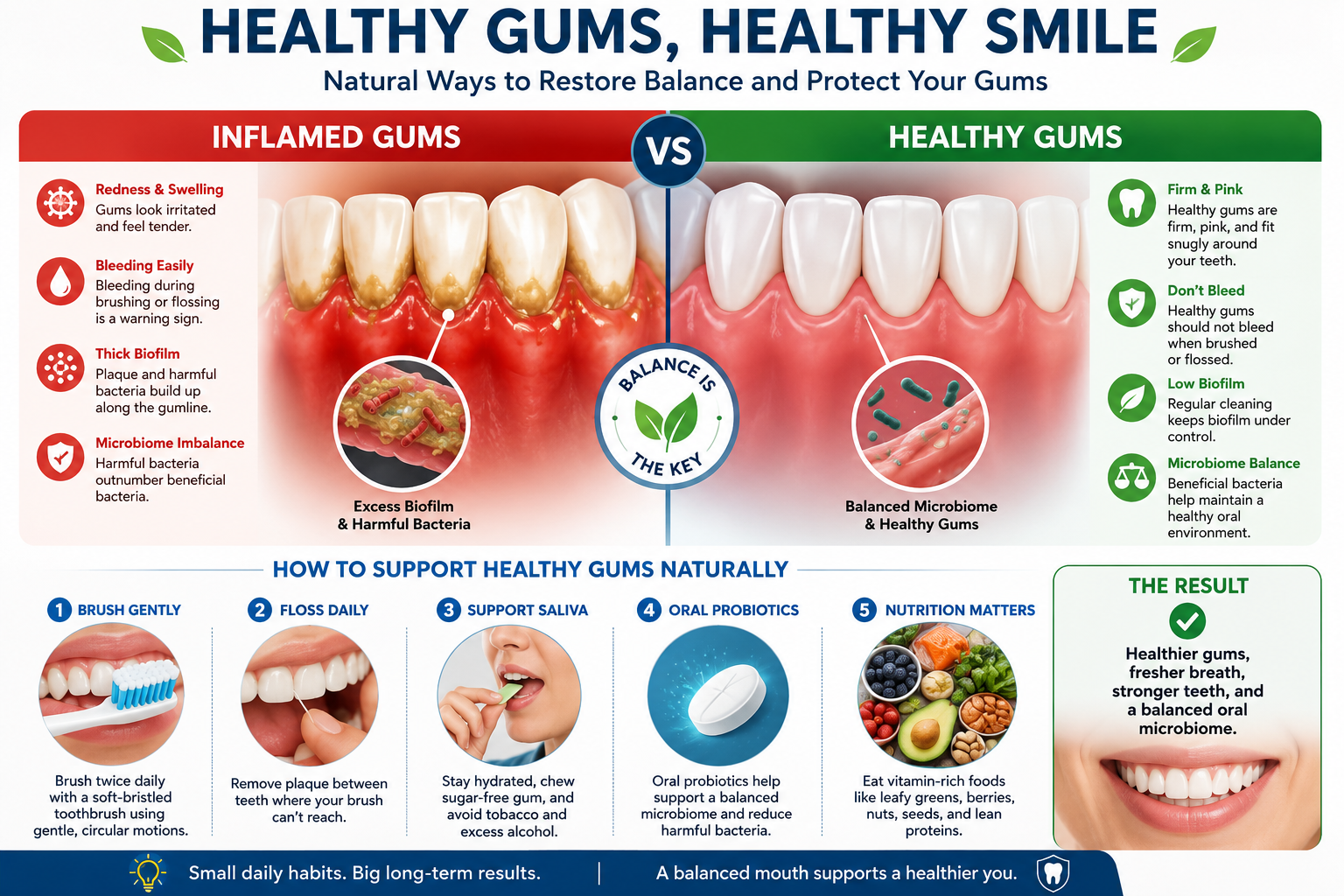
Related Oral Health Guides
Keep Building a Complete Gum Health Strategy
Healthy gums depend on daily habits, oral microbiome balance, plaque control, nutrition, and fresh-breath support. Continue with these related guides to strengthen your full oral health cluster.
How Oral Probiotics Support Healthy Gums
See how beneficial bacteria may support a healthier gum environment.
PreventionCommon Habits That Damage Your Gum Health
Learn which daily habits may quietly irritate your gums over time.
Oral BacteriaCan Oral Bacteria Cause Gum Inflammation?
Understand the link between bacterial imbalance and irritated gums.
MicrobiomeGood vs Bad Bacteria in Your Mouth
Discover why balance matters more than eliminating all bacteria.
Natural SupportOral Microbiome: Protecting Your Teeth Naturally
Explore how the oral ecosystem helps protect teeth and gums.
ResearchThe Science Behind Oral Probiotics
Learn how oral probiotics are studied for microbial balance.
Fresh BreathBest Natural Ways to Support Fresh Breath
Support fresher breath with gentle, microbiome-friendly habits.
Bad BreathWhy Mouthwash May Not Fix Chronic Bad Breath
Find out why harsh rinses may not solve the root cause of odor.
Scientific Studies: What Research Suggests About Gum Support
Modern gum health research increasingly focuses on inflammation, plaque control, saliva, nutrition, and the balance of bacteria inside the oral microbiome. While no natural habit should be presented as a cure for gum disease, evidence suggests that a cleaner, more balanced oral environment may help support healthier gums over time.
Researchers have found that gum irritation is strongly connected to bacterial biofilm near the gumline. When biofilm is allowed to remain undisturbed, the immune system may respond with inflammation. This is why brushing, flossing, professional cleanings, and consistent oral hygiene remain the foundation of gum care.
Oral Probiotics Research
Oral probiotics are being studied because they may help support a healthier microbial balance in the mouth. Unlike gut probiotics, oral probiotics are designed to interact with the oral cavity, including the tongue, saliva, teeth, and gums.
Some studies have explored probiotic strains for their potential role in reducing harmful bacterial activity, supporting fresher breath, and helping maintain a healthier gum environment. However, results can vary depending on the strain, dose, product quality, daily habits, and the person’s existing oral condition.
Ingredients Being Studied for Gum Health
Several natural compounds and nutrients are commonly discussed in relation to oral wellness. These include vitamin C for normal gum tissue support, vitamin D and calcium for tooth and bone health, antioxidants from fruits and vegetables, and probiotic strains that may help support microbial balance.
Ingredients such as xylitol are also popular in oral care because they may help reduce the ability of certain bacteria to thrive when used as part of a complete routine. Green tea polyphenols, cranberry compounds, coenzyme Q10, omega-3 fatty acids, and certain herbal extracts are also being studied for their potential connection to inflammation and oral health support.
Nutrition: Building Gum Support From the Inside
Your gums need nutrients to maintain normal repair, immune response, and tissue strength. A gum-friendly diet should include colorful vegetables, leafy greens, berries, citrus fruits, nuts, seeds, lean proteins, eggs, fish, and plenty of water.
At the same time, it helps to reduce constant exposure to sugar, sticky snacks, and acidic drinks. Frequent snacking gives harmful bacteria repeated opportunities to produce acids and irritants. For many people, improving gum health starts not only with better brushing, but also with better meal timing and smarter food choices.
Lifestyle Habits That Influence Gum Health
Gum health is also affected by lifestyle. Smoking, poor sleep, chronic stress, dehydration, mouth breathing, and inconsistent dental visits may all make it harder for the gums to stay firm and comfortable. Even the way you brush matters. Pressing harder does not clean better; it can irritate the gumline.
A supportive lifestyle focuses on reducing irritation and improving consistency. Drink water, sleep well, manage stress, avoid tobacco, use a soft-bristled toothbrush, and give your mouth enough time each day for complete cleaning.
A Simple Daily Routine for Healthier Gums
- Morning: Brush gently for two minutes with a soft-bristled toothbrush.
- After meals: Rinse with water to help remove food particles and reduce acid exposure.
- Daily: Clean between teeth using floss, interdental brushes, or a water flosser.
- Evening: Brush again, clean the tongue, and avoid sugary snacks before bed.
- Optional support: Consider an oral probiotic as part of a broader oral wellness routine.
- Regularly: Visit a dentist for professional cleanings and gum evaluation.
Prevention Checklist
- Brush twice daily with gentle pressure.
- Floss or clean between teeth every day.
- Stay hydrated to support saliva flow.
- Limit sugary drinks and frequent snacking.
- Avoid tobacco and harsh brushing.
- Choose nutrient-dense foods that support gum tissue.
- Schedule regular dental checkups and cleanings.
- Watch for bleeding, swelling, recession, or persistent bad breath.
Who May Benefit Most From a Gentler Gum Routine?
A natural gum-support routine may be especially helpful for adults over 40, people with occasional gum sensitivity, those who struggle with dry mouth, anyone concerned about plaque buildup, and people who want a more microbiome-friendly approach to oral care.
It may also benefit people who have relied heavily on strong mouthwashes but still experience recurring gum discomfort or bad breath. In these cases, the issue may not be a lack of harsh products, but an oral environment that needs better balance.
Safety Considerations
Natural gum care should be gentle, but it should also be realistic. Bleeding gums, gum recession, loose teeth, persistent swelling, pain, or ongoing bad breath should be evaluated by a dental professional. These signs may require professional treatment, not just home care.
Supplements and probiotics should be used responsibly, especially if you are pregnant, nursing, immunocompromised, taking medications, or managing a medical condition. When in doubt, ask your dentist or healthcare provider before starting a new supplement.
Support Your Gums Without Overcomplicating Your Routine
Discover how oral probiotics, saliva support, nutrition, and microbiome-friendly habits may help you build a smarter daily oral care routine.
Explore the Complete Oral Health Guide
Frequently Asked Questions
1. Can gums become healthy again naturally?
Mild gum irritation may improve when plaque is controlled, flossing becomes consistent, saliva is supported, and harsh habits are reduced. However, advanced gum problems need professional dental care.
2. What is the best natural way to support gum health?
The best approach is consistent daily care: gentle brushing, flossing, hydration, nutrient-rich foods, regular dental cleanings, and supporting a balanced oral microbiome.
3. Are harsh mouthwashes bad for gums?
Some strong rinses may be useful when recommended by a dentist, but overusing harsh products can leave the mouth feeling dry or irritated. A balanced routine is usually more sustainable.
4. Do oral probiotics help gums?
Oral probiotics are being studied for their potential to support microbial balance in the mouth. They should be used as part of a complete routine, not as a replacement for brushing, flossing, or dental visits.
5. Why do gums bleed when brushing?
Bleeding can happen when plaque irritates the gumline, but it may also be linked to brushing too hard, flossing inconsistently, or gum disease. Persistent bleeding should be checked by a dentist.
6. What foods support healthy gums?
Leafy greens, berries, citrus fruits, nuts, seeds, fish, eggs, lean proteins, and vitamin-rich whole foods may help support normal gum tissue maintenance.
7. Can brushing too hard damage gums?
Yes. Aggressive brushing may irritate gum tissue and contribute to gum recession over time. A soft-bristled toothbrush and gentle pressure are usually better.
8. How does saliva protect the gums?
Saliva helps wash away food particles, neutralize acids, keep tissues moist, and support a cleaner oral environment. Dry mouth can make gum irritation more likely.
9. When should I see a dentist for gum problems?
See a dentist if you notice persistent bleeding, swelling, gum recession, loose teeth, pain, pus, or bad breath that does not improve with good oral hygiene.
10. What is the safest way to start a gum-support routine?
Start with gentle brushing, daily flossing, more water, less sugar frequency, tongue cleaning, regular dental visits, and microbiome-friendly support such as oral probiotics when appropriate.
Conclusion: Healthy Gums Need Balance, Not Harshness
Restoring healthy gums without harsh chemicals starts with understanding what your mouth truly needs. Your gums are not isolated from the rest of your oral environment. They are affected by plaque, biofilm, saliva, diet, brushing pressure, flossing habits, lifestyle choices, and the balance of bacteria inside your mouth.
Instead of relying only on aggressive rinses or extreme routines, a smarter approach focuses on gentle consistency. Brush carefully, clean between your teeth, support saliva, choose nutrient-rich foods, reduce sugar frequency, avoid tobacco, and pay attention to early warning signs.
Oral probiotics may also be worth considering as part of a broader gum-support strategy, especially for people interested in supporting a healthier oral microbiome. They are not a cure or a replacement for professional dental care, but they may fit well into a complete daily wellness routine.
Ready to Support Healthier Gums Naturally?
Continue with the complete EnergyFix40 oral health guide and learn how oral probiotics, daily hygiene, nutrition, and microbiome balance may help support stronger gums, fresher breath, and long-term oral wellness.
Read the Complete Oral Health GuideContinue Your Oral Health Journey
Healthy gums are only one part of lifelong oral wellness. Explore these additional expert guides to learn how oral bacteria, probiotics, nutrition, and daily habits work together to support a healthier smile.
The Ultimate Oral Health Guide 2026
Discover the complete roadmap for healthier gums, fresher breath, oral probiotics, and a balanced oral microbiome.
What Causes Tooth Sensitivity?
Learn the most common reasons teeth become sensitive and how to protect enamel naturally.
How Antibiotics Affect Oral Health
Understand how antibiotics may influence beneficial oral bacteria and long-term microbial balance.
ProDentim Reviews 2026
Explore the ingredients, scientific research, potential benefits, and safety considerations behind ProDentim.
Microbiome-Friendly Oral Support
Support Healthier Gums & Fresher Breath With ProDentim
ProDentim is designed to support oral microbiome balance with probiotic strains and natural ingredients that may complement your daily brushing, flossing, and gum-care routine.
Check ProDentim Official AvailabilityAlways use supplements as directed. Results may vary. This product is not intended to diagnose, treat, cure, or prevent any disease.
Scientific References
The information in this article is based on general oral health education and reputable scientific sources. These references are provided for educational purposes and do not replace professional dental advice.
- National Institutes of Health (NIH) — General health and biomedical research information.
- PubMed — Scientific studies on oral probiotics, gum health, oral bacteria, plaque, and inflammation.
- National Library of Medicine — Medical literature and public health research resources.
- American Dental Association (ADA) — Oral Health Topics — Dentist-reviewed information about gum disease, plaque, brushing, flossing, and preventive oral care.
- Mayo Clinic — Gingivitis — Educational overview of gum inflammation, symptoms, causes, and prevention.
- MedlinePlus — Gum Disease — Patient-friendly information from the National Library of Medicine.
Note: This article is for informational purposes only. If you have bleeding gums, gum recession, loose teeth, pain, swelling, or persistent bad breath, consult a licensed dentist or healthcare professional.
RELATED POSTS
View all


ProvaDent Review 2026: Ingredients, Benefits, Pros & Cons
July 21, 2026 | by By EnergyFix40 Editorial Team
Prodentim Reviews 2026: Does This Oral Probiotic Really Work?
July 12, 2026 | by By EnergyFix40 Editorial Team
Best Daily Habits for Oral Health After 60
June 20, 2026 | by By EnergyFix40 Editorial Team