Best Natural Ways to Support Fresh Breath
June 5, 2026 | by By EnergyFix40 Editorial Team

Best Natural Ways to Support Fresh Breath
Discover natural, research-backed habits that may help support fresher breath, healthier gums, and a balanced oral microbiome—without relying only on temporary fixes.
Support a Healthy Oral Microbiome
Learn how maintaining a balanced population of beneficial oral bacteria may contribute to naturally fresher breath and healthier gums.
Natural Daily Habits
Explore practical lifestyle changes, nutrition tips, hydration strategies, and oral hygiene techniques that support lasting fresh breath.
Feel More Confident Every Day
Fresh breath can help improve confidence during conversations, meetings, and social interactions while supporting better oral wellness.
Fresh Breath Starts with a Healthy Mouth
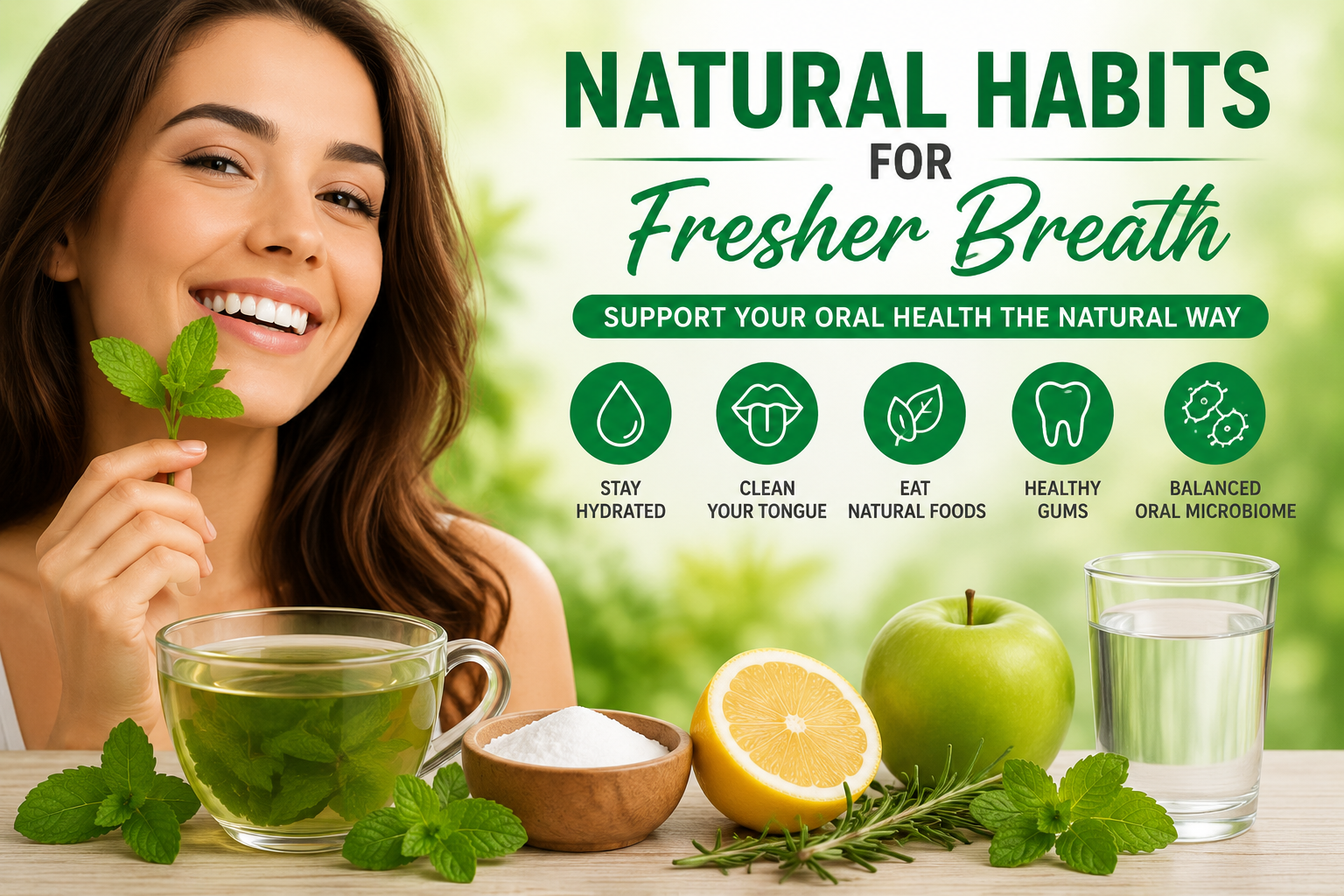
Having fresh breath is about much more than simply brushing your teeth or chewing mint gum. Modern research suggests that long-lasting fresh breath begins with maintaining a healthy oral environment, where beneficial bacteria, healthy gums, proper saliva production, and consistent oral hygiene work together to support overall oral wellness.Many cases of persistent bad breath develop when odor-producing bacteria multiply on the tongue, between the teeth, or below the gumline. These microorganisms release volatile sulfur compounds that create unpleasant odors. Poor hydration, dry mouth, inadequate oral hygiene, tobacco use, certain foods, and gum problems can all contribute to this imbalance.Fortunately, numerous natural strategies may help reduce these contributing factors while supporting the mouth's natural protective systems. Drinking more water, cleaning the tongue daily, eating fiber-rich foods, maintaining healthy gums, and supporting a balanced oral microbiome are all simple habits that may promote fresher breath over time.In this comprehensive guide, you'll discover evidence-based approaches that focus on addressing the underlying causes of bad breath rather than simply masking unpleasant odors. By supporting your oral microbiome and adopting healthier daily routines, you may enjoy fresher breath, greater confidence, and better overall oral health.
Introduction: Why Fresh Breath Is More Than a Cosmetic Issue
Fresh breath is often associated with confidence, cleanliness, and social comfort. However, it is also an important signal of what may be happening inside the mouth. While occasional bad breath can happen after eating strong foods, persistent unpleasant breath may be connected to bacterial imbalance, dry mouth, plaque buildup, poor tongue hygiene, or gum irritation.
The good news is that many natural strategies can help support a cleaner, healthier oral environment. Instead of only masking odor with mints or strong mouthwash, the most effective long-term approach is to support saliva flow, clean odor-prone areas, nourish the oral microbiome, and build consistent daily habits.
Article Index
What Causes Bad Breath?
Bad breath, also known as halitosis, is commonly linked to bacteria that live on the tongue, between the teeth, and along the gumline. These bacteria can break down food particles and proteins, producing odor-causing compounds. When oral hygiene is inconsistent, these compounds may become more noticeable.
One of the most common natural contributors is dry mouth. Saliva helps wash away food debris and supports a healthier oral environment. When saliva production decreases because of dehydration, mouth breathing, certain medications, or sleep, odor-producing bacteria may become more active.
Diet also plays a role. Garlic, onions, sugary snacks, alcohol, and highly processed foods may contribute to temporary odor or feed bacteria that produce unpleasant smells. Gum irritation, plaque buildup, smoking, and poor tongue cleaning can also make breath less fresh over time.
Common Triggers of Bad Breath
- Poor tongue cleaning
- Dry mouth or dehydration
- Plaque buildup between teeth
- Gum irritation or bleeding gums
- High-sugar foods and drinks
- Tobacco use
- Imbalanced oral bacteria
How the Oral Microbiome Works
The oral microbiome is the community of bacteria and other microorganisms that naturally live in the mouth. Some bacteria are helpful and support a balanced oral environment, while others may contribute to plaque, gum problems, and unpleasant breath when they grow out of balance.
A healthy oral microbiome works like a protective ecosystem. Beneficial bacteria may help compete with odor-producing bacteria, support normal gum health, and contribute to a cleaner mouth. When this balance is disrupted by poor diet, harsh products, low saliva flow, or inconsistent hygiene, odor-causing bacteria may become more dominant.
This is why supporting fresh breath naturally is not only about killing bacteria. The goal is to create conditions where beneficial bacteria can thrive while reducing the factors that allow harmful or odor-producing bacteria to multiply.
Want to Understand the Full Oral Health Strategy?
Fresh breath is only one part of a healthier mouth. Learn how oral probiotics, daily habits, gum support, and microbiome balance work together in our complete guide.
Read the Complete Oral Health Guide →Continue Learning About Natural Fresh Breath
Want to understand why bad breath happens and how your oral microbiome may influence long-term freshness? These related guides can help you build a smarter daily routine.
Ultimate Oral Health Guide 2026
Discover how oral probiotics, healthy gums, and daily habits may support fresher breath naturally.
Why Oral Bacteria Cause Bad Breath
Learn how harmful bacteria, tongue biofilm, and sulfur compounds may contribute to unwanted breath odor.
What Is the Oral Microbiome?
Understand the balance of good and bad bacteria in your mouth and why it matters for breath freshness.
10 Best Natural Ways to Support Fresh Breath
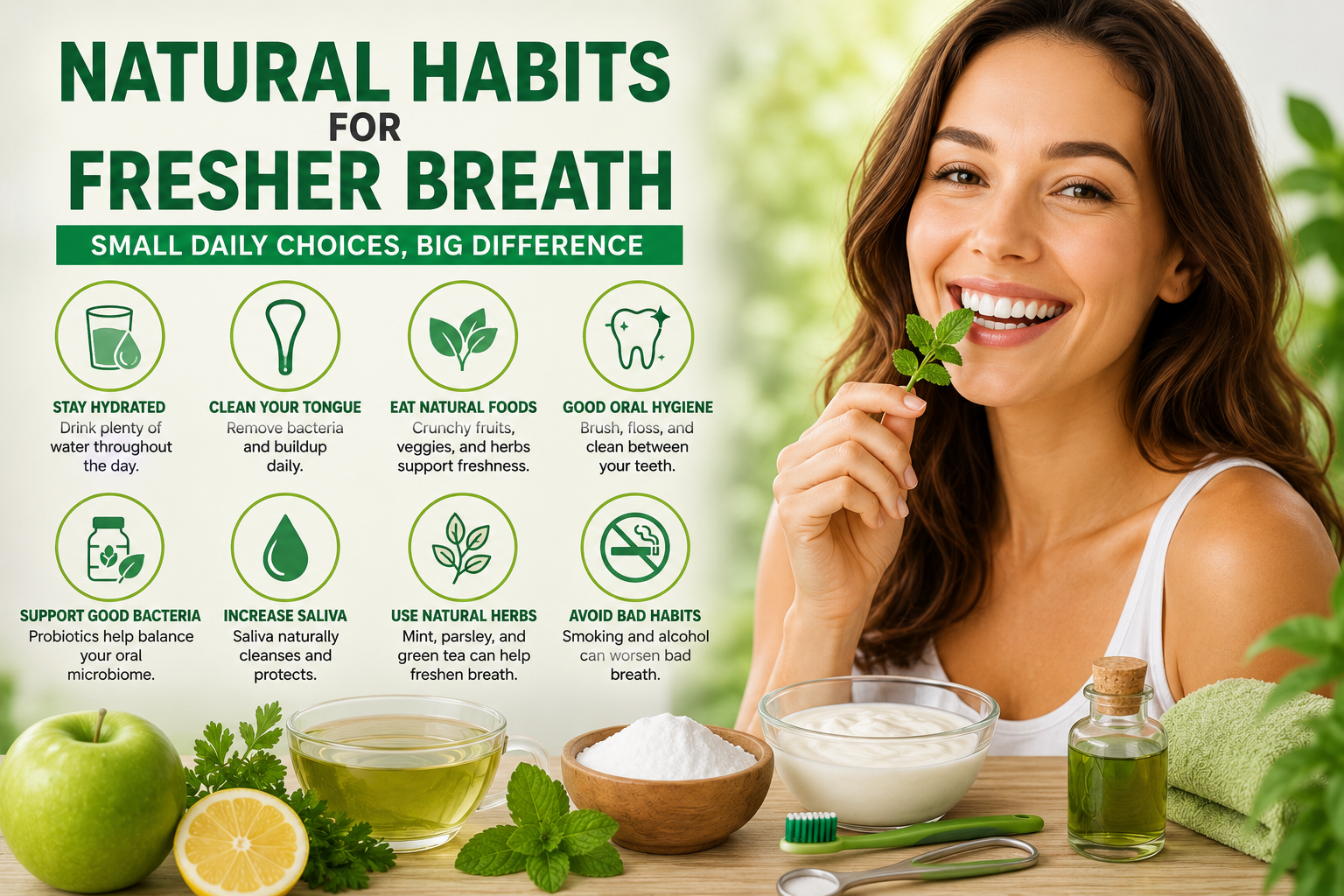
Fresh breath is built through daily habits. The goal is not only to mask odor, but to support saliva flow, reduce odor-causing buildup, nourish the oral microbiome, and maintain a cleaner mouth naturally.
1. Drink More Water
Hydration helps saliva wash away food particles and bacteria. Dry mouth is one of the most common reasons breath becomes less fresh.
2. Clean Your Tongue Daily
The tongue can trap bacteria, food debris, and odor-producing compounds. A tongue scraper or soft brush may help reduce buildup.
3. Eat Crunchy Fruits and Vegetables
Apples, carrots, celery, cucumbers, and leafy greens may help stimulate saliva and gently clean teeth while chewing.
4. Limit Sugar and Refined Carbs
Sugar can feed bacteria that contribute to plaque and odor. Reducing sugary snacks supports a cleaner oral environment.
5. Support Healthy Gums
Gum irritation and plaque buildup can make breath worse. Brushing, flossing, and dental checkups help protect gum health.
6. Use Fresh Herbs
Mint, parsley, cilantro, and basil can provide a natural freshening effect while adding beneficial plant compounds to your diet.
7. Choose Unsweetened Green Tea
Green tea contains plant compounds that may support a cleaner mouth and help reduce odor-related bacterial activity.
8. Avoid Tobacco
Smoking and tobacco use can dry the mouth, stain teeth, irritate gums, and contribute to persistent bad breath.
9. Support Oral Bacteria Balance
A balanced oral microbiome may help reduce the dominance of odor-producing bacteria and support healthier gums.
10. Keep a Consistent Routine
Fresh breath improves most when healthy habits are repeated daily: brush, floss, hydrate, clean your tongue, and eat well.
Breath-Friendly Foods to Include Daily
Your diet can influence breath quality more than many people realize. Foods that support saliva production, provide fiber, and reduce sugar exposure may help create a healthier environment inside the mouth.
- Apples: help stimulate chewing and saliva flow.
- Celery and carrots: naturally crunchy and helpful for cleaning food debris.
- Leafy greens: provide nutrients that support overall wellness.
- Plain yogurt: may support beneficial bacteria when unsweetened.
- Mint and parsley: naturally fresh-tasting herbs for quick breath support.
- Green tea: a sugar-free drink with plant compounds that support oral freshness.
Why Hydration Matters for Fresh Breath
Water is one of the simplest natural tools for fresher breath. When your mouth becomes dry, bacteria and food particles are more likely to remain on the tongue, teeth, and gums. Saliva helps cleanse the mouth naturally, neutralize acids, and support a healthier oral environment.
For better breath support, drink water throughout the day, especially after coffee, meals, exercise, or waking up. Reducing sugary drinks and alcohol may also help because they can contribute to dry mouth and bacterial imbalance.
Tongue Hygiene: The Overlooked Fresh Breath Habit
The tongue is one of the most common places where odor-causing bacteria collect. Even people who brush their teeth daily may still struggle with bad breath if they do not clean the tongue properly.
Use a tongue scraper or soft toothbrush once daily, preferably in the morning. Gently clean from the back of the tongue toward the front. Avoid scraping too aggressively. The goal is to remove buildup without irritating the tissue.
Comparison Table: What Helps vs. What Hurts Fresh Breath
| Habit | Supports Fresh Breath | May Worsen Breath |
|---|---|---|
| Hydration | Drinking water throughout the day | Dry mouth and dehydration |
| Diet | Crunchy fruits, vegetables, herbs, and unsweetened drinks | Sugary snacks, refined carbs, and strong-smelling foods |
| Tongue Care | Daily gentle tongue cleaning | Ignoring tongue buildup |
| Oral Microbiome | Supporting beneficial bacteria balance | Bacterial imbalance and plaque buildup |
| Lifestyle | Consistent brushing, flossing, and dental visits | Tobacco use and inconsistent hygiene |
Fresh Breath Is Just the Beginning
Discover how oral probiotics, daily habits, hydration, nutrition, and a balanced oral microbiome work together to support healthier gums and long-term oral wellness.
Explore the Ultimate Oral Health Guide →Explore More Expert Oral Health Guides
Fresh breath starts with understanding your entire oral ecosystem. Continue reading these evidence-based guides to discover how healthy bacteria, daily habits, nutrition, and gum care work together for long-lasting oral wellness.
📘 Ultimate Oral Health Guide
Discover the complete guide to healthier gums, oral probiotics, fresher breath, and long-term dental wellness.
Read the Complete Guide →🦠 What Is the Oral Microbiome?
Learn why billions of beneficial bacteria help protect your teeth, gums, and overall oral health every day.
Learn More →🚿 Why Mouthwash May Not Be Enough
Discover why mouthwash often masks odor temporarily instead of addressing the underlying bacterial imbalance.
Read More →🦷 Why Oral Bacteria Cause Bad Breath
Understand how bacterial biofilm, sulfur compounds, and tongue coating contribute to persistent bad breath.
Explore the Science →🌿 Oral Probiotics & Healthy Gums
Learn how beneficial bacteria may help maintain microbial balance and support healthier gums naturally.
Discover Benefits →⚠️ Habits That Damage Your Gums
Identify everyday habits that can increase plaque buildup, gum inflammation, and unpleasant breath.
See the Habits →🛡️ How the Oral Microbiome Protects Teeth
Explore how beneficial microbes help defend against plaque, cavities, and harmful bacterial overgrowth.
Read Article →🔬 The Science Behind Oral Probiotics
Review current scientific findings on oral probiotics and their potential role in supporting fresh breath and gum health.
Explore Research →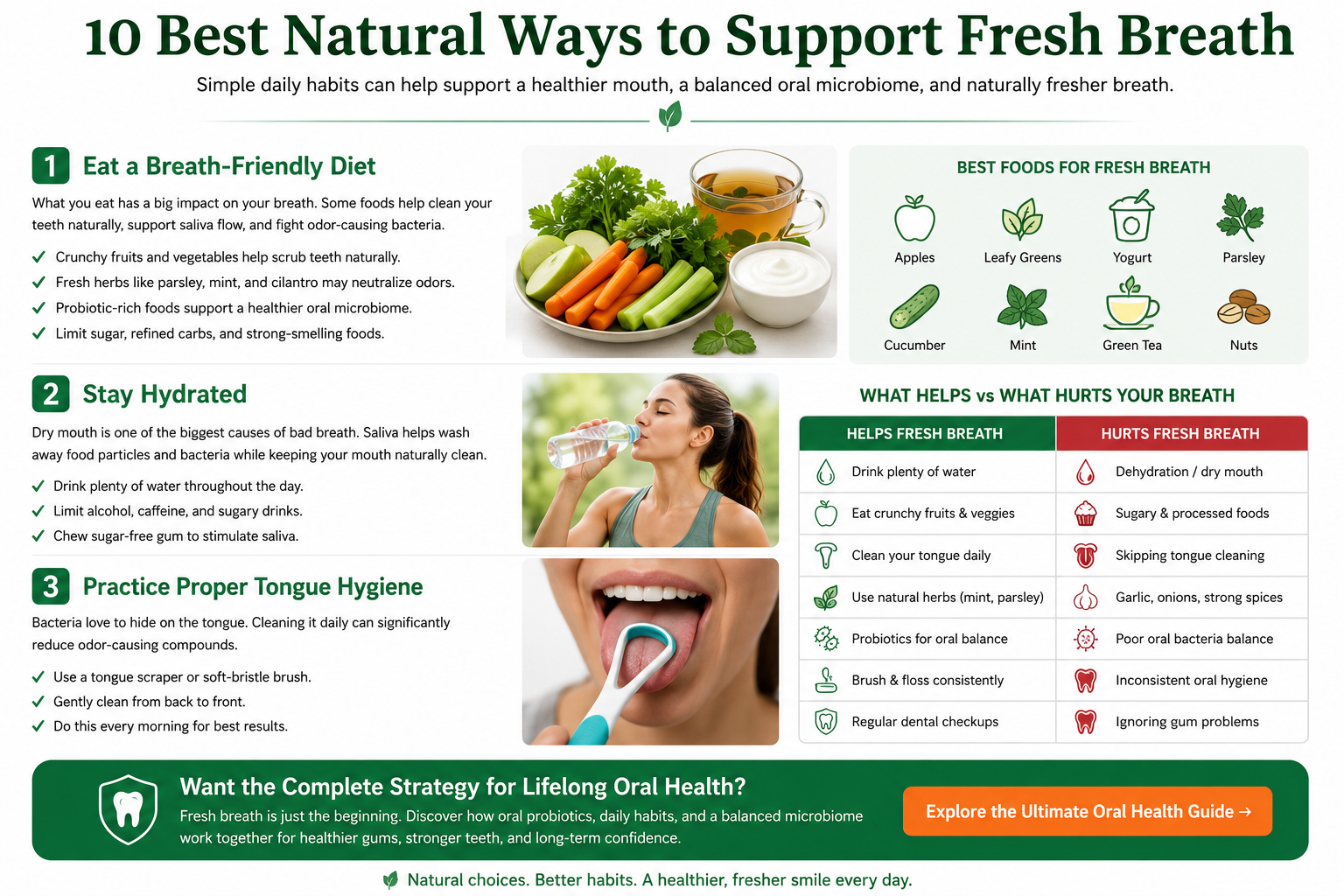
The Role of Oral Probiotics in Supporting Fresh Breath
Oral probiotics are designed to support a healthier balance of bacteria inside the mouth. Unlike regular probiotics that mainly target digestion, oral probiotics focus on the oral microbiome—the community of microorganisms that live on the tongue, teeth, gums, and saliva.
How Oral Probiotics May Help
Bad breath is often linked to odor-producing bacteria that release volatile sulfur compounds. When the oral microbiome becomes imbalanced, these bacteria may become more dominant. Oral probiotics may help by supporting beneficial bacterial species that compete with less desirable bacteria.
This does not mean oral probiotics replace brushing, flossing, hydration, or dental care. Instead, they may work best as part of a complete oral wellness routine focused on daily hygiene, better nutrition, saliva support, and regular dental visits.
What Scientific Studies Suggest
Research on oral probiotics continues to grow. Some studies suggest that specific probiotic strains may help support fresher breath by influencing odor-causing bacteria and helping maintain a healthier oral environment. Other studies have explored how probiotics may support gum health, plaque balance, and oral microbial diversity.
However, results can vary depending on the strain, dose, product quality, oral hygiene habits, diet, and individual health status. For that reason, oral probiotics should be viewed as supportive—not as a cure or replacement for professional dental treatment.
Important Takeaway
The strongest natural strategy for fresh breath is a complete routine: clean the tongue, brush and floss consistently, stay hydrated, eat breath-friendly foods, support saliva flow, and maintain a balanced oral microbiome.
Common Mistakes That Can Keep Breath From Staying Fresh
Mistake #1: Only Using Mints
Mints may temporarily cover odor, but they do not remove bacteria, tongue buildup, plaque, or dry mouth.
Mistake #2: Skipping Tongue Cleaning
The tongue can hold odor-causing bacteria. Ignoring it may reduce the effectiveness of brushing alone.
Mistake #3: Not Drinking Enough Water
Dry mouth allows odor-producing bacteria to become more noticeable. Hydration is essential for saliva flow.
Mistake #4: Ignoring Gum Problems
Bleeding, swelling, or gum sensitivity may be signs that professional dental attention is needed.
Who May Benefit Most from a Natural Fresh Breath Routine?
A natural fresh breath routine may be especially helpful for people who experience occasional morning breath, dry mouth, tongue coating, plaque buildup, or breath changes after certain foods and drinks. It may also benefit adults who want to support gum health and maintain a cleaner oral environment as part of a long-term wellness plan.
- Adults who want fresher breath without relying only on mouthwash
- People who often experience dry mouth or morning breath
- Those interested in supporting a balanced oral microbiome
- Individuals who eat sugary foods or drink coffee regularly
- People looking for a more complete oral wellness routine
When to See a Dentist
If bad breath is persistent, severe, or comes with bleeding gums, tooth pain, loose teeth, mouth sores, or a bad taste that does not improve, it is important to speak with a qualified dental professional. Natural habits can support oral wellness, but they should not replace diagnosis or treatment.
Build a Complete Fresh Breath Strategy
Learn how oral probiotics, daily hygiene, nutrition, hydration, and microbiome balance may work together to support fresher breath and healthier gums naturally.
Read the Complete Oral Health Guide →Frequently Asked Questions About Natural Fresh Breath
Below are common questions people ask when looking for natural ways to support fresher breath, healthier gums, and a balanced oral microbiome.
1. What is the best natural way to support fresh breath?
The best approach is a complete routine: brush, floss, clean your tongue, drink enough water, eat breath-friendly foods, and support a balanced oral microbiome.
2. Can dehydration cause bad breath?
Yes. When the mouth is dry, saliva cannot wash away food particles and bacteria as effectively, which may allow odor to become more noticeable.
3. Does cleaning the tongue really help?
Yes. The tongue can hold bacteria, food debris, and odor-causing compounds. Gentle daily tongue cleaning may help improve breath freshness.
4. What foods help support fresher breath?
Crunchy fruits and vegetables, leafy greens, plain yogurt, parsley, mint, cucumber, apples, celery, and unsweetened green tea may support a fresher mouth.
5. Can sugar make breath worse?
Sugar may feed bacteria that contribute to plaque and odor. Reducing sugary snacks and drinks may help support a cleaner oral environment.
6. Do oral probiotics help with fresh breath?
Oral probiotics may help support a healthier balance of bacteria in the mouth. They work best when combined with brushing, flossing, hydration, tongue cleaning, and dental care.
7. Is mouthwash enough to keep breath fresh?
Mouthwash may temporarily freshen breath, but it does not replace daily brushing, flossing, tongue cleaning, hydration, or professional dental checkups.
8. Why is morning breath so common?
During sleep, saliva flow decreases. This allows bacteria and odor compounds to build up overnight, which is why breath may smell stronger in the morning.
9. When should I see a dentist about bad breath?
See a dentist if bad breath is persistent or occurs with bleeding gums, tooth pain, swelling, loose teeth, mouth sores, or a bad taste that does not improve.
10. How long does it take to improve breath naturally?
Some habits may help quickly, such as drinking water or cleaning the tongue. Long-term improvements usually depend on consistency with daily oral hygiene, diet, hydration, and dental care.
Conclusion: Fresh Breath Begins with Daily Oral Balance
Supporting fresh breath naturally is not about covering odor for a few minutes. It is about creating a healthier oral environment where saliva, clean teeth, healthy gums, tongue hygiene, nutrition, and beneficial bacteria all work together.
By drinking more water, cleaning your tongue, eating breath-friendly foods, reducing sugar, avoiding tobacco, and supporting your oral microbiome, you can build a stronger foundation for fresher breath and better long-term oral wellness.
Continue Your Journey Toward Naturally Fresher Breath
Fresh breath is usually the result of healthy daily habits—not quick fixes. Explore these expert guides to learn how oral bacteria, probiotics, gum care, and the oral microbiome work together to support lasting oral health.
🏆 Ultimate Oral Health Guide
Discover the complete roadmap to healthier gums, stronger teeth, balanced oral bacteria, and naturally fresh breath.
Read the Complete Guide →🌿 How Oral Probiotics Support Healthy Gums
Learn how beneficial bacteria may help support healthier gums and a more balanced oral microbiome.
Learn More →💧 Why Mouthwash May Not Fix Chronic Bad Breath
Find out why temporary solutions often fail and what science suggests for longer-lasting freshness.
Explore the Article →🦷 What Is the Oral Microbiome?
Discover why maintaining a healthy oral microbiome may be one of the most important steps for fresh breath and overall oral wellness.
Discover More →
Knowledge is the first step toward better oral health.
Explore these evidence-based resources to build a complete daily routine for healthier gums, balanced oral bacteria, and naturally fresher breath.
Ready to Support Fresher Breath and a Healthier Oral Microbiome?
ProDentim is designed to support oral wellness with probiotic strains and nutrients that may help maintain a balanced mouth environment, fresh breath, and gum health as part of a daily routine.
✅ Visit the Official ProDentim Page →Official page • Current availability • Customer information • Secure access
Scientific References
The information presented in this article is based on evidence from internationally recognized organizations and peer-reviewed scientific publications focused on oral microbiology, periodontal health, halitosis, and the oral microbiome.
https://www.ada.org/
Clinical guidance on oral hygiene, fresh breath, gum health, plaque control, and preventive dental care.
https://www.nidcr.nih.gov/
Research supported by the U.S. National Institutes of Health (NIH) covering oral diseases, saliva, oral bacteria, and microbiome science.
https://www.cdc.gov/oralhealth/
Evidence-based recommendations for maintaining oral health and preventing common dental conditions.
https://www.mayoclinic.org/diseases-conditions/bad-breath/
Medical overview of halitosis, common causes, diagnosis, and evidence-based management.
https://pubmed.ncbi.nlm.nih.gov/
The world's largest database of peer-reviewed biomedical research, including studies on oral probiotics, halitosis, and oral microbiology.
PubMed Article
Review discussing how selected probiotic strains may help support oral microbial balance and overall oral health.
https://onlinelibrary.wiley.com/journal/1600051x
Leading scientific journal publishing research on periodontal disease, oral bacteria, inflammation, and preventive dentistry.
https://www.tandfonline.com/journals/zjom20
Peer-reviewed journal dedicated to research on the oral microbiome, bacterial ecology, and microbial health.
https://www.who.int/health-topics/oral-health
Global public health guidance on oral diseases, prevention strategies, and healthy lifestyle recommendations.
https://www.cochranelibrary.com/
Independent systematic reviews evaluating the quality of evidence for healthcare interventions, including oral health practices.
Editorial Note
This article is intended for educational and informational purposes only. It does not provide medical or dental advice and should not replace consultation with a qualified dentist or healthcare professional. Scientific understanding of the oral microbiome continues to evolve, and individual results may vary depending on oral hygiene, diet, lifestyle, and overall health.
RELATED POSTS
View all


ProvaDent Ingredients Explained: Benefits, Evidence & Safety
July 23, 2026 | by By EnergyFix40 Editorial Team
• Daily Habits That Improve Oral Health
July 17, 2026 | by By EnergyFix40 Editorial Team
ProDentim Reviews 2026: Does It Support Healthy Teeth and Gums?
August 17, 2026 | by By EnergyFix40 Editorial Team