What Causes Tooth Sensitivity?
June 14, 2026 | by By EnergyFix40 Editorial Team

What Causes Tooth Sensitivity?
Discover Why Your Teeth Hurt—and How to Support Stronger, Healthier Teeth Naturally
If cold drinks, hot coffee, sweet foods, or brushing make your teeth feel uncomfortable, your mouth may be sending an important warning sign. Tooth sensitivity can be linked to enamel wear, gum recession, cavities, acidic foods, brushing habits, and changes in your oral microbiome.
Read the Complete Oral Health GuideProtect Your Enamel
Learn how enamel erosion exposes sensitive areas of the teeth and what daily habits may help reduce damage.
Support Healthy Gums
Discover why gum recession can make teeth feel more sensitive and how gum health connects to long-term oral wellness.
Balance Oral Bacteria
Understand how the oral microbiome may influence plaque, acid production, gum irritation, and overall tooth comfort.
This cluster article explains the most common causes of tooth sensitivity, how to identify possible triggers, and why a complete oral health routine may help support stronger teeth, healthier gums, fresher breath, and better long-term protection.
Tooth sensitivity is one of the most common oral health complaints among adults. It can appear suddenly when drinking something cold, eating something sweet, brushing near the gumline, or breathing in cool air. For some people, the discomfort is occasional and mild. For others, it becomes a daily problem that affects eating, drinking, and confidence.
The important thing to understand is that sensitive teeth are usually not random. Sensitivity often develops when the protective layers of the teeth become weakened, worn down, or exposed. Enamel erosion, gum recession, cavities, cracked teeth, teeth grinding, acidic foods, aggressive brushing, and changes in the oral microbiome can all contribute to the problem.
This article explains what causes tooth sensitivity, how it develops, and why protecting your enamel and gums is essential for long-term oral comfort. It also connects sensitivity to the bigger picture of oral wellness, including saliva, plaque, bacteria, and daily habits.
Table of Contents
What Is Tooth Sensitivity?
Tooth sensitivity, also called dentin hypersensitivity, is discomfort that happens when the inner part of the tooth reacts to outside triggers. These triggers may include cold drinks, hot beverages, sweet foods, acidic foods, brushing, flossing, or even cold air.
In a healthy tooth, the outer enamel protects the crown, while the gums help cover the root area. When enamel becomes thin or the gumline pulls back, the softer dentin underneath can become exposed. Dentin contains tiny channels that connect to the nerve area inside the tooth. When temperature, pressure, or acidity reaches these channels, sensitivity can occur.
How Sensitive Teeth Develop
Sensitive teeth often develop slowly. At first, a person may notice a quick reaction to cold water or ice cream. Over time, the discomfort may happen more often, especially if the original cause is not corrected.
One common pathway is enamel erosion. Enamel is strong, but it is not living tissue, which means it cannot grow back once it is lost. Acidic drinks, frequent snacking, poor plaque control, and acid-producing bacteria can weaken enamel over time.
Another pathway is gum recession. When gums move away from the tooth surface, the root area may become exposed. Unlike the crown of the tooth, the root is not covered by thick enamel. This makes it more vulnerable to sensitivity, plaque buildup, and irritation.
Tooth Anatomy Explained
To understand tooth sensitivity, it helps to understand the basic structure of a tooth. The outer layer is enamel, which protects the visible part of the tooth. Under the enamel is dentin, a more porous layer that can transmit sensations. At the center is the pulp, where nerves and blood vessels are located.
The root of the tooth is normally protected by gum tissue and a thin layer called cementum. When the gumline recedes or the cementum wears away, the dentin near the root can become exposed. This is one reason many people feel sensitivity near the gumline rather than across the entire tooth.
Early Warning Signs of Sensitive Teeth
Common warning signs include discomfort when drinking cold water, pain when eating sweet foods, sensitivity during brushing, tenderness near the gumline, or a sharp sensation that comes and goes quickly. Sensitivity that lasts longer, becomes severe, or affects only one tooth may suggest a cavity, crack, infection, or another dental issue that should be checked by a dentist.
Why Tooth Sensitivity Should Not Be Ignored
Tooth sensitivity is not always dangerous, but it should not be ignored. It may be an early sign that enamel is wearing down, gums are receding, plaque is accumulating, or oral bacteria are becoming unbalanced. Addressing sensitivity early can help protect your teeth before the problem becomes more difficult to manage.
Want the Complete Oral Health Strategy?
Learn how oral probiotics, healthy gums, balanced bacteria, fresh breath, and daily habits work together to support better long-term oral wellness.
Read the Full Oral Health GuideContinue Learning About Natural Oral Health
Tooth sensitivity is often connected to enamel wear, gum recession, oral bacteria, and daily habits. These related guides can help you understand the bigger picture and protect your smile naturally.
Oral Microbiome: Protecting Your Teeth Naturally
Learn how balanced oral bacteria may help support enamel, gums, and long-term tooth comfort.
Why Some People Get More Cavities Than Others
Discover why saliva, bacteria, enamel strength, diet, and daily habits can increase cavity risk.
Common Habits That Damage Your Gum Health
See which everyday habits may contribute to gum recession, exposed roots, and sensitivity near the gumline.
Main Causes of Tooth Sensitivity
Tooth sensitivity usually happens when the protective barriers of the teeth are weakened or exposed. While the discomfort may feel similar from person to person, the underlying cause can be very different. Some people develop sensitivity because their enamel is wearing away. Others experience it because their gums are receding, a cavity is forming, a tooth is cracked, or nighttime grinding is placing too much pressure on the teeth.
Identifying the real cause matters because tooth sensitivity is not just a surface-level problem. It can be connected to enamel health, gum health, saliva quality, plaque buildup, oral bacteria, diet, brushing habits, and even stress-related grinding. Below are the most common reasons sensitive teeth develop.
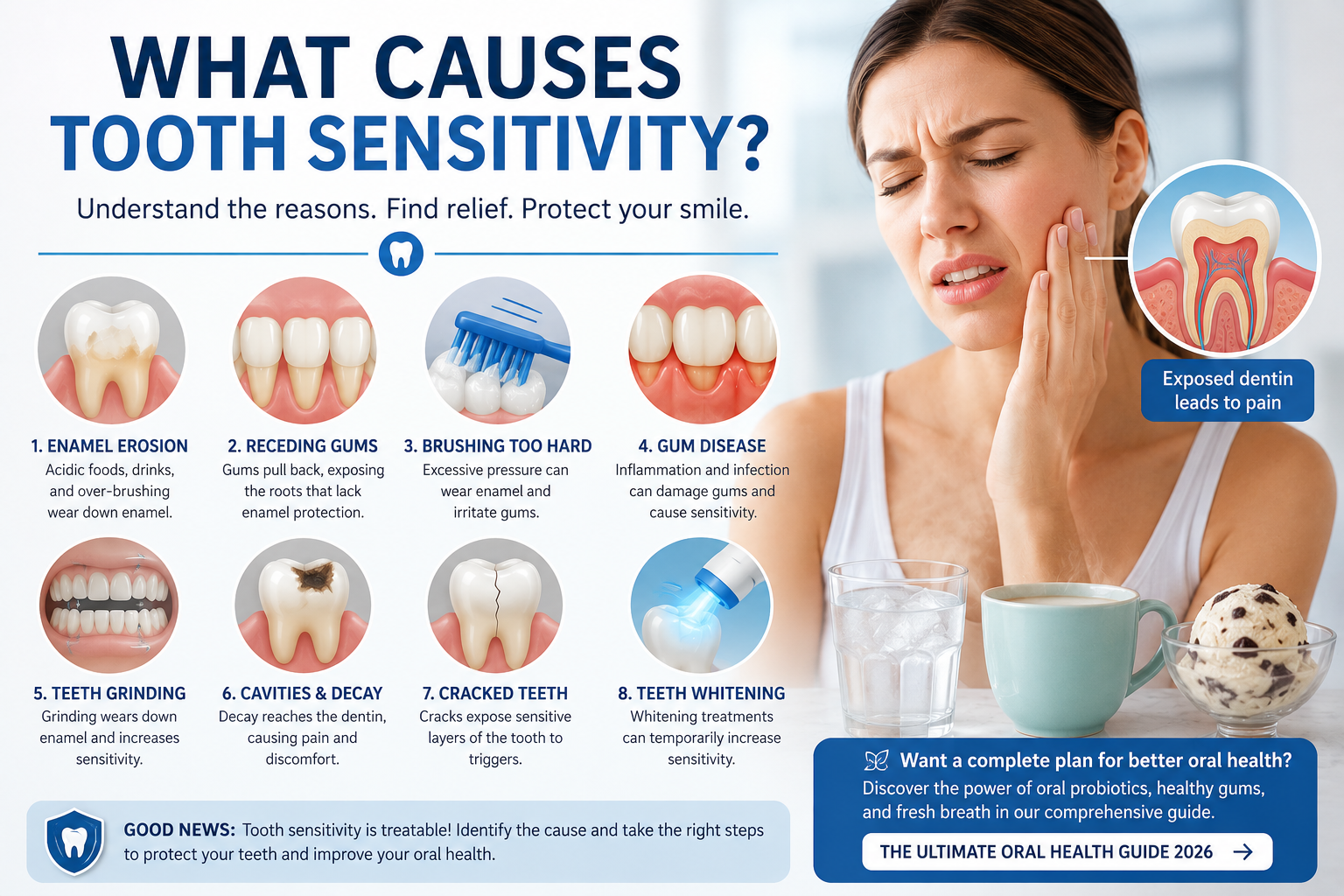
1. Enamel Erosion
Enamel is the hard outer layer that protects the visible part of your teeth. Although it is the strongest substance in the body, it can still be damaged over time. Acidic drinks, frequent snacking, sugary foods, poor plaque control, and acid-producing bacteria may gradually weaken enamel.
Once enamel becomes thinner, the dentin underneath is more likely to react to cold, heat, sweetness, and pressure. This is why people with enamel erosion often feel discomfort when drinking iced water, eating citrus fruits, or brushing with too much force.
Common contributors to enamel erosion include soda, sports drinks, citrus juice, wine, vinegar-based foods, frequent sugar exposure, acid reflux, and brushing immediately after acidic meals. Since enamel does not grow back naturally, prevention is one of the most important strategies for reducing sensitivity.
2. Gum Recession
Gum recession happens when the gum tissue pulls away from the tooth, exposing more of the root surface. Unlike the crown of the tooth, the root is not protected by thick enamel. This makes exposed roots much more vulnerable to sensitivity.
Recession may develop from aggressive brushing, gum inflammation, aging, genetics, tobacco use, poor oral hygiene, or long-term plaque buildup. Many people first notice gum-related sensitivity near the gumline, especially when brushing or drinking something cold.
Supporting gum health is essential because gums act like a protective seal around the teeth. When that seal weakens, bacteria and irritants can affect areas that are normally covered and protected.
3. Tooth Decay and Cavities
Cavities are another major cause of tooth sensitivity. Tooth decay begins when bacteria in dental plaque produce acids that attack enamel. Over time, these acids can create weak spots and small openings in the tooth surface.
As decay moves deeper, sensitivity may become more noticeable. A person may feel discomfort when eating sweets, drinking cold beverages, or chewing on one side of the mouth. Unlike mild generalized sensitivity, cavity-related discomfort may affect a specific tooth.
If sensitivity is sharp, localized, or worsening, it is important to have the tooth evaluated by a dental professional. Early cavities are easier to treat than advanced decay.
4. Cracked or Damaged Teeth
A cracked tooth can expose sensitive inner structures or allow temperature changes to reach the dentin and pulp. Cracks may happen from biting hard foods, dental trauma, large fillings, grinding, or repeated pressure over time.
Sensitivity from a cracked tooth may feel different from enamel-related sensitivity. It may occur when biting down, releasing pressure, or drinking something cold. Sometimes the discomfort comes and goes, making the problem harder to identify without a dental exam.
Cracked teeth should not be ignored because small cracks can grow larger. A dentist can determine whether the tooth needs bonding, a crown, or another form of treatment.
5. Teeth Grinding and Clenching
Teeth grinding, also called bruxism, places repeated pressure on the teeth. Many people grind or clench during sleep without realizing it. Over time, this pressure may wear down enamel, create tiny cracks, irritate the gums, and make teeth more sensitive.
Signs of grinding may include jaw soreness, morning headaches, flattened tooth edges, chipped enamel, facial tension, or sensitivity across several teeth. Stress, sleep issues, bite imbalance, and certain habits may contribute to grinding.
If grinding is suspected, a dentist may recommend a night guard or other strategies to reduce pressure on the teeth. Protecting enamel from mechanical wear is just as important as protecting it from acid.
Tooth Sensitivity Causes: Comparison Table
| Cause | How It Triggers Sensitivity | Common Signs | Best First Step |
|---|---|---|---|
| Enamel Erosion | Thins the protective outer layer and exposes dentin. | Cold, sweet, or acidic food discomfort. | Reduce acids and protect enamel daily. |
| Gum Recession | Exposes root surfaces that are not covered by enamel. | Sensitivity near the gumline. | Use gentle brushing and support gum health. |
| Tooth Decay | Creates openings in enamel that allow irritation deeper inside. | Pain in one specific tooth. | Schedule a dental evaluation. |
| Cracked Tooth | Allows pressure or temperature to reach sensitive inner areas. | Pain when biting or releasing pressure. | Have the tooth checked quickly. |
| Teeth Grinding | Wears enamel and may create small cracks over time. | Jaw soreness, headaches, multiple sensitive teeth. | Ask about a night guard or bite protection. |
Protect Your Teeth Before Sensitivity Gets Worse
Tooth sensitivity is often a sign that your enamel, gums, oral bacteria, or daily habits need more support. Learn the complete oral health strategy in the full guide.
Explore the Complete Oral Health GuideExpand Your Oral Health Knowledge
Tooth sensitivity rarely has a single cause. Understanding how your enamel, gums, oral microbiome, and daily habits work together can help you make smarter decisions for long-term dental health. Continue exploring these expert guides below.
🦷 Oral Microbiome: Protecting Your Teeth Naturally
Discover how beneficial bacteria help protect enamel, maintain healthy gums, and naturally reduce harmful microbes.
Read the Guide →🦠 Good vs Bad Bacteria in Your Mouth
Learn why bacterial balance matters more than eliminating every microbe and how it influences tooth sensitivity.
Learn More →🪥 Why Some People Get More Cavities Than Others
Explore how enamel strength, saliva, diet, and oral bacteria affect cavity formation and tooth sensitivity.
Discover Why →🦷 The Surprising Link Between Oral Bacteria and Tooth Decay
Understand how harmful bacteria create acids that weaken enamel and expose sensitive dentin.
Read More →🌿 Common Habits That Damage Your Gum Health
Find out which daily habits may contribute to gum recession—a leading cause of tooth sensitivity.
Explore the Habits →🦷 How Oral Probiotics Support Healthy Gums
See how beneficial bacteria may help maintain healthier gums and support a balanced oral microbiome.
Read the Article →🔬 The Science Behind Oral Probiotics
Learn what current scientific research says about oral probiotics and maintaining a healthy mouth ecosystem.
View Research →📘 The Ultimate Oral Health Guide 2026
Access our complete oral health resource covering healthy gums, fresh breath, oral probiotics, cavities, and natural prevention strategies.
Visit the Complete Guide →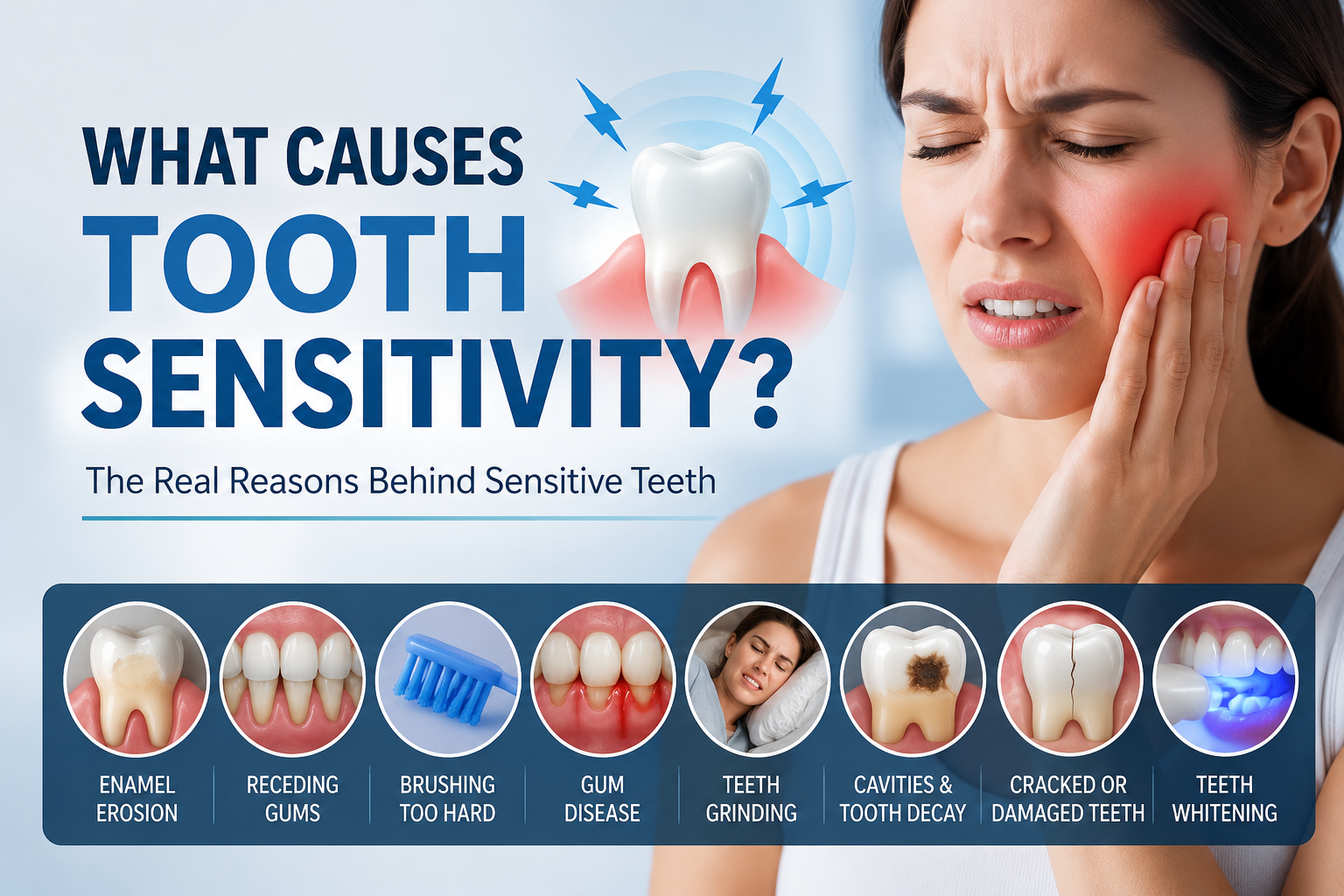
The Oral Microbiome and Tooth Sensitivity
Most people think tooth sensitivity is caused only by worn enamel or exposed tooth roots. While these are certainly major contributors, researchers now recognize that another important factor may influence long-term oral health: the oral microbiome.
The oral microbiome is the complex ecosystem of hundreds of bacterial species that naturally live inside the mouth. These microorganisms cover the teeth, tongue, gums, cheeks, and saliva. In a healthy mouth, beneficial bacteria help maintain balance by limiting excessive growth of harmful microorganisms, participating in normal biofilm formation, and supporting healthy gum tissues.
Problems begin when this microbial balance becomes disrupted—a condition often called oral dysbiosis. When acid-producing bacteria become dominant, they generate acids capable of gradually weakening tooth enamel. As enamel becomes thinner, the underlying dentin becomes increasingly exposed, making teeth much more responsive to cold, heat, sweet foods, and acidic beverages.
An unhealthy oral microbiome may also contribute to plaque accumulation and gum inflammation. Chronic inflammation can increase the likelihood of gum recession, exposing root surfaces that naturally lack the thick enamel protecting the visible portion of the tooth. This creates another pathway for tooth sensitivity to develop.
Although maintaining a balanced oral microbiome alone cannot eliminate tooth sensitivity, combining good oral hygiene, proper nutrition, professional dental care, and healthy daily habits may support stronger teeth and healthier gums over the long term.
Acidic Foods and Drinks: A Silent Cause of Sensitive Teeth
Many everyday foods that seem healthy can still contribute to enamel erosion when consumed frequently. Citrus fruits, lemons, oranges, grapefruits, tomatoes, vinegar-based dressings, sparkling water with added acids, sports drinks, energy drinks, soda, and even wine may gradually soften the enamel surface.
The problem usually isn't consuming these foods occasionally—it is repeated exposure throughout the day. Every acidic meal temporarily lowers the pH inside the mouth. During this period, enamel becomes more vulnerable until saliva restores a healthier balance.
Brushing immediately after eating acidic foods can actually increase enamel wear because the enamel is temporarily softened. Many dental professionals recommend waiting approximately 30 minutes before brushing after highly acidic meals.
Helpful habits include:
- Drink water after acidic beverages.
- Limit continuous sipping throughout the day.
- Use a straw for acidic drinks when appropriate.
- Chew sugar-free gum to stimulate saliva production.
- Maintain regular fluoride exposure according to your dentist's recommendations.
Can Teeth Whitening Cause Sensitivity?
Professional whitening treatments and over-the-counter whitening products are among the most common temporary causes of tooth sensitivity. Whitening ingredients such as hydrogen peroxide and carbamide peroxide penetrate enamel to break down stains deep within the tooth.
During this process, microscopic pathways inside the enamel may temporarily become more permeable, allowing temperature changes to reach the nerve more easily. Many people experience temporary sensitivity during or shortly after whitening treatment.
Fortunately, this discomfort often improves within several days after treatment ends. Individuals who already have enamel erosion, exposed roots, gum recession, or untreated cavities may experience stronger reactions and should discuss whitening options with their dentist before beginning treatment.
Using whitening products more frequently than recommended does not usually produce better results and may increase unnecessary irritation.
Dental Procedures That May Temporarily Increase Sensitivity
Certain dental procedures may produce temporary sensitivity while teeth recover. This does not necessarily indicate a problem and often improves naturally.
Examples include:
- Professional dental cleanings
- Deep periodontal cleanings (scaling and root planing)
- Dental fillings
- Crown placement
- Dental bonding
- Orthodontic adjustments
- Professional whitening procedures
These treatments may temporarily expose sensitive tissues or create mild inflammation while the tooth adapts. However, severe pain, swelling, prolonged sensitivity, or discomfort that continues worsening should always be evaluated by a dental professional.
What Scientific Research Says
Scientific evidence suggests that dentin hypersensitivity affects a substantial portion of adults worldwide. Multiple systematic reviews have identified enamel loss, gingival recession, exposed dentin, and aggressive tooth brushing as some of the leading contributors.
Research also continues exploring the relationship between the oral microbiome and long-term oral health. Studies indicate that maintaining microbial balance may contribute to healthier gums and reduced plaque accumulation, both of which indirectly support the structures that protect sensitive teeth.
Additional evidence highlights the protective role of saliva. Saliva naturally neutralizes acids, supplies minerals involved in enamel remineralization, and helps regulate microbial communities inside the mouth. Conditions that reduce saliva production—including certain medications, aging, and dry mouth disorders—may increase the risk of both cavities and tooth sensitivity.
Current scientific consensus emphasizes prevention. Daily oral hygiene, balanced nutrition, professional dental care, and minimizing unnecessary enamel damage remain the most effective long-term strategies.
Daily Prevention Tips for Sensitive Teeth
Although treatment depends on the underlying cause, many daily habits may help reduce the likelihood of developing tooth sensitivity or prevent existing symptoms from becoming worse.
Healthy Daily Habits
- Brush gently using a soft-bristled toothbrush.
- Use toothpaste formulated for sensitive teeth if recommended by your dental professional.
- Floss daily to reduce plaque accumulation between teeth.
- Limit sugary snacks and acidic beverages.
- Drink plenty of water throughout the day.
- Avoid brushing immediately after acidic meals.
- Wear a night guard if you grind your teeth during sleep.
- Schedule regular dental examinations and cleanings.
- Support healthy gums through consistent oral hygiene.
- Maintain a balanced diet rich in calcium, phosphorus, and vitamin D.
- Consider discussing oral probiotics with your dental professional as research into the oral microbiome continues to evolve.
Remember that sensitivity is often an early warning sign rather than the disease itself. Identifying the cause early may help prevent more significant oral health problems in the future.
Build a Stronger Foundation for Long-Term Oral Health
Discover how healthy daily habits, balanced oral bacteria, proper nutrition, effective hygiene, and science-backed strategies work together to support stronger teeth, healthier gums, fresher breath, and a healthier smile.
👉 Read the Complete Oral Health GuideEvidence-based information • Natural oral wellness strategies • Healthy gums • Oral microbiome education
Continue Your Journey to Better Oral Health
Understanding what causes tooth sensitivity is just one step toward protecting your smile. Explore these carefully selected resources to learn how healthy gums, balanced oral bacteria, and smarter daily habits can support stronger teeth for years to come.
🦷 Oral Microbiome: Protecting Your Teeth Naturally
Learn how a balanced oral microbiome helps defend your enamel, gums, and overall dental health.
Read Article →🪥 How Antibiotics Affect Oral Health
Discover how antibiotics may temporarily change your oral microbiome and influence tooth and gum health.
Learn More →🌿 Common Habits That Damage Your Gum Health
Avoid everyday mistakes that may contribute to gum recession, exposed roots, and increased tooth sensitivity.
Explore Tips →📘 The Ultimate Oral Health Guide 2026
Visit our complete resource covering oral probiotics, healthy gums, fresh breath, cavity prevention, and natural oral care.
Visit the Complete Guide →Frequently Asked Questions About Tooth Sensitivity
1. What is the most common cause of tooth sensitivity?
The most common causes include enamel erosion, gum recession, cavities, cracked teeth, teeth grinding, acidic foods, and aggressive brushing.
2. Why do my teeth hurt when I drink cold water?
Cold sensitivity often happens when dentin becomes exposed due to worn enamel or receding gums. The exposed dentin can transmit temperature changes toward the tooth nerve.
3. Can tooth sensitivity go away naturally?
Mild sensitivity may improve when the cause is controlled, such as reducing acidic foods, brushing gently, improving gum care, or using toothpaste for sensitive teeth. Persistent pain should be checked by a dentist.
4. Can cavities cause sensitive teeth?
Yes. Cavities can expose deeper tooth layers and cause discomfort with cold, sweet foods, pressure, or chewing. Sensitivity in one specific tooth may suggest decay or damage.
5. Does gum recession cause tooth sensitivity?
Yes. When gums recede, the root surface may become exposed. Tooth roots are not protected by thick enamel, so they can become more sensitive.
6. Can whitening products make teeth sensitive?
Yes. Whitening products may temporarily increase sensitivity, especially when overused or used on teeth with enamel wear, gum recession, or untreated dental issues.
7. What foods make tooth sensitivity worse?
Highly acidic foods and drinks, such as soda, citrus fruits, sports drinks, wine, vinegar-based foods, and frequent sugary snacks, may contribute to enamel erosion.
8. Can oral bacteria affect tooth sensitivity?
Oral bacteria can contribute indirectly by producing acids, supporting plaque buildup, and irritating gums. A balanced oral microbiome may support healthier gums and enamel protection.
9. When should I see a dentist for sensitive teeth?
You should see a dentist if sensitivity is severe, lasts a long time, affects one tooth, happens when biting, or comes with swelling, bleeding gums, or visible damage.
10. How can I help prevent tooth sensitivity?
Brush gently, use a soft-bristled toothbrush, floss daily, limit acidic drinks, drink water, avoid brushing right after acidic meals, manage grinding, and schedule regular dental checkups.
Conclusion: Tooth Sensitivity Is a Warning Sign Worth Understanding
Tooth sensitivity can feel like a minor annoyance, but it often reveals something important about your oral health. Enamel erosion, gum recession, tooth decay, cracked teeth, teeth grinding, acidic foods, whitening products, dental procedures, and oral microbiome imbalance may all contribute to sensitive teeth.
The best strategy is to identify the cause early and protect the structures that keep your teeth comfortable: strong enamel, healthy gums, balanced oral bacteria, saliva support, and consistent daily hygiene. When sensitivity becomes persistent, painful, or localized to one tooth, a dental evaluation is the safest next step.
Ready to Build a Healthier Oral Care Routine?
Learn how oral probiotics, healthy gums, enamel support, fresh breath habits, and the oral microbiome work together in the complete pillar guide.
Read the Complete Oral Health GuidePremium Oral Microbiome Support
ProDentim is designed for people interested in supporting oral wellness through oral probiotic ingredients and a microbiome-focused daily routine.
Visit the Official ProDentim PageAffiliate disclosure: this website may earn a commission if you purchase through this link.
Scientific References
RELATED POSTS
View all


ProDentim Ingredients Explained: Benefits & Science
July 14, 2026 | by By EnergyFix40 Editorial Team
How Long Does ProDentim Take to Work? Results Timeline
July 5, 2026 | by By EnergyFix40 Editorial Team
Why Mouthwash May Not Fix Chronic Bad Breath
July 3, 2026 | by By EnergyFix40 Editorial Team