Why Some People Get More Cavities Than Others
June 11, 2026 | by By EnergyFix40 Editorial Team

Why Some People Get More Cavities Than Others
Discover the hidden reasons behind tooth decay — including oral bacteria, saliva, diet, enamel strength, and microbiome balance — and learn how to protect your smile naturally.
Learn why some mouths are more prone to cavities.
Support good bacteria and natural oral defenses.
Make smarter daily choices for stronger teeth.
Evidence-based. Easy to follow. Designed for real-life oral care.

Introduction: Why Cavities Are Not Just About Sugar
Cavities are one of the most common oral health problems in the United States, but not everyone develops them at the same rate. Some people can eat sweets occasionally and rarely experience tooth decay, while others brush daily and still seem to face recurring cavities. This difference often creates confusion, frustration, and even guilt.
The truth is that cavities are not caused by one single factor. They develop when harmful bacteria, frequent acid exposure, weakened enamel, poor saliva flow, diet, oral hygiene habits, and the balance of the oral microbiome all interact over time. In other words, tooth decay is not simply a “sugar problem.” It is a long-term imbalance inside the mouth.
Understanding why some people get more cavities than others can help you make smarter decisions about daily oral care. Instead of only focusing on brushing harder or avoiding every sweet food, it is more useful to understand how your mouth protects itself naturally — and what can weaken that protection.
This article explains the early science behind cavity risk, the role of bacteria, why saliva matters, how diet influences enamel, and why the oral microbiome has become such an important topic in modern oral health discussions.
Table of Contents
What Are Cavities?
Cavities, also called dental caries, are damaged areas on the surface of the teeth that gradually turn into small holes. They usually begin when acids weaken the hard outer layer of the tooth, known as enamel. Over time, if the process continues, the damage can move deeper into the tooth.
This process often starts silently. In the early stages, a cavity may not cause pain. You may only notice a white spot, mild sensitivity, or nothing at all. That is why regular dental checkups are important, because dentists can often identify early signs before the damage becomes more serious.
The main driver behind cavities is acid production. Certain bacteria in the mouth feed on sugars and refined carbohydrates. As they break these substances down, they produce acids that lower the pH inside the mouth. When the mouth stays acidic too often or for too long, enamel begins to lose minerals.
Fortunately, the mouth also has natural defense systems. Saliva helps neutralize acids, wash away food particles, and support the remineralization of enamel. Beneficial oral bacteria may also help maintain a healthier environment by competing with harmful species.
Why Do Some People Get More Cavities Than Others?
Some people are more prone to cavities because their oral environment makes it easier for harmful bacteria and acids to damage enamel. This can happen for several reasons, including dry mouth, frequent snacking, high sugar intake, weakened enamel, poor brushing technique, crowded teeth, certain medications, or an imbalanced oral microbiome.
Frequency is especially important. Eating sugary or starchy foods once in a while is different from sipping sweet drinks or snacking many times throughout the day. Every exposure can create an acid attack. If the mouth does not have enough time to recover, enamel remains under pressure.
Saliva also plays a major role. People with lower saliva flow often have a higher risk of tooth decay because acids are not neutralized as efficiently. Dry mouth may be linked to dehydration, mouth breathing, aging, stress, or medication use.
Another important factor is the composition of oral bacteria. Two people may eat similar foods and brush regularly, but if one person has more acid-producing bacteria and fewer protective species, their risk may be higher. This is where the oral microbiome becomes especially important.
The Role of the Oral Microbiome in Cavity Risk
The oral microbiome is the community of bacteria and other microorganisms that live naturally in the mouth. This ecosystem exists on the tongue, gums, cheeks, saliva, and tooth surfaces. A balanced oral microbiome helps support fresh breath, gum comfort, enamel protection, and a healthier mouth environment.
Problems begin when this ecosystem becomes unbalanced. When acid-producing bacteria grow too strongly, they can dominate the biofilm on the teeth. This makes the mouth more acidic and increases the chance of mineral loss from enamel.
A healthy oral microbiome does not mean a bacteria-free mouth. In fact, the goal is not to kill every microbe. The goal is balance. Overusing harsh products, eating too much sugar, poor hydration, and inconsistent oral care can all disturb that balance.
This is why modern oral health education is beginning to focus more on supporting the mouth’s natural defenses, not only attacking bacteria. Brushing, flossing, professional dental care, hydration, nutrition, and oral microbiome support can all work together.
How Bacteria, Acids, and Enamel Work Together
Tooth enamel is strong, but it is not indestructible. When bacteria produce acids, minerals such as calcium and phosphate can be pulled from the enamel surface. This is called demineralization. When saliva restores minerals back into enamel, the process is called remineralization.
Cavities happen when demineralization occurs more often than remineralization. In simple terms, the tooth loses more minerals than it regains. Over weeks, months, or years, this imbalance can create visible tooth decay.
This explains why cavity prevention is not only about cleaning the teeth. It is also about reducing acid exposure, supporting saliva, choosing tooth-friendly foods, maintaining a balanced oral microbiome, and giving enamel time to recover between meals.
Early Risk Factors That May Increase Tooth Decay
Several early warning signs may suggest a higher risk for cavities. These include frequent tooth sensitivity, dry mouth, plaque buildup, bad breath, bleeding gums, visible white spots on teeth, frequent snacking, or a history of repeated dental fillings.
Lifestyle can also increase risk. Drinking soda, sweet tea, energy drinks, or flavored coffee throughout the day can expose teeth to repeated acids and sugars. Even foods that seem healthy, such as dried fruit or sticky snacks, may cling to teeth and feed bacteria longer than expected.
People with braces, dental appliances, crowded teeth, or deep grooves in their molars may also find it harder to clean every surface properly. In these cases, plaque can remain in hidden areas and increase cavity risk.
The good news is that many cavity risk factors can be improved. A stronger oral care routine, better hydration, smarter food timing, dental checkups, and microbiome-friendly habits can help create a healthier mouth environment over time.
Want a Complete Strategy for Stronger Teeth and Healthier Gums?
Discover how oral probiotics, daily habits, nutrition, saliva support, and microbiome balance can work together in a smarter oral health routine.
Read the Complete Oral Health GuideContinue Learning About Cavities, Oral Bacteria & Tooth Protection
If you want to better understand why some people develop cavities more easily, these related guides explain how oral bacteria, enamel strength, and daily habits work together.
Oral Bacteria & Tooth Decay
Discover how harmful mouth bacteria produce acids that may weaken enamel and increase cavity risk.
Natural Ways to Support Stronger Teeth
Learn daily habits, foods, and oral-care strategies that may help protect enamel naturally.
Oral Microbiome & Natural Tooth Protection
See how a balanced oral microbiome may support healthier teeth, gums, and fresher breath.
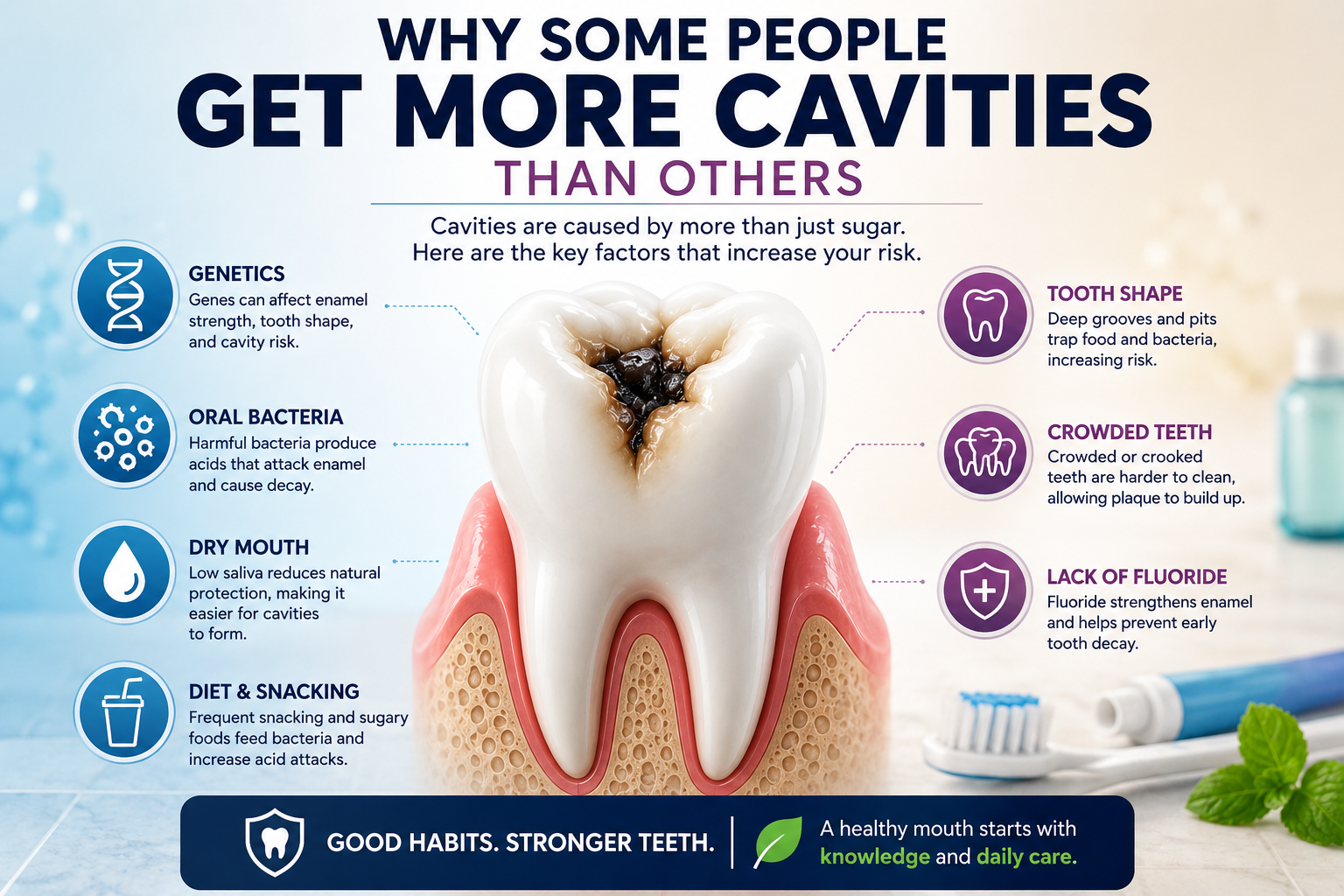
How Bacteria Cause Cavities
Cavities begin when certain oral bacteria feed on sugars and refined carbohydrates left on the teeth. As these bacteria break down those sugars, they produce acids. These acids lower the pH inside the mouth and begin pulling minerals from the enamel, the hard outer layer of the tooth.
This process is called demineralization. In a healthy mouth, saliva helps neutralize acids and replace minerals such as calcium and phosphate. But when acid attacks happen too often, the enamel does not have enough time to recover. Over time, weak spots can develop and eventually become cavities.
Dental Biofilm: Friend or Enemy?
Dental biofilm is a thin layer of bacteria that naturally forms on teeth. It is not automatically harmful. A balanced biofilm can be part of a normal oral ecosystem. The problem begins when harmful, acid-producing bacteria become dominant.
When plaque is not removed properly, the biofilm becomes thicker and more acidic. This creates the perfect environment for enamel damage, gum irritation, bad breath, and higher cavity risk.
Sugar vs. Eating Frequency: What Matters More?
Sugar matters, but frequency matters even more. Eating a sweet snack once is different from sipping soda, sweet tea, juice, or flavored coffee throughout the day. Each exposure gives cavity-causing bacteria another chance to produce acid.
When the mouth is exposed to sugar repeatedly, the enamel stays under acid pressure for longer periods. This makes it harder for saliva to repair mineral loss. That is why frequent snacking can be more damaging than an occasional dessert eaten with a meal.
Saliva and Natural Tooth Protection
Saliva is one of the mouth’s most important natural defenses. It helps wash away food particles, dilute acids, support enamel remineralization, and maintain a healthier oral pH.
People with dry mouth often have a higher risk of cavities because acids stay active for longer. Dry mouth may be caused by dehydration, mouth breathing, aging, stress, or certain medications. Supporting saliva flow is an important part of a cavity-prevention strategy.
Does Genetics Affect Cavity Risk?
Genetics may influence enamel strength, tooth shape, saliva composition, and how the immune system responds to oral bacteria. Some people naturally have deeper grooves in their molars, thinner enamel, or saliva that is less effective at neutralizing acids.
However, genetics does not determine your oral health destiny. Daily habits, diet, hydration, brushing technique, dental visits, and microbiome balance still play a major role in reducing cavity risk.
Cavity Risk Factors Compared
| Factor | How It Increases Cavity Risk | What Helps |
|---|---|---|
| Acid-producing bacteria | Produce acids that weaken enamel. | Balanced oral microbiome and consistent hygiene. |
| Frequent sugar exposure | Creates repeated acid attacks throughout the day. | Limit snacking and drink water after meals. |
| Dry mouth | Reduces acid neutralization and enamel repair. | Hydration and saliva-supporting habits. |
| Weak enamel | Makes teeth more vulnerable to mineral loss. | Mineral-rich diet and dentist-recommended care. |
| Deep grooves or crowded teeth | Make plaque harder to remove. | Careful brushing, flossing, and regular checkups. |
Want to Understand the Bigger Picture of Oral Health?
Learn how oral probiotics, saliva, nutrition, enamel protection, and daily habits work together to support healthier teeth and gums.
Read the Complete Oral Health GuideMajor Risk Factors That Increase the Chances of Developing Cavities
Cavities rarely develop because of a single cause. Most cases result from a combination of biological, environmental, and lifestyle factors that gradually shift the balance of the oral microbiome toward harmful, acid-producing bacteria. Understanding these risk factors is one of the best ways to reduce your chances of tooth decay before permanent damage occurs.
While brushing and flossing remain essential, they represent only one part of cavity prevention. Diet, saliva production, medication use, genetics, oral bacteria, hydration, smoking, and even stress can all influence the health of your teeth.
Common Risk Factors
- Frequent consumption of sugary foods and beverages
- Poor oral hygiene habits
- Low saliva production
- Dry mouth caused by medications
- High levels of acid-producing bacteria
- Smoking and tobacco use
- Frequent snacking between meals
- High intake of acidic drinks
- Medical conditions affecting saliva
- Imbalance of the oral microbiome
How Antibiotics May Affect Your Oral Health
Antibiotics are valuable medications that save millions of lives every year, but they do not distinguish between harmful and beneficial bacteria. Although they target infections, antibiotics may also reduce populations of beneficial microorganisms living naturally inside the mouth.
When this balance is disrupted, harmful bacteria may multiply more easily after treatment. Some people notice changes such as bad breath, oral yeast overgrowth, increased plaque formation, gum irritation, or a greater tendency to develop cavities after repeated antibiotic use.
This does not mean antibiotics should be avoided when medically necessary. Instead, maintaining excellent oral hygiene and supporting the recovery of the oral microbiome afterward may help restore a healthier balance.
Research suggests that microbial diversity inside the mouth contributes to a more stable oral ecosystem. Lower diversity may increase susceptibility to oral diseases over time.
Dry Mouth: One of the Most Overlooked Causes of Tooth Decay
Saliva is one of your body's most powerful natural defense mechanisms. Besides helping digestion, saliva continuously cleans the teeth, neutralizes acids, supplies minerals for enamel repair, lubricates oral tissues, and limits bacterial overgrowth.
When saliva production decreases, cavity risk rises significantly. This condition, known as xerostomia or dry mouth, affects millions of adults and becomes increasingly common with age.
Common Causes of Dry Mouth
- Prescription medications
- Diabetes
- Autoimmune disorders
- Radiation therapy
- Mouth breathing
- Dehydration
- Smoking
- Stress and anxiety
Without enough saliva, acids remain on tooth surfaces longer, allowing harmful bacteria to attack enamel repeatedly throughout the day.
Can Oral Probiotics Help Support a Healthier Mouth?
Traditional oral care focuses mainly on removing bacteria. Modern research, however, increasingly recognizes that maintaining a balanced oral microbiome may be just as important as eliminating harmful microbes.
Oral probiotics are designed to introduce beneficial bacterial strains that may help maintain microbial balance within the mouth. Researchers are investigating whether specific probiotic strains may support:
- Healthier oral bacterial diversity
- Reduced plaque accumulation
- Better breath freshness
- Healthier gum tissues
- Lower levels of acid-producing bacteria
- Overall oral microbiome stability
Although oral probiotics are not intended to replace brushing, flossing, fluoride, or professional dental care, they are becoming an area of growing scientific interest as part of a comprehensive oral health routine.
What Scientific Research Says
During the last decade, numerous clinical studies have investigated the relationship between the oral microbiome and dental diseases. Researchers now understand that cavities are associated with changes in the entire microbial community rather than one single bacterial species.
Studies have shown that maintaining microbial diversity may contribute to a healthier oral environment, while excessive growth of acid-producing bacteria increases the likelihood of enamel demineralization.
Scientists are also studying probiotic strains such as Lactobacillus reuteri, Streptococcus salivarius, Lactobacillus paracasei, and Bifidobacterium lactis for their potential role in supporting oral microbial balance. Although research remains ongoing, results are encouraging and continue to expand our understanding of preventive oral health strategies.
| Risk Factor | Potential Impact | Helpful Habit |
|---|---|---|
| Frequent Sugar Intake | More acid production | Reduce snacking frequency |
| Dry Mouth | Less enamel protection | Hydration and saliva support |
| Antibiotic Use | Reduced microbial diversity | Support oral microbiome recovery |
| Poor Oral Hygiene | Plaque accumulation | Brush, floss and regular dental visits |
Discover the Complete Guide to Stronger Teeth and Healthier Gums
Learn how oral probiotics, microbiome balance, nutrition, saliva, and science-backed daily habits can help support healthier teeth naturally.
Read the Ultimate Oral Health Guide →Explore More Guides About Cavities, Oral Bacteria & Stronger Teeth
Cavities are rarely caused by one single factor. These related articles explain how bacteria, enamel strength, saliva, diet, and daily oral-care habits may influence long-term tooth protection.
Oral Bacteria & Tooth Decay
Learn how harmful bacteria create acids that may weaken enamel and increase cavity risk.
Natural Ways to Support Stronger Teeth
Discover simple nutrition and oral-care habits that may help support stronger enamel.
What Causes Tooth Sensitivity?
Understand why enamel erosion, gum recession, and exposed dentin may trigger sensitivity.
Oral Microbiome & Tooth Protection
See how balanced mouth bacteria may help support teeth, gums, and fresher breath.
Good vs Bad Bacteria in Your Mouth
Compare beneficial and harmful bacteria and how they may affect cavity formation.
How Antibiotics Affect Oral Health
Learn how antibiotics may disturb the oral microbiome and influence mouth health.
Ultimate Oral Health Guide 2026
Visit the main pillar guide about oral probiotics, healthy gums, and fresh breath.
How to Prevent Cavities Naturally
Preventing cavities naturally does not mean ignoring professional dental care. It means building daily habits that support your mouth’s natural defenses: saliva, enamel remineralization, balanced oral bacteria, and a cleaner tooth surface.
The best strategy is not one single habit, but a complete routine. Brushing, flossing, hydration, smart food timing, mineral-rich nutrition, and oral microbiome support can all work together to reduce the conditions that allow cavities to develop.
A Daily Routine to Lower Cavity Risk
A strong daily oral care routine should focus on consistency rather than intensity. Brushing harder does not always mean cleaning better. In fact, aggressive brushing may irritate gums or wear down enamel over time.
- Brush twice daily using gentle circular movements.
- Floss once daily to remove plaque between teeth.
- Drink water after meals to help rinse acids and food particles.
- Avoid constant snacking so enamel has time to recover.
- Clean the tongue to reduce odor-causing buildup.
- Visit your dentist regularly for early detection and prevention.
Protective Foods for Stronger Teeth
Food choices influence the oral microbiome, saliva, and enamel health. Some foods may increase acid production, while others help support minerals and a cleaner mouth environment.
Cheese & Yogurt
Provide calcium and protein that support enamel and oral balance.
Leafy Greens
Rich in minerals and nutrients that support gum and tooth health.
Crunchy Vegetables
Help stimulate saliva and naturally clean tooth surfaces.
Nuts & Seeds
Offer minerals and healthy fats that fit a tooth-friendly diet.
Common Mistakes That Make Cavities More Likely
Many people increase their cavity risk without realizing it. Small daily habits can create repeated acid exposure or allow plaque to remain on the teeth for too long.
- Sipping soda, juice, sweet tea, or flavored coffee throughout the day.
- Brushing too aggressively instead of brushing carefully.
- Skipping flossing because the front teeth look clean.
- Eating sticky snacks that cling to tooth surfaces.
- Ignoring dry mouth symptoms.
- Using harsh products while neglecting microbiome balance.
Build a Smarter Oral Health Routine
Learn how daily habits, oral probiotics, nutrition, saliva support, and microbiome balance can work together for healthier teeth and gums.
Read the Complete Oral Health Guide →Continue Your Oral Health Journey
Understanding why some people develop more cavities is only one piece of the puzzle. Explore these evidence-based resources to learn how your oral microbiome, daily habits, and preventive care may help support healthier teeth and gums for years to come.
What Causes Tooth Sensitivity?
Discover the common causes of sensitive teeth and practical ways to help protect your enamel.
Good vs. Bad Bacteria in Your Mouth
Learn how balancing your oral microbiome may contribute to healthier teeth and gums.
How Oral Probiotics Support Healthy Gums
Explore the science behind beneficial bacteria and their role in supporting oral health.
📘 Read the Complete Oral Health Guide
Access our comprehensive pillar guide covering oral probiotics, healthy gums, cavity prevention, fresh breath, and long-term dental wellness.
Frequently Asked Questions
1. Why do some people get more cavities than others?
Because cavity risk depends on bacteria, saliva, diet, enamel strength, genetics, oral hygiene, dry mouth, and how often teeth are exposed to sugar or acids.
2. Are cavities only caused by sugar?
No. Sugar feeds acid-producing bacteria, but frequent snacking, dry mouth, plaque buildup, weak enamel, and an unbalanced oral microbiome also increase risk.
3. Can good oral hygiene still fail to prevent cavities?
Yes. Brushing helps, but people with dry mouth, deep tooth grooves, frequent acid exposure, or high levels of cariogenic bacteria may still be more vulnerable.
4. What is the oral microbiome?
The oral microbiome is the community of bacteria and microorganisms living in the mouth. A balanced microbiome helps support fresher breath, healthier gums, and better oral protection.
5. Can dry mouth cause more cavities?
Yes. Saliva helps neutralize acids, wash away food particles, and support enamel repair. Low saliva flow can increase tooth decay risk.
6. Do antibiotics affect cavity risk?
Antibiotics can temporarily disturb bacterial balance in the mouth. They should be used when prescribed, but oral hygiene and microbiome support may help after treatment.
7. Can oral probiotics help with cavities?
Oral probiotics are being studied for their potential to support a healthier oral microbiome. They should not replace brushing, flossing, fluoride, or dental care.
8. What foods help protect teeth?
Cheese, yogurt, leafy greens, crunchy vegetables, nuts, seeds, and water may support saliva, minerals, and a healthier oral environment.
9. How often should I visit a dentist?
Most people benefit from regular dental checkups, but the ideal schedule depends on personal risk, dental history, and professional advice.
10. Can cavities be prevented naturally?
Many risk factors can be reduced with daily brushing, flossing, hydration, fewer sugar exposures, dental visits, and better oral microbiome balance.
Conclusion
Some people get more cavities than others because their mouth creates a higher-risk environment for enamel damage. Acid-producing bacteria, frequent sugar exposure, dry mouth, genetics, weak enamel, medication use, and an imbalanced oral microbiome can all play a role.
The good news is that cavity risk can often be reduced with smarter daily habits. Brushing, flossing, hydration, tooth-friendly foods, regular dental visits, and support for a balanced oral microbiome can help protect teeth naturally.
Ready to Build a Smarter Oral Health Routine?
Learn how oral probiotics, nutrition, saliva support, and daily habits work together for healthier teeth and gums.
Read the Complete Oral Health Guide →Support Your Oral Microbiome Naturally
Discover ProDentim, a popular oral probiotic formula designed to support oral microbiome balance as part of a complete daily routine.
Visit the Official ProDentim Page →Affiliate disclosure: This website may earn a commission if you purchase through this link.
Scientific References
- CDC — Oral Health Prevention and Cavity Prevention
- CDC — Fluoride and Tooth Decay Prevention
- CDC Recommendations for Using Fluoride to Prevent and Control Dental Caries
- Probiotics and Oral Health: A Systematic Review
- Unlocking the Potential of Probiotic Administration in Caries Prevention
- The Role of Probiotics in Preventing Dental Caries
RELATED POSTS
View all


What Is the Oral Microbiome and Why It Matters?
June 15, 2026 | by By EnergyFix40 Editorial Team
ProDentim vs Traditional Probiotics
June 21, 2026 | by By EnergyFix40 Editorial Team
ProDentim Ingredients Explained: Benefits & Science
July 14, 2026 | by By EnergyFix40 Editorial Team