Signs Your Bad Breath Starts in the Gut or Mouth
June 4, 2026 | by By EnergyFix40 Editorial Team

Signs Your Bad Breath Starts in the Gut or Mouth
Persistent bad breath can feel frustrating, especially when brushing, mouthwash, or mints only give temporary relief. In many cases, the real issue begins with oral bacteria, tongue biofilm, gum irritation, dry mouth, or digestive triggers.
This guide explains how to recognize whether your breath problem may be starting in the mouth, the gut, or a combination of both — and why supporting a healthier oral microbiome may be one of the smartest first steps.
- ✔ Learn why bad breath keeps returning
- ✔ Understand mouth vs gut-related signs
- ✔ Discover the role of oral bacteria
- ✔ Support fresher breath naturally
Why This Matters
Bad breath is not always just a “surface problem.” It may be a signal that bacteria, saliva flow, gum health, diet, or digestive comfort need more attention.
- Mouth-related signs: tongue coating, dry mouth, gum tenderness, plaque buildup.
- Gut-related signs: reflux, bloating, sour taste, discomfort after meals.
- Smart approach: start with oral hygiene, microbiome support, hydration, and professional dental care when needed.
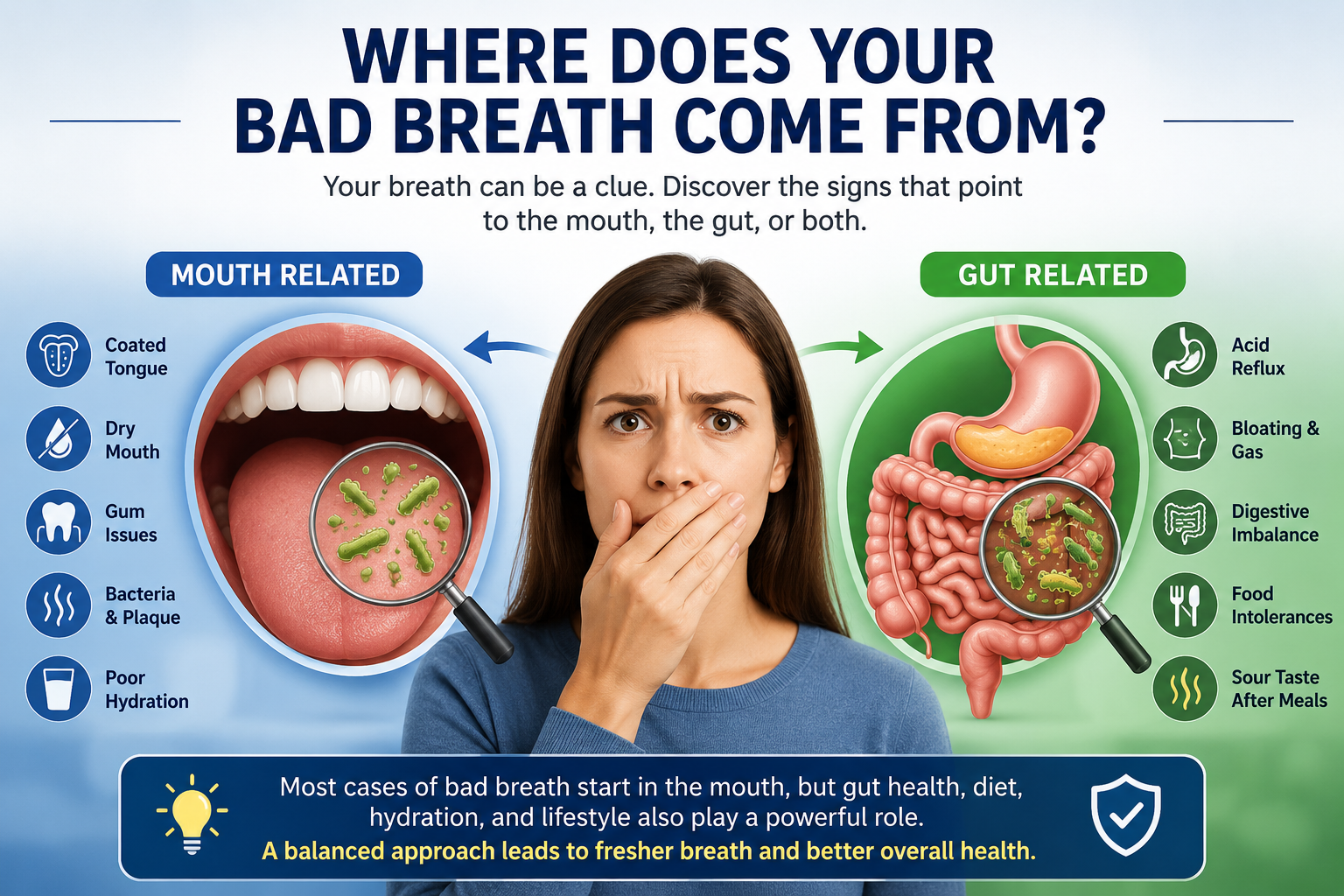
Bad breath can be embarrassing, but it is also one of the most common signs that something inside your daily oral routine may need more attention. While many people immediately blame food, coffee, or missed brushing, persistent breath odor often has deeper causes. In many cases, the source begins in the mouth, where bacteria collect on the tongue, around the gums, between teeth, and within sticky dental biofilm.
However, some people also notice that their breath changes after meals, during periods of digestive discomfort, or when they experience acid reflux, bloating, or a sour taste. This is why the question becomes important: does your bad breath start in the gut, the mouth, or both?
The answer matters because temporary solutions such as mints, sprays, or strong mouthwash may only cover the smell for a short time. To support fresher breath long term, it is better to understand what is feeding the odor in the first place. A healthier oral environment, balanced bacteria, proper hydration, and regular dental care may make a major difference.
Article Navigation
What Causes Bad Breath?
Bad breath, also called halitosis, usually develops when odor-producing compounds build up in the mouth. These compounds are often created when bacteria break down food particles, proteins, dead cells, and debris. The back of the tongue is one of the most common places where this happens because it has a rough surface that can trap bacteria and residue.
Gum health also plays a major role. When plaque builds up near the gumline, bacteria may irritate the gums and create unpleasant odors. If the gums bleed, feel tender, or appear swollen, the breath issue may be connected to gum inflammation or early periodontal problems. This is one reason bad breath should not be ignored when it becomes frequent.
Dry mouth is another common trigger. Saliva helps wash away food particles and bacteria. When saliva flow is low, odor-causing bacteria can multiply more easily. This can happen overnight, after drinking alcohol, when taking certain medications, after dehydration, or when breathing through the mouth.
Signs Your Bad Breath Starts in the Mouth
Most cases of persistent bad breath are connected to oral causes. If your breath smells worse in the morning, improves after brushing and tongue cleaning, or returns when your mouth feels dry, the mouth is likely playing a major role.
One of the clearest signs is a coated tongue. A white, yellowish, or thick coating on the tongue may indicate that bacteria and debris are collecting on the surface. This coating can produce strong odors, especially near the back of the tongue.
Another sign is gum sensitivity. If your gums bleed when brushing or flossing, feel puffy, or look red near the gumline, bacteria may be accumulating in areas that are difficult to clean. Bad breath linked to gum problems often does not disappear completely with mouthwash because the deeper issue is bacterial buildup and inflammation.
You may also notice a sticky feeling on your teeth, a dry mouth, plaque buildup, or a bad taste that returns quickly after cleaning. These are strong clues that the oral microbiome may be out of balance.
Signs Your Bad Breath May Be Linked to the Gut
Although the mouth is the most common source of bad breath, digestive factors can sometimes contribute. Gut-related breath issues may be more likely when odor appears alongside acid reflux, frequent burping, bloating, nausea, or a sour taste after meals.
Acid reflux can bring stomach contents or acidic vapors upward, creating a sour or unpleasant smell. Some people notice this more after spicy foods, large meals, carbonated drinks, alcohol, or lying down soon after eating.
Food intolerance or digestive discomfort may also influence breath indirectly. If certain foods consistently cause bloating or reflux symptoms, they may also affect how your breath smells afterward. However, it is important not to assume that every breath problem comes from the stomach. In many cases, the gut may be a contributing factor while the mouth remains the main source.
The Role of the Oral Microbiome
Your mouth contains billions of microorganisms. Some are helpful, while others can contribute to plaque, gum irritation, cavities, and bad breath when they become too dominant. This ecosystem is known as the oral microbiome.
A balanced oral microbiome supports a cleaner mouth environment. But when harmful bacteria take over, they may create more odor-producing compounds, especially in areas with low oxygen, such as deep tongue grooves, gum pockets, and plaque-covered surfaces.
This is why many people are now interested in oral probiotics and microbiome-friendly habits. Instead of only trying to kill bacteria with harsh products, the goal is to support a healthier balance inside the mouth.
Want to Understand the Bigger Picture?
Learn how oral bacteria, gum health, fresh breath, and oral probiotics connect inside our complete oral health guide.
Read the Complete Oral Health GuideContinue Learning About Fresh Breath & Oral Bacteria
Bad breath is often connected to bacteria, tongue coating, gum health, and the oral microbiome. These related guides can help you understand the next steps.
Understand why odor can return even after using strong mouthwash.
How Many Bacteria Live in Your Mouth?Learn how oral bacteria affect breath, gums, teeth, and daily oral balance.
The Hidden Cause of Bad Breath Most People IgnoreDiscover overlooked reasons breath problems may keep coming back.
Mouth vs Gut: How to Tell the Difference
One of the biggest mistakes people make with bad breath is assuming there is only one cause. In reality, breath odor can come from several overlapping factors. The mouth is usually the first place to investigate because bacteria on the tongue, teeth, and gums are among the most common sources of persistent odor.
Gut-related causes are less common, but they can still matter for some people. Digestive discomfort, acid reflux, sour burps, bloating, or a bad taste after meals may suggest that the digestive system is contributing to the problem. Still, even when gut symptoms are present, the mouth can amplify the odor if there is tongue coating, dry mouth, plaque buildup, or gum irritation.
Why Mouth-Related Bad Breath Is So Common
Your mouth is warm, moist, and full of tiny surfaces where bacteria can collect. Food particles may become trapped between teeth, around dental work, in gumline areas, or on the back of the tongue. When bacteria break down these materials, they can release unpleasant-smelling compounds.
The tongue is especially important. Its surface contains grooves and small bumps that can hold bacteria and debris. This is why someone may brush their teeth carefully but still experience bad breath if they do not clean the tongue. A coated tongue is often one of the strongest visible signs that breath odor is beginning in the mouth.
Gum health is another major clue. When plaque stays near the gumline, bacteria may irritate the gums and produce odor. If bad breath appears together with bleeding gums, swelling, tenderness, or loose-feeling teeth, the issue should be taken seriously and evaluated by a dental professional.
Common Signs the Mouth Is the Main Source
Breath that is worse in the morning is often connected to low saliva flow during sleep. Saliva naturally helps clean the mouth, so when saliva decreases overnight, bacteria become more active. Morning breath is common, but if the odor remains strong throughout the day, it may suggest a deeper oral hygiene or microbiome imbalance.
Another sign is breath that improves after brushing, flossing, tongue scraping, or drinking water but returns quickly. This pattern often points to bacteria that are still present in deeper tongue coating, plaque, or gumline areas.
A metallic, bitter, or unpleasant taste can also be connected to oral bacteria. Some people notice this taste when they wake up, after long periods without water, or when they have gum irritation. Dry mouth can make the taste and odor worse because there is not enough saliva to dilute and wash away bacteria.
| Possible Source | Common Signs | What It May Suggest |
|---|---|---|
| Mouth | Coated tongue, dry mouth, plaque, gum bleeding, morning breath | Oral bacteria, tongue biofilm, gum irritation, low saliva |
| Gut | Acid reflux, sour burps, bloating, bad taste after meals | Digestive irritation, reflux, food triggers, stomach discomfort |
| Both | Odor after meals plus dry mouth, coated tongue, or gum problems | Digestive triggers may combine with oral bacteria |
When Gut Symptoms May Be Involved
Digestive-related bad breath may appear when stomach acid or digestive gases move upward. This can happen with reflux, especially after large meals, spicy foods, fried foods, carbonated drinks, alcohol, or lying down soon after eating. Some people describe the odor as sour, acidic, bitter, or “stomach-like.”
Gut involvement may also be suspected when bad breath appears with frequent bloating, burping, nausea, or discomfort after specific foods. In this situation, tracking meals and symptoms can be helpful. If the pattern repeats, a healthcare professional can help determine whether reflux, food intolerance, or another digestive issue is involved.
Still, it is important to avoid self-diagnosis. A person may have reflux and still have mouth-related bad breath at the same time. That is why oral care remains the foundation. Cleaning the tongue, flossing daily, drinking enough water, and visiting a dentist can help rule out the most common causes before assuming the problem begins in the stomach.
The Oral Microbiome Connection
The oral microbiome is the community of bacteria and other microorganisms living in the mouth. A healthy balance helps protect the teeth and gums. But when harmful bacteria dominate, they can contribute to plaque, gum irritation, cavities, and unpleasant breath.
Many traditional products focus only on killing bacteria. While this may help temporarily, the mouth naturally needs a balanced ecosystem. This is why oral probiotics and microbiome-friendly habits have become popular topics in oral health research and wellness education.
Supporting the oral microbiome does not replace brushing, flossing, tongue cleaning, or dental visits. Instead, it may work as part of a broader routine focused on balance, hydration, cleaner habits, and better daily consistency.
Want a Complete Strategy for Fresher Breath?
Explore how oral bacteria, gum health, dry mouth, and oral probiotics connect inside the full oral health guide.
Read the Complete Oral Health Guide
What Scientific Research Says About Bad Breath
Halitosis has been studied for decades by dentists, microbiologists, and medical researchers. One of the most consistent findings is that the overwhelming majority of chronic bad breath cases originate inside the mouth rather than the digestive tract.
According to numerous clinical studies, approximately 80–90% of persistent bad breath cases have an oral origin. The most common contributors include tongue coating, periodontal disease, inadequate plaque removal, reduced saliva flow, and an imbalance in the oral microbiome. These conditions allow odor-producing bacteria to multiply and release compounds known as volatile sulfur compounds (VSCs), which are responsible for the characteristic unpleasant smell.
Researchers have identified several bacterial species capable of producing these sulfur compounds. While these microorganisms naturally exist in the mouth, problems usually begin when they become dominant and the healthy microbial balance is disrupted.
This explains why professional dental cleaning, improved oral hygiene, tongue cleaning, hydration, and addressing gum disease often produce significant improvements in breath quality.
Can Oral Probiotics Help Support Fresher Breath?
Interest in oral probiotics has grown considerably over the last decade. Unlike traditional products that attempt to eliminate bacteria indiscriminately, oral probiotics are designed to support a healthier microbial balance inside the mouth.
Scientists are currently investigating whether certain beneficial bacterial strains may help compete with odor-producing microorganisms, support gum health, and contribute to a healthier oral environment. Although research is still developing, several clinical studies have reported encouraging findings in specific populations.
It is important to understand that oral probiotics should not be viewed as a replacement for brushing, flossing, professional dental care, or treatment of underlying medical conditions. Instead, they may serve as one component of a comprehensive oral health routine.
Healthy Daily Habits Still Matter Most
- Brush twice daily using fluoride toothpaste.
- Clean between the teeth every day.
- Clean the tongue regularly.
- Drink enough water throughout the day.
- Schedule regular dental examinations.
- Address persistent gum bleeding promptly.
- Limit tobacco use whenever possible.
- Maintain a balanced diet rich in vegetables and fiber.
Lifestyle Factors That May Influence Breath
Many everyday habits influence breath quality without people realizing it. Poor hydration is one of the most common examples. Since saliva naturally cleans the mouth, dehydration allows bacteria to remain active for longer periods.
Diet can also influence breath. Garlic, onions, alcohol, coffee, sugary foods, and highly processed snacks may temporarily affect breath. More importantly, diets high in sugar may encourage plaque accumulation by providing fuel for certain bacteria.
Smoking and tobacco products represent another major contributor. Besides leaving their own odor, they reduce saliva production, stain the teeth, increase plaque accumulation, and significantly increase the risk of periodontal disease.
Stress may also play an indirect role. Many individuals experience dry mouth during stressful periods because saliva production decreases. Less saliva means less natural cleansing of bacteria and food debris.
Who May Benefit Most From Improving Their Oral Microbiome?
Although everyone benefits from maintaining good oral hygiene, certain individuals may be especially interested in supporting a healthier oral microbiome.
- People with recurring bad breath.
- Individuals experiencing dry mouth.
- Adults with frequent plaque buildup.
- People with recurring gum irritation.
- Adults over age 50.
- Individuals recovering after antibiotic use.
- People wearing orthodontic appliances or dentures.
- Those looking to improve long-term oral wellness.
Improving the oral microbiome involves much more than adding one product. Consistent daily habits, regular professional cleanings, balanced nutrition, hydration, and proper oral hygiene remain the foundation of healthier breath.
A Practical Prevention Checklist
| Habit | Frequency | Potential Benefit |
|---|---|---|
| Brush teeth thoroughly | Twice daily | Helps remove plaque and food debris |
| Floss or clean between teeth | Daily | Reduces bacteria between teeth |
| Clean the tongue | Daily | Removes tongue coating associated with odor |
| Drink water regularly | Throughout the day | Supports saliva production |
| Professional dental cleaning | As recommended | Removes hardened plaque and supports gum health |
Final Thoughts Before Moving Forward
Persistent bad breath is rarely something that should simply be ignored or masked with mints. In most situations, it is a signal that the oral environment deserves closer attention. Tongue biofilm, plaque accumulation, dry mouth, gum inflammation, and microbial imbalance remain the leading contributors identified by current scientific evidence.
For individuals who also experience digestive symptoms, it may be worthwhile to discuss those concerns with a healthcare professional. Since multiple factors can occur together, understanding both oral and digestive health provides the most complete picture.
By combining excellent oral hygiene, proper hydration, healthy nutrition, regular dental care, and habits that support a balanced oral microbiome, many people can significantly improve long-term breath freshness and overall oral wellness.
Ready to Build a Healthier Oral Microbiome?
Explore our comprehensive pillar guide to discover the latest research on oral bacteria, gum health, probiotics, plaque control, and long-term fresh breath strategies.
📘 Read the Complete Oral Health GuideExplore More Guides About Bad Breath, Oral Bacteria & Fresh Breath
Continue learning how the oral microbiome, tongue bacteria, gum health, dry mouth, and daily habits may influence long-term breath freshness.
Learn why odor can return even after strong rinses.
The Hidden Cause of Bad Breath Most People IgnoreDiscover overlooked bacterial and lifestyle triggers.
How Many Bacteria Live in Your Mouth?Understand how oral bacteria affect breath and gums.
Good vs Bad Bacteria in Your MouthSee how bacterial balance may support oral wellness.
The Science Behind Oral ProbioticsExplore why researchers study probiotics for the mouth.
What Is the Oral Microbiome?Learn how your mouth’s ecosystem supports oral health.
Daily Habits That Improve Oral HealthBuild a simple routine for fresher breath and cleaner gums.
Foods That Support Healthy Teeth and GumsSee how nutrition may influence teeth, gums, and breath.
Frequently Asked Questions
1. Can bad breath really come from the gut?
Yes, but it is less common than mouth-related bad breath. Digestive issues such as acid reflux, sour burps, or frequent bloating may contribute to breath changes in some people.
2. What is the most common source of bad breath?
The mouth is usually the main source. Tongue coating, plaque buildup, gum irritation, dry mouth, and odor-producing bacteria are among the most common causes.
3. How do I know if my bad breath starts in the mouth?
Common signs include morning breath, coated tongue, dry mouth, bleeding gums, plaque buildup, and odor that improves after brushing but returns quickly.
4. How do I know if my bad breath may be gut-related?
Gut-related breath may appear with reflux, sour taste, frequent burping, bloating, nausea, or symptoms that worsen after certain meals.
5. Can tongue coating cause bad breath?
Yes. The back of the tongue can trap bacteria, food particles, and dead cells. This buildup can produce unpleasant-smelling compounds.
6. Does mouthwash solve chronic bad breath?
Mouthwash may temporarily reduce odor, but it may not fix the root cause if the issue is tongue biofilm, gum disease, dry mouth, or bacterial imbalance.
7. Can oral probiotics help with bad breath?
Oral probiotics may help support a healthier balance of bacteria in the mouth. They should be used as part of a complete routine, not as a replacement for dental care.
8. When should I see a dentist?
You should see a dentist if bad breath is persistent, especially if you also notice bleeding gums, tooth pain, loose teeth, swelling, or heavy plaque buildup.
9. When should I talk to a doctor?
Consider medical advice if bad breath comes with reflux, stomach pain, frequent nausea, unexplained digestive symptoms, or symptoms that do not improve after oral care.
10. What is the best first step?
Start by improving oral hygiene: brush, floss, clean your tongue, hydrate well, and schedule a dental checkup. This helps address the most common causes first.
Conclusion: Start With the Mouth, But Do Not Ignore the Gut
Bad breath can feel confusing because it may be influenced by more than one part of the body. However, the mouth is usually the first and most important place to investigate. Tongue coating, plaque, gum irritation, dry mouth, and oral bacteria are among the leading reasons breath odor keeps returning.
Digestive factors may also play a role for some people, especially when bad breath appears with reflux, sour taste, bloating, or discomfort after meals. In these cases, it may be helpful to look at both oral health and digestive patterns instead of relying only on mints or mouthwash.
A smarter approach begins with consistency: clean your tongue, brush and floss daily, drink enough water, support saliva flow, reduce sugar-heavy habits, and visit your dentist regularly. If digestive symptoms are frequent, a healthcare professional can help identify possible causes.
Long-term fresh breath is not only about covering odor. It is about creating a healthier environment where your teeth, gums, saliva, and oral microbiome can work together more effectively.
Take the Next Step Toward Fresher Breath
Learn how oral bacteria, gum health, tongue biofilm, dry mouth, and oral probiotics connect in our complete oral health guide.
Read the Complete Oral Health GuideContinue Your Journey to Fresher Breath
The more you understand your oral microbiome, the easier it becomes to identify the real causes of bad breath, support healthier gums, and enjoy long-lasting fresh breath naturally.
Why Mouthwash May Not Fix Chronic Bad Breath
Discover why simply masking odors often fails and learn what may actually be causing persistent bad breath.
Read This Guide →The Hidden Cause of Bad Breath Most People Ignore
Learn how tongue biofilm, harmful bacteria, and poor microbial balance can quietly affect your breath every day.
Discover More →The Science Behind Oral Probiotics
Explore the latest scientific research into beneficial bacteria and how they may support long-term oral health.
Explore Research →The Ultimate Oral Health Guide 2026
Don't stop here. Explore our complete pillar guide featuring everything you need to know about oral bacteria, probiotics, healthy gums, cavities, tongue biofilm, dry mouth, plaque, and long-lasting fresh breath.
Read the Complete Guide💡 Knowledge Builds Better Oral Health
Every article you read gives you a clearer understanding of how oral bacteria, healthy gums, saliva, nutrition, and the oral microbiome work together. Explore the guides above and build a healthier daily routine for cleaner teeth, stronger gums, and naturally fresher breath.
Premium Oral Health Support
Support Fresher Breath & a Healthier Oral Microbiome
ProDentim is designed for people who want to support oral bacterial balance, gum wellness, and daily fresh breath as part of a consistent oral care routine.
Visit the Official ProDentim WebsiteDisclosure: This page may contain affiliate links. Results may vary. This product is not intended to diagnose, treat, cure, or prevent any disease.
Scientific References
The information presented in this article is based on peer-reviewed scientific research, evidence-based clinical guidance, and reputable medical organizations specializing in oral health, dentistry, microbiology, and halitosis research.
1. National Library of Medicine (PubMed Central)
Oral Microbiome as a Co-Mediator of Halitosis and Periodontitis
Lee YH, et al. (2023). This review discusses how changes in the oral microbiome are associated with both halitosis and periodontal disease.
2. PubMed Central
Causes and Management of Halitosis: A Narrative Review
Comprehensive review summarizing the causes, diagnosis, and management of halitosis. It notes that more than 85% of persistent cases originate from intraoral conditions such as tongue coating and poor oral hygiene.
3. Mayo Clinic
Bad Breath (Halitosis): Symptoms, Causes, Diagnosis & Treatment
Clinical guidance covering common causes of bad breath, prevention, and recommended treatments, emphasizing that plaque, tongue bacteria, and gum disease are frequent contributors.
4. Journal of Clinical Medicine
The Role of Oral Microbiota in Intra-Oral Halitosis
Peer-reviewed review describing the oral bacteria most strongly associated with intra-oral halitosis and the production of volatile sulfur compounds (VSCs).
5. Medscape Clinical Reference
Halitosis: Practice Essentials
Clinical overview explaining that approximately 80–90% of halitosis cases arise from intraoral microbial biofilms on the tongue, teeth, and periodontal tissues.
Evidence-Based Editorial Policy
Every health article published on EnergyFix40.com is developed using current scientific literature, peer-reviewed publications, and guidance from recognized medical organizations. Our educational content is regularly reviewed and updated to reflect evolving research in oral health, the oral microbiome, gum health, and preventive dentistry.
RELATED POSTS
View all


ProDentim Reviews: Customer Experiences Explained | Benefits, Results & Honest Insights
July 2, 2026 | by By EnergyFix40 Editorial Team
Why Thousands Of Americans Over 40 Are Switching To Oral Probiotics (2026 Scientific Review)
July 13, 2026 | by By EnergyFix40 Editorial Team
Why Dental Problems Increase With Age
June 18, 2026 | by By EnergyFix40 Editorial Team