Can Oral Bacteria Cause Gum Inflammation?
June 10, 2026 | by By EnergyFix40 Editorial Team

Can Oral Bacteria Cause Gum Inflammation?
Discover how harmful oral bacteria may contribute to swollen, bleeding gums, why your oral microbiome matters more than you think, and the science-backed strategies that can help support healthier gums naturally.
Why This Guide Is Worth Reading
🦠 Understand Oral Bacteria
Learn the difference between beneficial and harmful bacteria and how changes in your oral microbiome may influence gum health.
🩸 Discover Why Gums Become Inflamed
Explore the biological mechanisms behind plaque formation, bacterial toxins, immune responses, and chronic inflammation.
🔬 Review Scientific Evidence
Read summaries of research explaining the relationship between oral bacteria, periodontal disease, and systemic health.
🌿 Learn Natural Prevention Strategies
Discover daily habits that may help support a healthier oral microbiome and reduce the risk of gum irritation.
Can Tiny Bacteria Really Trigger Gum Inflammation?
Many people assume bleeding or swollen gums are simply the result of brushing too hard or skipping flossing for a few days. While oral hygiene certainly plays an important role, researchers now understand that the story is much more complex.
Your mouth contains hundreds of bacterial species that constantly interact with each other and with your immune system. When these microorganisms remain balanced, they contribute to a healthy oral environment. However, when harmful bacteria begin to dominate, they may produce toxins, trigger inflammation, and encourage the formation of bacterial biofilms that are difficult to remove.
Scientists increasingly describe gum disease as an imbalance of the oral microbiome rather than simply an infection caused by a single bacterium. This shift in understanding has transformed modern dental research and has led to growing interest in approaches that support beneficial bacteria alongside traditional oral hygiene.
Want to Learn How to Support Healthier Gums Naturally?
Our comprehensive pillar guide explains the oral microbiome, oral probiotics, daily habits, nutrition, and the latest scientific discoveries for long-term oral wellness.
👉 Explore the Complete Guide
Learn More About Oral Health
Understanding how oral bacteria affect your gums is only one part of maintaining a healthy smile. Explore these related guides to learn how your oral microbiome, daily habits, and natural approaches may support healthier gums and fresher breath.
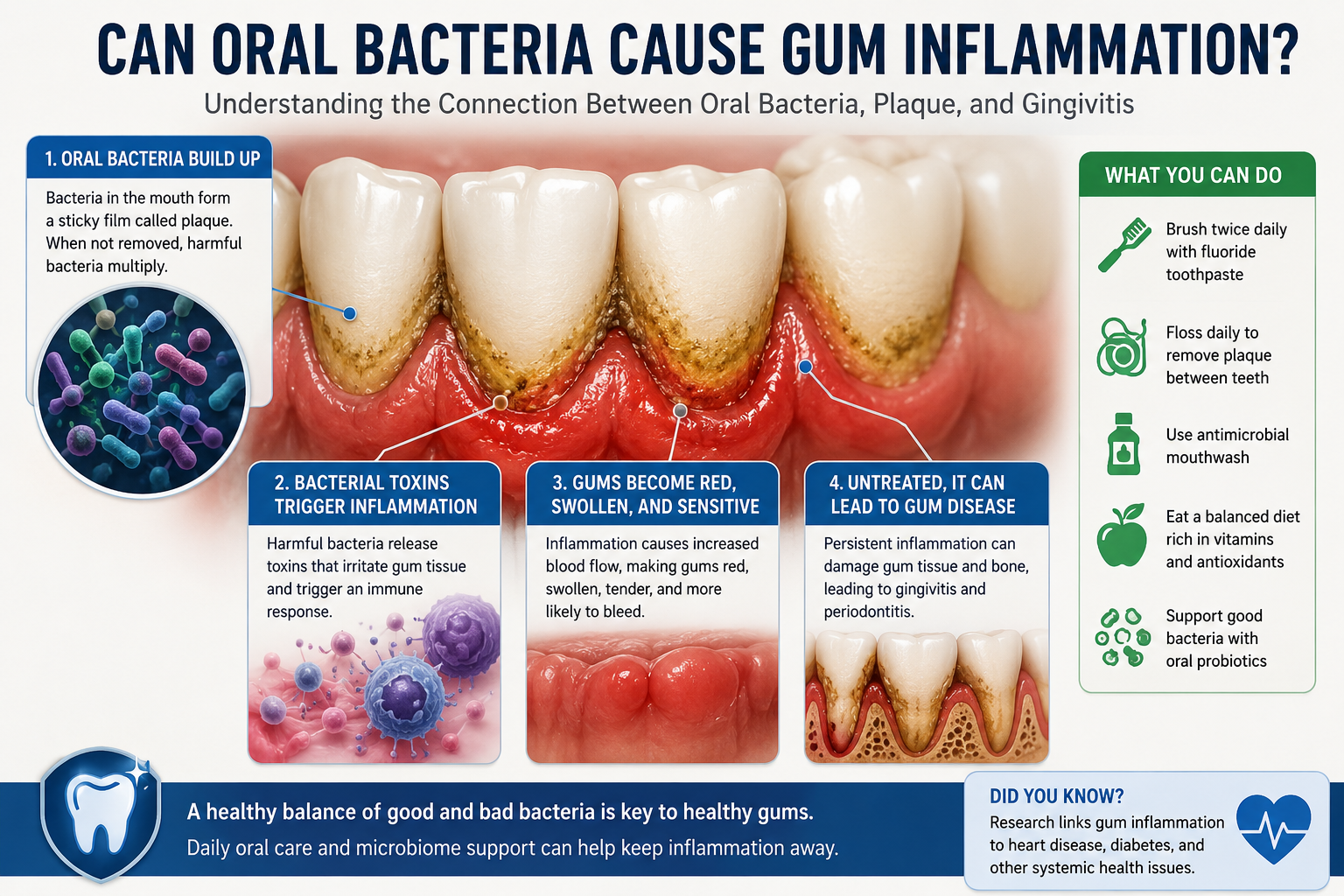
Gum inflammation is one of the most common signs that something may be out of balance inside the mouth. Many people first notice it when their gums look red, feel tender, bleed during brushing, or appear slightly swollen around the teeth. While these symptoms may seem minor at first, they often point to a deeper biological process involving oral bacteria, dental plaque, and the body’s immune response.
The mouth is home to a complex ecosystem known as the oral microbiome. This ecosystem includes bacteria, fungi, enzymes, saliva proteins, and other microorganisms that live on the tongue, gums, teeth, and soft tissues. When this community remains balanced, it helps support normal oral function. But when harmful bacteria begin to multiply and dominate, they can contribute to plaque buildup and gum irritation.
So, can oral bacteria cause gum inflammation? The short answer is yes. However, the process is not as simple as one bad bacterium attacking the gums. Gum inflammation usually develops when bacterial communities become imbalanced, plaque is not removed effectively, and the immune system reacts to bacterial byproducts near the gumline.
In This Article, You Will Learn:
- What oral bacteria are and why they matter for gum health
- How plaque forms around the gumline
- Why bacterial imbalance may trigger inflammation
- The difference between healthy gums, gingivitis, and periodontitis
- Daily habits that may help support a healthier oral microbiome
What Are Oral Bacteria?
Oral bacteria are microscopic organisms that naturally live inside the mouth. They are found on the teeth, gums, tongue, cheeks, and even in saliva. Some bacteria are considered beneficial because they help maintain microbial balance and compete with harmful organisms. Others may become problematic when they multiply too quickly or organize into sticky communities known as biofilms.
These bacterial communities are not always harmful. In fact, a completely sterile mouth would not be realistic or healthy. The goal is not to eliminate all bacteria, but to maintain a balanced oral environment where harmful species do not overwhelm beneficial ones.
Understanding the Oral Microbiome
The oral microbiome is the full community of microorganisms living in the mouth. It is influenced by brushing habits, flossing, diet, saliva flow, hydration, smoking, medications, age, stress, and dental care routines. A healthy oral microbiome is usually diverse and stable. This means beneficial bacteria can help limit the growth of more aggressive bacteria.
When this balance changes, the mouth may enter a state known as dysbiosis. Dysbiosis happens when harmful bacteria become more dominant. This can make plaque more inflammatory, increase bad breath, irritate the gums, and make the oral environment more vulnerable to problems over time.
Important Note
Gum inflammation should not be ignored. If bleeding, swelling, pain, gum recession, or loose teeth are present, a dental professional should evaluate the condition. Educational content can support awareness, but it does not replace diagnosis or treatment.
How Oral Bacteria May Cause Gum Inflammation
Gum inflammation often begins when plaque accumulates near the gumline. Plaque is a sticky biofilm made of bacteria, saliva components, and food particles. When plaque remains on the teeth for too long, harmful bacteria may release substances that irritate gum tissue.
The immune system responds to this irritation by sending inflammatory cells to the affected area. This response is meant to protect the body, but it can also cause visible symptoms such as redness, tenderness, swelling, and bleeding. In the early stage, this condition is commonly known as gingivitis.
If the bacterial imbalance continues and plaque hardens into tartar, inflammation may become more difficult to control with brushing alone. Over time, untreated gum inflammation may progress into more serious periodontal problems involving deeper tissues around the teeth.
The Role of Plaque Around the Gumline
The gumline is especially vulnerable because it is where the tooth surface meets soft gum tissue. This area can trap bacteria and food particles easily. If plaque is not removed daily, it can become thicker and more organized, making it harder for the body to maintain a calm and balanced gum environment.
That is why brushing, flossing, tongue cleaning, hydration, and regular dental cleanings are so important. These habits help reduce plaque buildup and support a healthier microbial balance inside the mouth.
Want the Complete Oral Health Strategy?
Learn how oral probiotics, daily habits, gum care, and microbiome balance work together in our complete oral health pillar guide.
Read the Ultimate Oral Health Guide
Continue Learning About Gum Health & Oral Bacteria
If oral bacteria can trigger gum inflammation, the next step is understanding how your oral microbiome, daily habits, and probiotic support may influence long-term oral wellness.
The Science Behind Oral Bacteria and Gum Inflammation
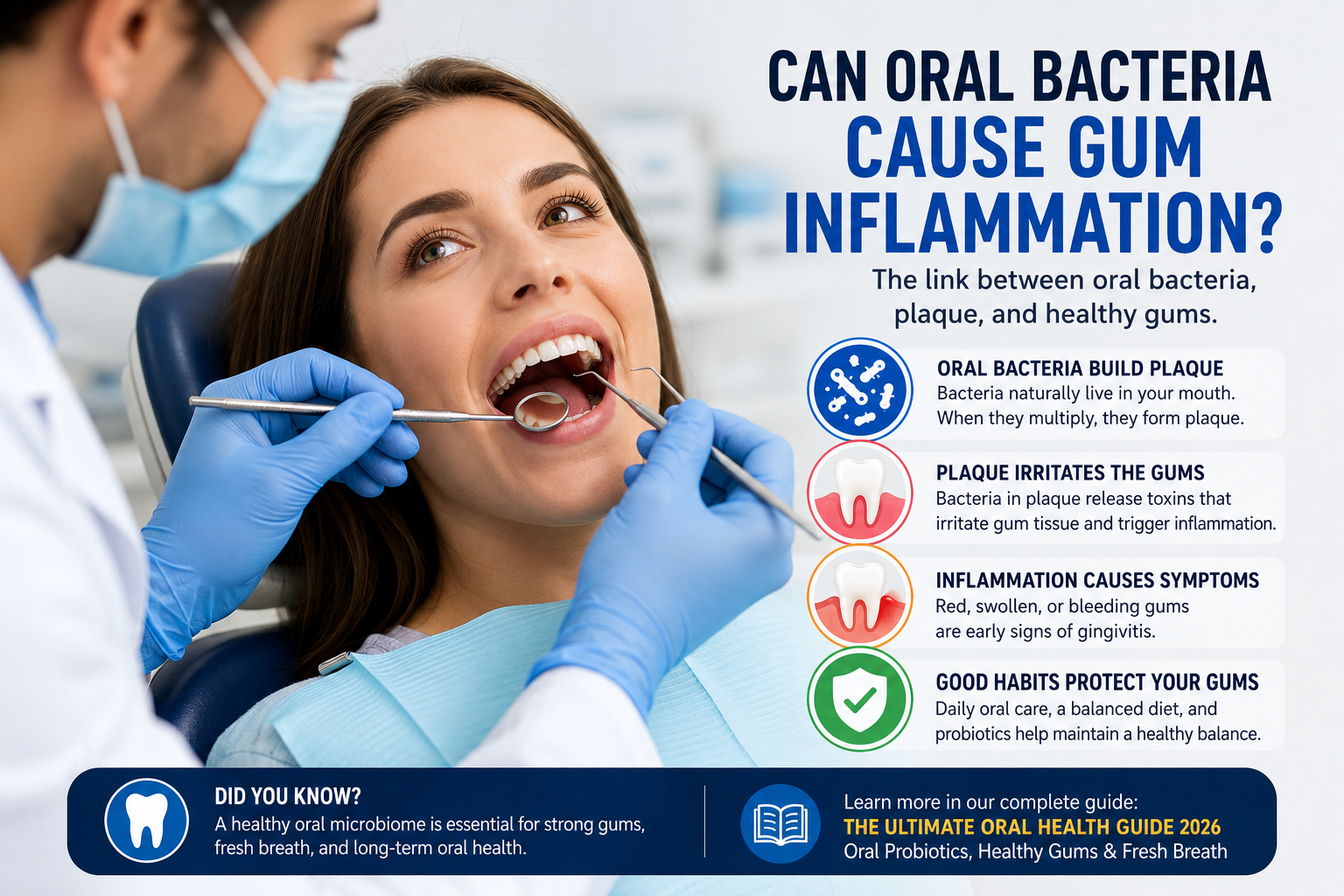
Gum inflammation is not usually caused by bacteria alone. It is caused by the interaction between oral bacteria, dental plaque, and the immune system. When bacteria collect around the gumline, they form a sticky layer called biofilm. If this biofilm is not removed consistently, it can become more mature, more resistant, and more irritating to gum tissue.
The body responds by sending immune cells to the area. This immune reaction is designed to protect the gums from microbial irritation. However, when the irritation continues every day, the response may become excessive. That is when gums can become red, swollen, tender, or more likely to bleed during brushing and flossing.
How Harmful Bacteria Become a Problem
Not every bacterium in the mouth is harmful. In a balanced oral microbiome, many bacteria coexist without causing damage. Some even help protect the mouth by competing with more aggressive species. The problem begins when certain bacteria grow out of proportion and create a more inflammatory environment.
This imbalance may be influenced by poor oral hygiene, frequent sugar intake, smoking, dry mouth, stress, aging, certain medications, and inconsistent dental cleanings. When plaque is allowed to remain near the gums, bacteria have more time to multiply and release irritating substances.
Key Point
Gum inflammation is often a sign that the oral environment is out of balance. Supporting gum health means reducing plaque, improving daily habits, and helping the mouth maintain a healthier bacterial balance.
Biofilm: The Protective Shield Around Bacteria
Biofilm is one of the most important concepts in gum health. A biofilm is a structured community of bacteria that attaches to a surface. In the mouth, this surface is often the teeth, especially near the gumline. Once bacteria organize into biofilm, they become harder to remove and may be more resistant to simple rinsing.
Dental plaque is a type of biofilm. At first, plaque may be soft and easier to remove with brushing and flossing. But when plaque remains in place, minerals from saliva can harden it into tartar. Tartar cannot be removed effectively with normal brushing and usually requires professional dental cleaning.
Why the Immune System Reacts
The gums are living tissues with blood vessels, nerves, and immune defenses. When bacterial byproducts collect near the gumline, the immune system identifies them as a threat. It responds by increasing blood flow and sending defensive cells to the area.
This increased blood flow is one reason inflamed gums may look red or swollen. The tissue may also become more sensitive and bleed more easily. In the beginning, this stage is often reversible with improved oral hygiene and professional care. But when ignored, inflammation may become more serious and affect the deeper structures that support the teeth.
Healthy Gums vs Inflamed Gums
| Feature | Healthy Gums | Inflamed Gums |
|---|---|---|
| Color | Firm, pink, and even | Red, darker, or irritated-looking |
| Texture | Firm and well-adapted to teeth | Swollen, puffy, or tender |
| Bleeding | Usually does not bleed with gentle care | May bleed during brushing or flossing |
| Plaque Level | Controlled with daily cleaning | Often higher around the gumline |
| Oral Microbiome | More balanced bacterial community | Possible dysbiosis with more harmful bacteria |
Early Gingivitis vs Advanced Gum Problems
Gingivitis is the early stage of gum inflammation. It usually affects the soft gum tissue around the teeth. At this point, the bone and deeper supporting structures are typically not permanently damaged. This is why early action matters so much.
If plaque and tartar remain for too long, inflammation can move deeper. Over time, this may contribute to periodontal disease, where the tissues and bone supporting the teeth may become affected. This is why bleeding gums should never be treated as normal or ignored.
Learn the Complete Oral Microbiome Strategy
Discover how oral probiotics, plaque control, gum-friendly habits, and microbiome support may work together for long-term oral wellness.
Visit the Complete Oral Health Guide
Scientific Research on Oral Bacteria and Gum Inflammation
Over the last two decades, scientific understanding of gum disease has evolved considerably. Researchers no longer view gingivitis and periodontitis as simple bacterial infections caused by a single microorganism. Instead, they are increasingly recognized as complex inflammatory conditions influenced by the balance of the oral microbiome, the body's immune response, lifestyle habits, genetics, and environmental factors.
Advanced DNA sequencing technologies have allowed scientists to identify hundreds of bacterial species living inside the mouth. Many of these microorganisms coexist peacefully and even contribute to maintaining oral health. However, when the microbial ecosystem becomes imbalanced—a condition known as dysbiosis—certain bacterial communities may promote inflammation that damages gum tissue over time.
Scientific Insight
Current evidence suggests that maintaining a balanced oral microbiome may be just as important as reducing harmful bacteria. Modern preventive dentistry increasingly focuses on restoring microbial balance rather than simply eliminating bacteria.
Factors That Increase the Risk of Gum Inflammation
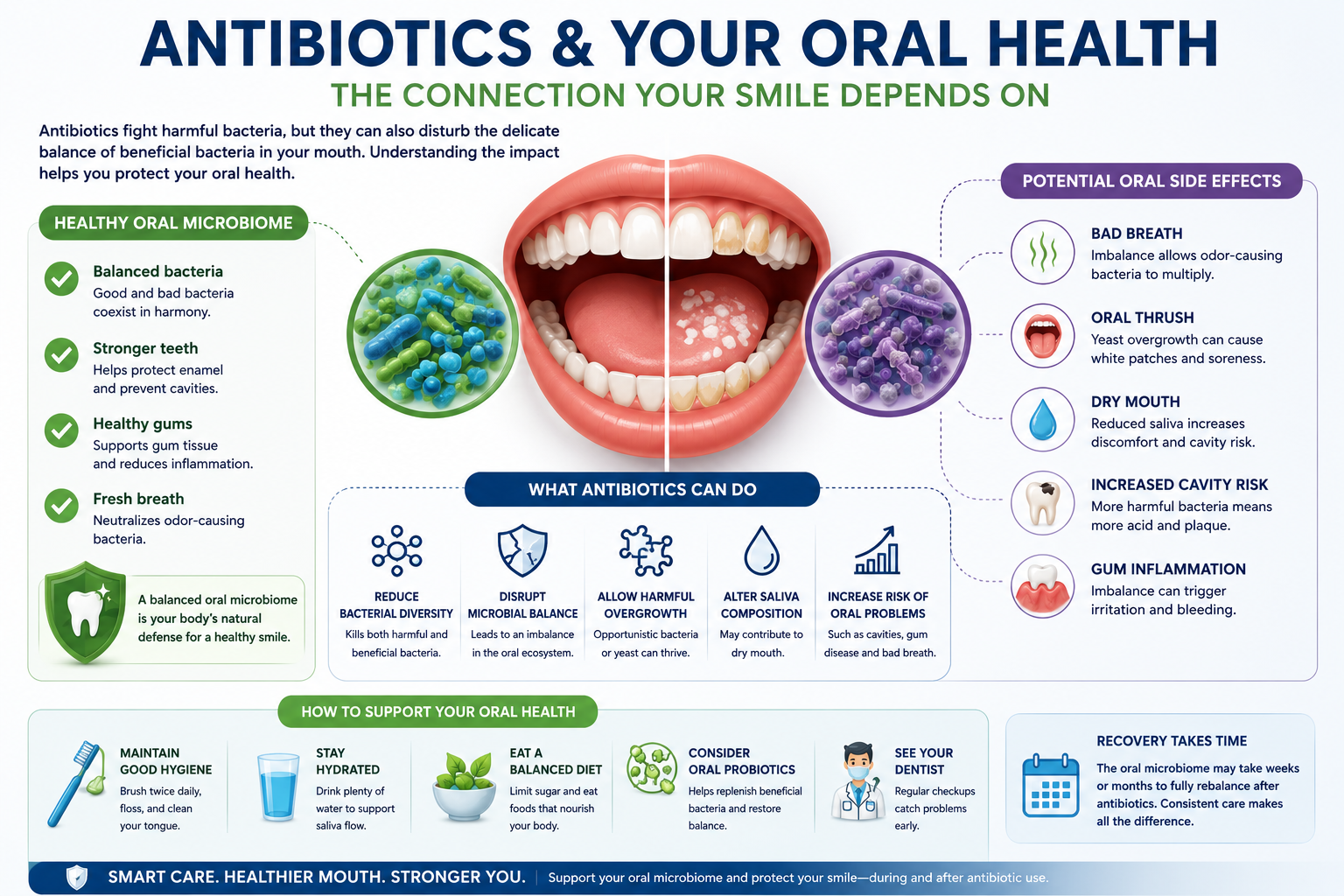
Although bacteria play a central role, several everyday habits and health conditions can increase the likelihood of developing gum inflammation. These factors may alter the oral environment, reduce saliva production, or create favorable conditions for harmful bacteria.
- Poor brushing and flossing habits
- Smoking or tobacco use
- Frequent consumption of sugary foods and drinks
- Dry mouth caused by medications or dehydration
- Poorly controlled diabetes
- Hormonal changes
- Chronic stress
- Insufficient professional dental cleanings
- Orthodontic appliances that retain plaque
- Advancing age
Having one or more of these factors does not necessarily mean someone will develop gum disease. However, understanding these influences helps explain why some individuals are more susceptible than others despite following similar oral hygiene routines.
Daily Habits That May Help Support Healthier Gums
Supporting healthy gums is about consistency rather than perfection. Small daily habits can reduce plaque accumulation and encourage a healthier balance within the oral microbiome.
| Daily Habit | Potential Benefit |
|---|---|
| Brush twice daily | Helps remove plaque before it matures. |
| Floss every day | Removes bacteria between teeth. |
| Clean your tongue | May reduce bacterial buildup and bad breath. |
| Stay hydrated | Supports healthy saliva production. |
| Eat fewer sugary snacks | Reduces food available for harmful bacteria. |
| Visit your dentist regularly | Professional cleaning removes hardened tartar. |
| Support microbial balance | Emerging research is evaluating the role of oral probiotics. |
Could Oral Probiotics Help?
Interest in oral probiotics has grown significantly in recent years. Unlike traditional probiotics that primarily target digestive health, oral probiotics are formulated to survive in the mouth and interact with the oral microbiome.
Researchers are investigating whether selected beneficial bacterial strains may help maintain microbial balance by competing with harmful bacteria for space and nutrients. While results are promising, oral probiotics should be viewed as a complement to—not a replacement for—daily brushing, flossing, and professional dental care.
More long-term clinical studies are still needed to fully understand which strains, dosages, and treatment durations provide the greatest benefit for different individuals.
Remember
No supplement can compensate for inadequate oral hygiene. The strongest evidence continues to support brushing, flossing, professional dental care, a balanced diet, and healthy lifestyle habits as the foundation of gum health.
Discover the Complete Guide to Oral Health
Want to better understand oral bacteria, healthy gums, oral probiotics, plaque control, and the latest scientific discoveries? Explore our comprehensive pillar guide designed to help you build healthier daily habits.
Frequently Asked Questions About Oral Bacteria and Gum Inflammation
Below are answers to some of the most common questions people ask about oral bacteria, gum inflammation, gingivitis, and maintaining a healthy oral microbiome.
1. Can oral bacteria really cause gum inflammation?
Yes. Scientific evidence shows that harmful bacteria within dental plaque can trigger an immune response in the gums. The inflammation itself is caused by the body's reaction to bacterial biofilm and its byproducts rather than by bacteria alone.
2. Why do my gums bleed when I brush?
Bleeding gums are often one of the earliest signs of gingivitis. Plaque accumulation near the gumline may irritate the tissue, making it more sensitive during brushing or flossing. Persistent bleeding should be evaluated by a dental professional.
3. Is plaque the same as tartar?
No. Plaque is a soft bacterial biofilm that forms continuously and can usually be removed through daily brushing and flossing. Tartar develops when plaque hardens due to minerals found in saliva and generally requires professional dental cleaning.
4. Can gingivitis be reversed?
In many cases, yes. Early-stage gingivitis often improves with consistent brushing, flossing, professional dental cleanings, and improved oral hygiene habits before permanent damage occurs.
5. Are all oral bacteria harmful?
Not at all. Hundreds of bacterial species naturally live in the mouth. Many are beneficial and help maintain a balanced oral microbiome by competing with harmful microorganisms.
6. Does diet affect gum inflammation?
Yes. Frequent consumption of sugary foods and beverages may encourage plaque-producing bacteria. A balanced diet rich in vegetables, fiber, vitamins, and minerals supports overall oral health alongside good hygiene practices.
7. Can oral probiotics replace brushing?
No. Oral probiotics are being studied as a way to help support microbial balance, but they should complement—not replace—daily brushing, flossing, and routine dental care.
8. How often should I visit a dentist?
Most people benefit from regular dental examinations and professional cleanings every six months, although individual recommendations may vary depending on oral health status and risk factors.
9. Can gum inflammation affect overall health?
Researchers continue to investigate possible links between periodontal disease and systemic conditions such as diabetes and cardiovascular disease. While associations have been observed, maintaining healthy gums remains an important part of overall wellness.
10. What is the best way to maintain healthy gums?
The most effective strategy combines brushing twice daily, flossing every day, regular dental visits, a balanced diet, adequate hydration, and habits that support a healthy oral microbiome.
Conclusion
The answer to the question "Can oral bacteria cause gum inflammation?" is supported by a growing body of scientific research. Harmful bacteria are an important part of the process, but gum inflammation develops because of the interaction between bacterial biofilms and the body's immune response.
Fortunately, maintaining healthier gums does not usually depend on one single solution. Consistent oral hygiene, professional dental care, balanced nutrition, adequate hydration, and supporting a healthy oral microbiome all contribute to creating an environment where beneficial bacteria can thrive while harmful bacteria are kept under control.
Understanding how the oral microbiome works allows you to make more informed decisions about your daily oral care routine. Small habits practiced consistently often make the greatest difference over time.
Take the Next Step Toward Better Oral Health
Discover our complete guide covering oral probiotics, healthy gums, fresh breath, plaque control, beneficial bacteria, and the latest scientific research on maintaining a balanced oral microbiome.
Continue Your Oral Health Journey
Healthy gums depend on much more than brushing alone. Continue exploring our evidence-based guides to better understand the oral microbiome, discover healthy daily habits, and learn practical ways to support your smile naturally.
Ultimate Oral Health Guide
Read our complete guide covering oral probiotics, gum health, bad breath, dental biofilm, and the latest scientific insights.
Oral Probiotics & Healthy Gums
Discover how beneficial bacteria may help maintain a balanced oral microbiome and support healthier gums over time.
Habits That May Harm Your Gums
Learn which everyday habits may contribute to gum irritation and what changes can support better oral health.
Early Signs of Gum Disease
Recognize the warning signs of gum disease early and learn when it's time to seek professional dental care.
Explore more expert resources and build healthier habits—one article at a time.
Support Your Oral Microbiome Naturally
ProDentim is designed to support a healthy balance of oral bacteria, fresh breath, and long-term gum wellness as part of a consistent daily oral care routine.
🦷 Visit the Official ProDentim WebsiteEducational content only. Results may vary. This link may be an affiliate link.
RELATED POSTS
View all


How Oral Bacteria Affect Your Breath Every Day
June 3, 2026 | by By EnergyFix40 Editorial Team
Common Habits That Damage Your Gum Health
June 9, 2026 | by By EnergyFix40 Editorial Team