How Antibiotics Affect Oral Health
June 17, 2026 | by By EnergyFix40 Editorial Team

How Antibiotics Affect Oral Health
Antibiotics play a vital role in treating bacterial infections, but they can also disrupt the natural balance of beneficial bacteria living in your mouth. Learn how these medications may influence your oral microbiome, gums, teeth, and breath—and discover science-backed strategies to support a healthier recovery and long-term oral wellness.
✔ Understand the oral microbiome • ✔ Learn how antibiotics affect beneficial bacteria • ✔ Explore scientific research • ✔ Discover practical ways to support healthier gums
Introduction: Why Antibiotics Matter for Oral Health
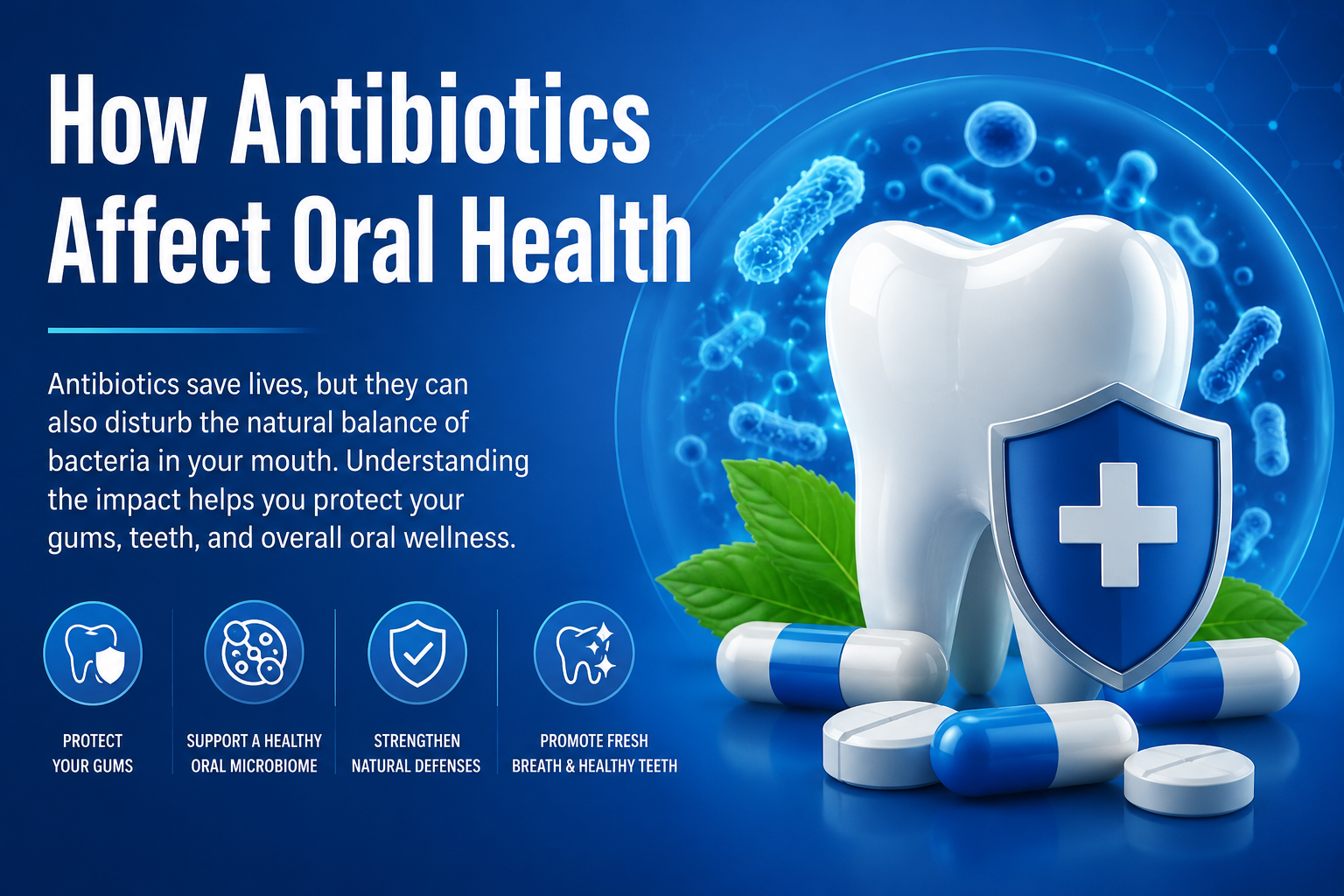
Antibiotics are powerful medications used to fight bacterial infections. When prescribed correctly, they can be essential for protecting health. However, antibiotics may also affect the natural community of bacteria that lives inside your mouth, known as the oral microbiome.
Your mouth contains both helpful and potentially harmful bacteria. When this ecosystem is balanced, it supports healthier gums, fresher breath, cleaner teeth, and better oral defense. But when antibiotics reduce bacterial diversity, some people may notice temporary changes such as dry mouth, altered taste, oral discomfort, increased plaque, or changes in breath freshness.
This article explains how antibiotics may influence oral health, why the oral microbiome matters, and what practical steps may help support a healthier mouth after antibiotic use.
Table of Contents
- How antibiotics affect the oral microbiome
- Why beneficial oral bacteria matter
- Common oral changes after antibiotic use
- Antibiotics, dry mouth, and bad breath
- Can antibiotics increase the risk of oral imbalance?
- How to support your mouth after antibiotics
- The role of oral probiotics
- When to speak with a dentist
Want the Complete Oral Health Strategy?
Discover the full guide to oral probiotics, healthy gums, fresh breath, and daily habits that support a balanced oral microbiome.
Read the Ultimate Oral Health Guide →What Happens to Your Mouth When You Take Antibiotics?
Antibiotics work by killing bacteria or slowing their growth. The problem is that many antibiotics do not only target harmful bacteria. They may also affect beneficial bacteria that help maintain balance in the mouth.
When helpful bacteria are reduced, the oral environment may become less stable. This does not mean antibiotics are “bad.” It means they should be used only when medically necessary and followed by smart oral care habits.
Understanding the Oral Microbiome
The oral microbiome is the living ecosystem of bacteria, fungi, and other microorganisms found on the tongue, gums, teeth, cheeks, and saliva. A balanced microbiome helps limit the overgrowth of harmful organisms and supports a healthier oral environment.
When antibiotics disturb this balance, some people may experience changes in plaque buildup, gum sensitivity, breath, or overall mouth comfort. The effects can vary depending on the type of antibiotic, treatment length, oral hygiene routine, diet, age, and overall health.
Why Beneficial Bacteria Are Important
Beneficial oral bacteria help compete with harmful species for space and nutrients. They also support a more balanced pH environment and may help reduce conditions that allow unwanted bacteria to multiply.
For this reason, protecting the oral microbiome is becoming an important topic in modern oral wellness. Brushing and flossing remain essential, but microbiome balance is now recognized as another key part of long-term gum and breath support.
Continue Learning About Oral Health
Antibiotics can affect the balance of bacteria in your mouth. These related guides explain how the oral microbiome, probiotics, and daily habits may help support healthier teeth, gums, and breath.
Learn how oral probiotics, gums, and fresh breath connect. Oral Microbiome: Protecting Your Teeth Naturally
Understand why bacterial balance matters after antibiotics. The Science Behind Oral Probiotics
See how beneficial bacteria may support oral health recovery.
How Antibiotics Alter the Oral Microbiome
Antibiotics are designed to reduce or eliminate bacteria that may be causing an infection. However, many antibiotics can also affect beneficial bacteria that naturally live in the mouth. This can temporarily reduce microbial diversity and disturb the balance between helpful and harmful organisms.
When the oral microbiome becomes less balanced, certain bacteria or fungi may have more opportunity to grow. This is one reason some people notice changes in their mouth during or after antibiotic use, especially if treatment lasts several days or is repeated frequently.
Good Bacteria vs Harmful Bacteria in the Mouth
Your mouth is not supposed to be completely bacteria-free. In fact, many oral bacteria are helpful. They compete with harmful species, support a balanced environment, and help protect the gums, teeth, tongue, and saliva ecosystem.
| Beneficial Oral Bacteria | Potentially Harmful Bacteria |
|---|---|
| Help maintain microbial balance | May contribute to plaque buildup |
| Support a healthier gum environment | May irritate gums when overgrown |
| Compete with unwanted microbes | May contribute to bad breath |
| Support fresh breath and oral comfort | May disrupt the normal oral ecosystem |
Main Effects Antibiotics May Have in the Mouth
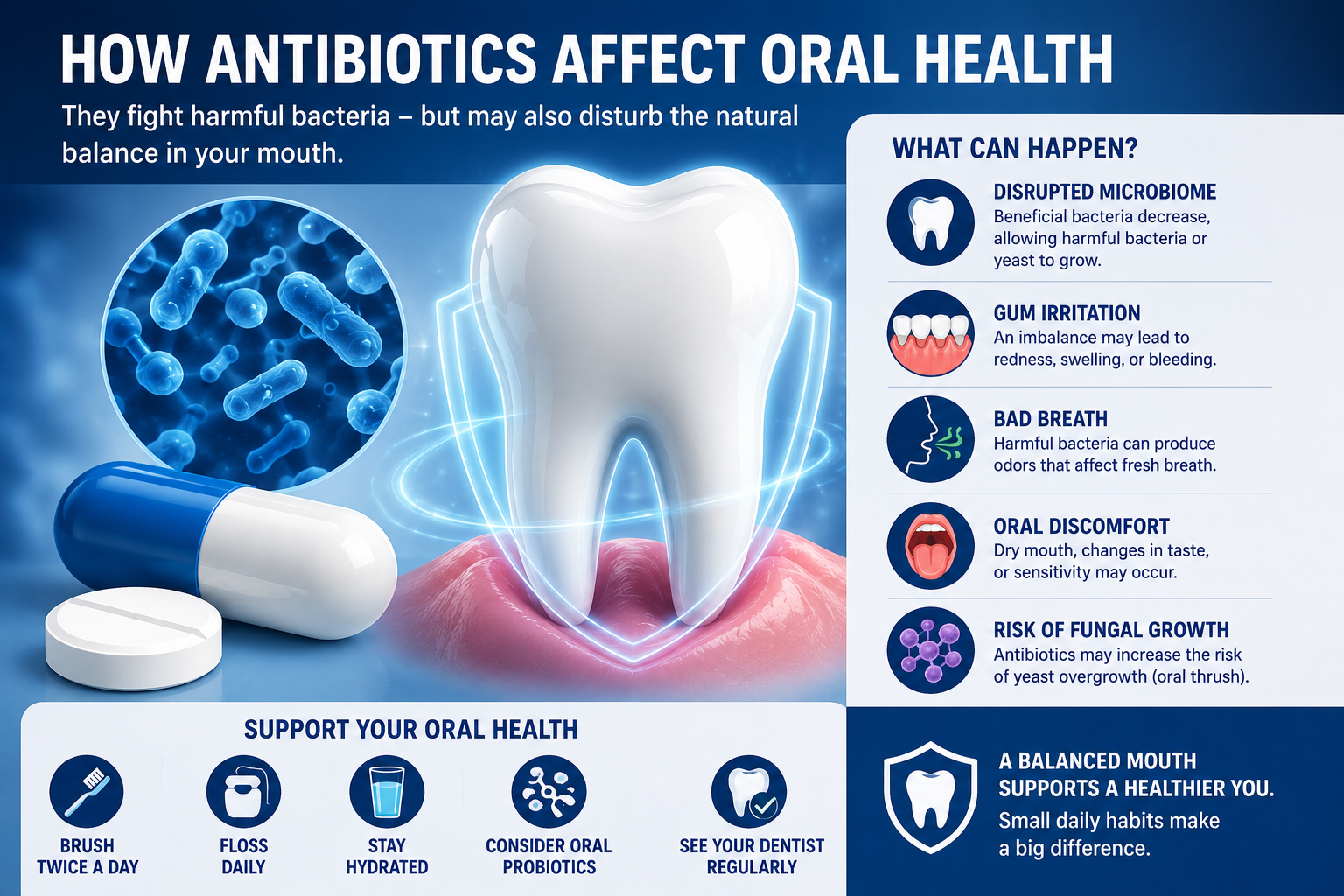
The oral effects of antibiotics can vary from person to person. Some people may not notice any changes, while others may experience temporary symptoms related to microbial imbalance.
1. Changes in Breath Freshness
When beneficial bacteria are reduced, odor-producing bacteria may become more noticeable. This can contribute to temporary bad breath, especially when combined with dry mouth or poor hydration.
2. Dry Mouth Sensation
Some people report a dry or uncomfortable feeling in the mouth while taking medication. Saliva is important because it helps wash away food particles, neutralize acids, and support microbial balance.
3. Increased Plaque Concerns
A less balanced microbiome may make it easier for plaque-forming bacteria to become more active. This does not replace brushing and flossing, but it shows why consistent oral hygiene is especially important during antibiotic use.
4. Gum Sensitivity
When the bacterial balance changes, the gums may feel more sensitive in some people. If swelling, bleeding, pain, or persistent discomfort occurs, it is important to speak with a dental professional.
5. Oral Fungal Overgrowth
Because antibiotics may reduce competing bacteria, yeast-like organisms may sometimes grow more easily. This is one reason persistent white patches, burning sensations, or unusual mouth changes should be evaluated by a dentist or physician.
Support a Balanced Oral Microbiome
Antibiotics may be necessary, but your daily oral care routine can help support a healthier mouth. Learn how oral probiotics, smart habits, and microbiome-friendly strategies may help protect your gums and breath.
Explore the Complete Oral Health Guide →Keep Exploring Your Oral Health Journey
Antibiotics can temporarily change the balance of bacteria inside your mouth. If you'd like to better understand how your oral microbiome works—and what you can do to naturally support healthy gums, fresher breath, and stronger teeth—explore these expert guides below.
📘 The Ultimate Oral Health Guide 2026
Discover the complete guide to oral probiotics, healthy gums, fresh breath, and long-term oral wellness.
🦷 What Is the Oral Microbiome?
Learn why billions of beneficial bacteria are essential for protecting your teeth and gums.
🧬 The Science Behind Oral Probiotics
Explore the latest scientific research explaining how oral probiotics help rebalance the mouth after bacterial disruption.
💙 How Oral Probiotics Support Healthy Gums
Understand how beneficial bacteria may contribute to healthier gums and a balanced oral environment.
🦠 Oral Bacteria & Tooth Decay
Find out how harmful bacteria contribute to cavities—and how maintaining microbial balance may help reduce risk.
🌿 Best Natural Ways to Support Fresh Breath
Fresh breath starts with a healthy oral microbiome. Discover natural habits that support long-lasting freshness.
⚠️ Common Habits That Damage Your Gum Health
Learn which everyday habits may interfere with gum health and how to build a healthier oral care routine.
🔬 Why Researchers Are Studying the Oral Microbiome
Discover why scientists believe the oral microbiome plays a critical role in both oral and overall health.
What Scientific Studies Say About Antibiotics and the Oral Microbiome
Scientific research shows that antibiotics can temporarily change the diversity and balance of microbial communities in the body, including the mouth. Because the oral microbiome contains many beneficial bacteria, antibiotic use may reduce some protective species while allowing other organisms to become more dominant.
This does not mean antibiotics should be avoided when prescribed by a healthcare professional. Antibiotics can be necessary and lifesaving. The key point is that after antibiotic use, the mouth may need extra support through consistent hygiene, hydration, nutrition, and professional dental care when needed.
How Long Does the Oral Microbiome Take to Recover?
Recovery varies from person to person. Some people may regain microbial balance relatively quickly, while others may experience longer-lasting changes, especially after repeated or broad-spectrum antibiotic use.
Several factors may influence recovery, including age, diet, oral hygiene, saliva flow, immune health, medication type, and how often antibiotics are used. A healthy routine can help create a better environment for beneficial bacteria to return.
| Area Affected | Possible Antibiotic Impact | Supportive Habit |
|---|---|---|
| Oral Microbiome | Reduced bacterial diversity and temporary imbalance | Maintain daily brushing, flossing, and microbiome-friendly habits |
| Gums | Possible sensitivity, irritation, or inflammation in some people | Use gentle brushing and visit a dentist if symptoms persist |
| Breath | Temporary bad breath due to microbial imbalance or dry mouth | Stay hydrated and clean the tongue daily |
| Mouth Comfort | Dry mouth, altered taste, or oral discomfort may occur | Drink water, avoid tobacco, and limit sugary snacks |
| Fungal Balance | Yeast-like organisms may overgrow when bacteria are reduced | Seek professional evaluation for white patches, burning, or persistent symptoms |
How to Reduce the Oral Impact of Antibiotics
While you should always follow your doctor’s prescription instructions, there are several practical steps that may help support your mouth during and after antibiotic use.
1. Keep Brushing Twice a Day
Brushing helps remove plaque, food particles, and bacteria from the teeth and gumline. Use a soft-bristled toothbrush and avoid brushing aggressively, especially if your gums feel sensitive.
2. Floss Daily
Flossing helps clean areas between the teeth where plaque can accumulate. This is especially important when the oral microbiome is temporarily disturbed.
3. Stay Hydrated
Saliva is one of the mouth’s natural defenses. Drinking enough water can help reduce dry mouth, support comfort, and assist with normal cleansing.
4. Limit Sugar and Highly Processed Foods
Sugary foods and drinks may encourage the growth of acid-producing bacteria. During recovery, focus on nutrient-dense foods that support overall wellness.
5. Clean Your Tongue
The tongue can hold bacteria and odor-producing compounds. Gentle tongue cleaning may help support fresher breath during periods of oral imbalance.
6. Do Not Stop Antibiotics Without Medical Guidance
Even if you notice oral changes, do not stop antibiotics early unless your healthcare provider tells you to. Stopping treatment too soon may allow an infection to return or become harder to treat.
Rebuild Your Oral Health Routine After Antibiotics
Your mouth depends on balance. Learn how oral probiotics, smart hygiene habits, and daily wellness strategies may help support healthier gums, fresher breath, and a stronger oral microbiome.
Continue to the Complete Oral Health Guide →Frequently Asked Questions (FAQ)
1. Can antibiotics affect oral health?
Yes. Antibiotics may temporarily change the balance of bacteria in your mouth by reducing both harmful and beneficial microorganisms. This temporary imbalance can contribute to changes in breath, gum comfort, or the overall oral microbiome.
2. Why do antibiotics change the oral microbiome?
Most antibiotics are designed to eliminate bacteria that cause infections. However, they may also affect beneficial bacteria that naturally help maintain a healthy oral environment.
3. Can antibiotics cause bad breath?
Some people notice temporary bad breath while taking antibiotics. This may be related to changes in the oral microbiome, reduced saliva flow, or the growth of odor-producing bacteria.
4. Can antibiotics increase the risk of oral thrush?
Yes. Antibiotics may reduce beneficial bacteria that normally help keep yeast under control. This may increase the risk of oral thrush in some individuals, particularly after prolonged antibiotic use.
5. How long does it take for the oral microbiome to recover?
Recovery varies from person to person. Factors such as the type of antibiotic, treatment duration, diet, oral hygiene, age, and overall health all influence how quickly the oral microbiome returns to balance.
6. Should I stop taking antibiotics if my mouth feels different?
No. Always complete your antibiotic treatment exactly as prescribed unless your healthcare provider instructs otherwise. Stopping antibiotics too early may lead to treatment failure or antibiotic resistance.
7. Can oral probiotics help after antibiotics?
Oral probiotics may help support a balanced oral microbiome after antibiotic use. They are intended to complement—not replace—good oral hygiene, professional dental care, and any treatment recommended by your healthcare provider.
8. What are the best habits to support oral health after antibiotics?
Brush your teeth twice daily, floss every day, clean your tongue, stay hydrated, eat a balanced diet, reduce added sugar, and maintain regular dental checkups.
9. Are all antibiotics equally likely to affect the mouth?
No. Different antibiotics have different effects on oral bacteria. The impact depends on the specific medication, dosage, duration of treatment, and each person's unique oral microbiome.
10. When should I see a dentist after taking antibiotics?
Contact a dentist if you develop persistent bad breath, mouth pain, swollen or bleeding gums, white patches, burning sensations, dry mouth that does not improve, or any symptoms that continue after completing your antibiotic treatment.
Continue Your Oral Health Journey
Before you go, explore these carefully selected guides to deepen your understanding of oral bacteria, probiotics, healthy gums, and long-term dental wellness.
📘 Ultimate Oral Health Guide
Your complete resource for healthier teeth, stronger gums, fresh breath, and the science behind oral probiotics.
🦷 The Science Behind Oral Probiotics
Learn how beneficial bacteria may help restore microbial balance after antibiotics and support long-term oral health.
💙 How Oral Probiotics Support Healthy Gums
Discover how maintaining a balanced oral microbiome may contribute to healthier gums and reduced plaque buildup.
🧬 Oral Microbiome: Protecting Your Teeth Naturally
Understand how a healthy oral microbiome naturally helps protect your teeth, gums, and overall dental wellness.
Knowledge is one of the best tools for protecting your smile.
Continue exploring our evidence-based articles to discover practical strategies for maintaining a balanced oral microbiome and supporting lifelong oral health.
Support Your Smile From the Inside Out
If you're looking for an easy way to help support a balanced oral microbiome, healthier gums, stronger teeth, and fresher breath, discover why thousands of adults are adding ProDentim to their daily oral wellness routine. Individual results vary, and ProDentim is intended to complement—not replace—good oral hygiene and professional dental care.
🦷 Get Your ProDentim Today →
✔ Supports a healthy oral microbiome
✔ Helps maintain fresh breath
✔ Supports healthy gums and teeth
✔ Easy chewable daily formula
✔ 60-Day Money-Back Guarantee*
*Always follow the instructions provided by the manufacturer. Dietary supplements are not intended to diagnose, treat, cure, or prevent any disease. Consult your healthcare provider before using any supplement, especially if you are pregnant, nursing, have a medical condition, or take prescription medications.
Scientific References
- Oral Microbiome: A Review of Its Impact on Oral and Systemic Health
- Probiotics for Oral Health: A Critical Evaluation of Bacterial Strains
- Current Understanding of Antibiotic-Associated Dysbiosis
- Probiotics and Oral Health
- Efficacy of Probiotics in the Management of Halitosis
- CDC: Antibiotic Prescribing and Use — Patient Education Resources
RELATED POSTS
View all


Top 7 Signs Your Oral Microbiome Is Out of Balance
July 11, 2026 | by By EnergyFix40 Editorial Team
The Surprising Link Between Oral Bacteria and Tooth Decay
June 12, 2026 | by By EnergyFix40 Editorial Team
Oral Microbiome: Protecting Your Teeth Naturally
June 15, 2026 | by By EnergyFix40 Editorial Team