EnergyFix40 | Reclaim Your Vitality After 40

βœ“ Practical Resource 🦷 Evidence-Informed πŸ–¨ Printable Guides
EnergyFix40 Oral Health Library

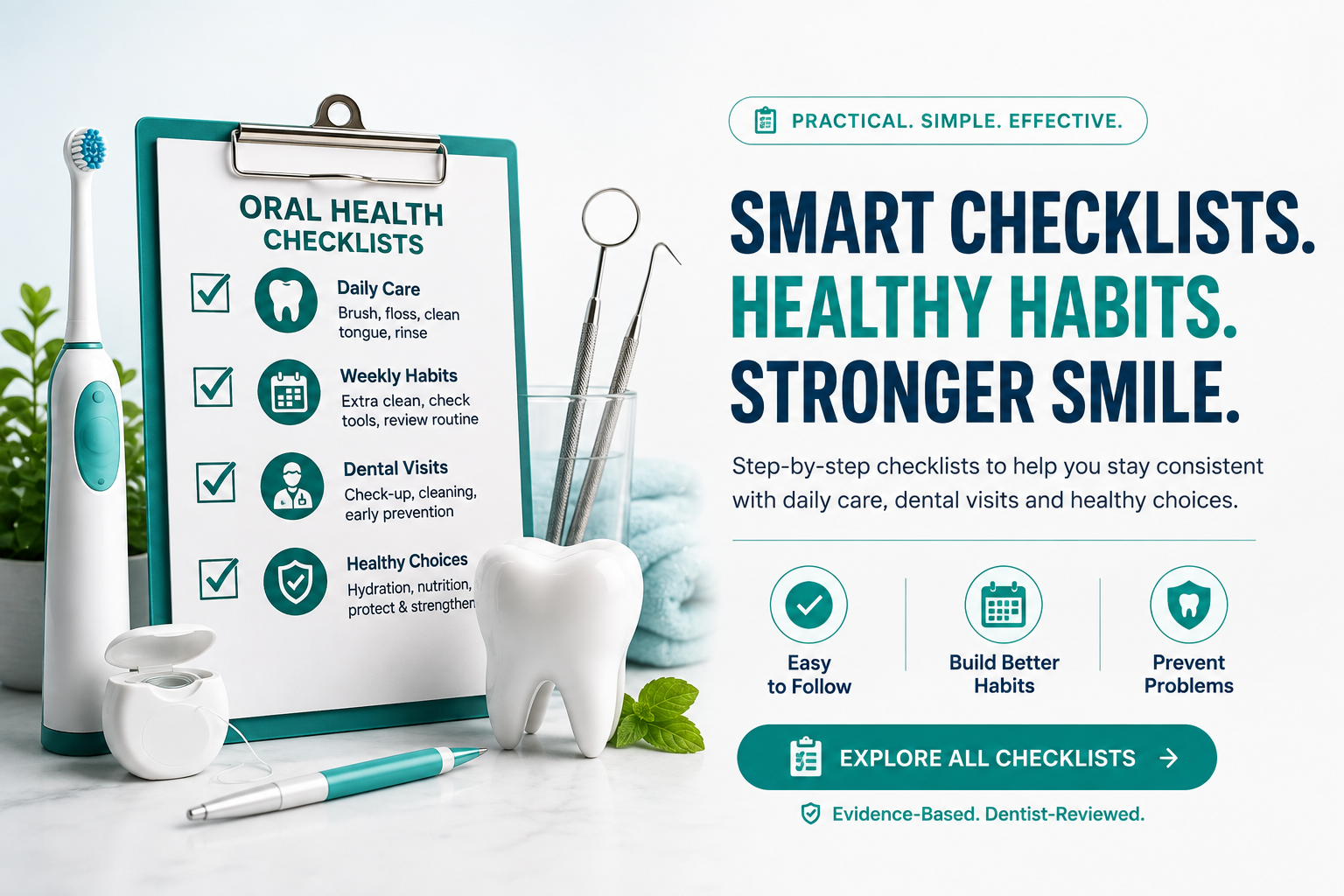
Oral Health Checklists for Healthier Daily Habits

Explore practical daily, weekly and age-specific oral health checklists designed to make healthy routines easier to understand, follow and share.

  • πŸ“… Updated July 2026
  • ⏱ Reading time: 12–15 minutes
  • πŸ‘₯ Designed for all audiences
  • πŸ“„ Printable resource

Medical disclaimer: These checklists provide general educational information and are not a substitute for diagnosis, treatment or personalized advice from a dentist, physician or other qualified healthcare professional. Individual needs may vary according to age, medical history, medications and current oral health conditions.

Simple checklists can turn oral health advice into consistent action

Oral health recommendations are often spread across articles, product instructions and dental appointments. This can make it difficult to remember which habits should be completed every day, every week or before a professional visit.

The EnergyFix40 Oral Health Checklists bring these actions together in one permanent resource. Each checklist is designed to help readers organize routines, identify gaps and discuss concerns with an appropriate dental professional.

The collection includes general checklists as well as focused resources for gum care, dry mouth, fresh breath, nutrition, adults over 40, older adults, caregivers and families.

Build consistency

Organize small actions into routines that are easier to repeat throughout the week.

Notice changes

Pay attention to bleeding, discomfort, dryness, sensitivity and other changes that may require evaluation.

Print and share

Use the checklists at home or share them in educational, caregiving and community settings.

Prepare for care

Record questions and observations before speaking with a dentist or other qualified health professional.

Explore the complete EnergyFix40 Oral Health Library

Find permanent guides, statistics, research summaries, infographics and practical resources created to support better oral health decisions.

Visit the Oral Health Library
```
Quick Navigation

Quick Access to Featured Oral Health Resources

Explore oral health statistics, scientific research, practical checklists, ingredient information, infographics and evidence-based resources created to support informed oral health decisions.

Practical Tools

Oral Health Checklists

Use practical daily routines, dental visit preparation tools, symptom trackers and printable oral health checklists.

View the Checklists
Visual Resources

Oral Health Infographics Library

Discover visual statistics, educational graphics, comparison charts and shareable oral health resources.

Explore the Infographics
Ingredient Research

Oral Health Ingredient Library

Review oral health ingredients, possible uses, evidence, safety considerations and product formula research.

Browse the Ingredient Library
Scientific Research

Oral Probiotics Research Hub

Explore clinical evidence, probiotic strain research, study summaries, research tables and evidence limitations.

Visit the Research Hub
EnergyFix40 provides educational oral health information and does not replace professional dental diagnosis, advice or treatment.
Foundational Routine

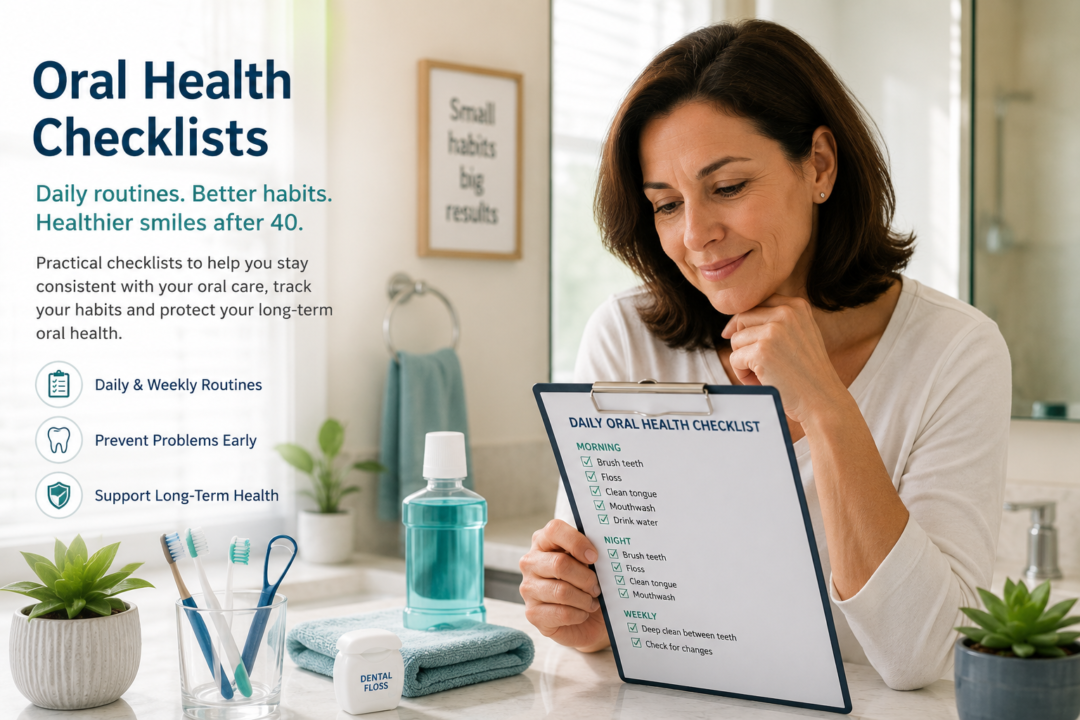
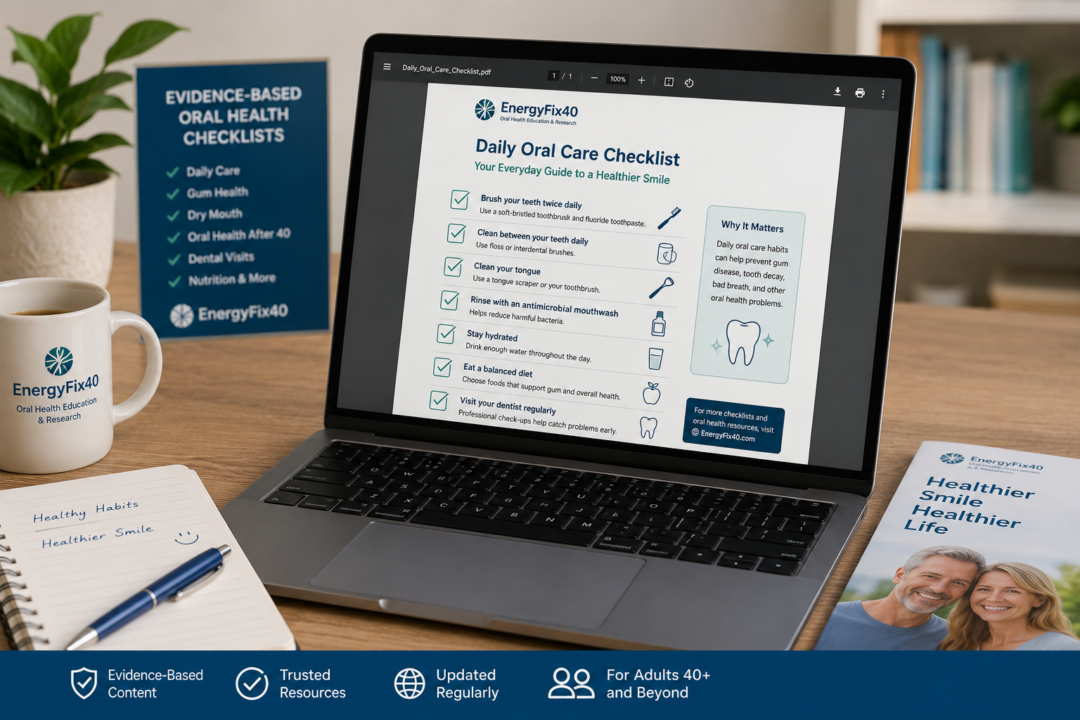
Daily Oral Health Checklist

Use this practical checklist to organize the essential actions that support clean teeth, healthier gums, fresh breath and early awareness of changes in the mouth.

01

Use the checklist as a routine guide

Check each item after completing it. The selections remain active while the page is open, making this a simple interactive routine tracker. Individual recommendations may differ according to your dentist’s guidance.

Today’s checklist progress 0 of 10 completed

10 essential daily actions

Mark each step as you complete your oral care routine.

  • Brush all tooth surfaces carefully with fluoride toothpaste and a soft-bristled toothbrush.

    Morning
  • Complete a thorough nighttime brushing routine to remove plaque and food debris accumulated throughout the day.

    Night
  • Use floss, interdental brushes or another dentist-recommended tool to clean areas a toothbrush may not reach effectively.

    At least once daily
  • Use a tongue cleaner or toothbrush gently to help remove coating, food debris and odor-producing buildup.

    Once or twice daily
  • Drink water throughout the day, especially when experiencing dryness or taking medications that may reduce saliva.

    Throughout the day
  • Reduce repeated snacking on sweets and frequent sipping of sugary or acidic drinks between meals.

    All day
  • Rinse the brush after use, store it upright and allow it to air-dry without touching other toothbrush heads.

    After brushing
  • Follow professional and manufacturer instructions for cleaning removable appliances, aligners, retainers or dentures.

    When applicable
  • Pay attention to bleeding, swelling, sores, pain, sensitivity, dry mouth, unusual taste or persistent breath changes.

    Daily awareness
  • Use prescribed or professionally recommended products exactly as directed and keep track of upcoming dental appointments.

    As recommended

Suggested daily oral care schedule

Use this example as a planning tool and adjust it according to your dental professional’s recommendations.

TimeRecommended actionMain purposeHelpful reminder
Morning Brush teeth and clean the tongue. Remove overnight buildup and begin the day with a clean mouth. Use gentle pressure, especially near the gumline.
After meals Drink water and avoid repeated sugary snacking. Support saliva and reduce prolonged exposure to food acids. Water is a simple option when brushing is not possible.
Throughout the day Monitor hydration, dryness and unusual symptoms. Recognize changes that may affect comfort or oral health. Record persistent symptoms for your next dental visit.
Evening Clean between teeth, brush thoroughly and clean appliances. Remove plaque and food debris before the overnight period. Make nighttime cleaning the most complete routine of the day.

Why a daily checklist matters

A written routine reduces the chance of forgetting important steps and makes it easier to notice when a habit is becoming inconsistent.

Routine awareness Shows which habits are being completed consistently.
Better preparation Helps organize observations before professional visits.
Early recognition Encourages attention to changes instead of ignoring them.
Family support Provides a simple visual routine for households and caregivers.
```
Twice-Daily Routine

Morning and Night Oral Care Checklists

Separate your oral care routine into two clear moments. The morning checklist helps you begin the day with a clean, comfortable mouth, while the nighttime checklist focuses on removing the plaque, food debris and buildup accumulated during the day.

02

Morning focus

Refresh the mouth, remove overnight buildup and prepare for the day’s meals, drinks and conversations.

Nighttime focus

Complete the most thorough cleaning of the day before the extended overnight period.

Consistency matters

Linking oral care to regular wake-up and bedtime habits makes the routine easier to maintain.

Morning Routine

Start the day with a clean mouth

Use this checklist after waking or as part of your regular morning preparation.

Morning progress 0 of 7 completed
  • Pay attention to dryness, soreness, unusual taste, jaw discomfort or persistent morning breath.

    Quick self-check
  • Use fluoride toothpaste and gentle pressure, including the outer, inner and chewing surfaces of the teeth.

    Essential step
  • Angle the toothbrush carefully toward the gumline without scrubbing aggressively.

    Gum care
  • Remove visible coating with a tongue cleaner or toothbrush, working gently from back to front.

    Breath support
  • Clean dentures, retainers, aligners or other removable devices according to professional instructions.

    When applicable
  • Drink water to support comfort and hydration, especially when you regularly wake with a dry mouth.

    Hydration
  • Check that toothpaste, floss and other supplies are available before they run out.

    Routine planning

Adapt these steps to your dentist’s recommendations.

Night Routine

Complete the most thorough cleaning

Use this checklist before sleeping to remove the day’s plaque, food debris and buildup.

Night progress 0 of 8 completed
  • Note bleeding, sensitivity, dryness, pain, sores, unusual taste or changes in chewing comfort.

    Daily awareness
  • Use floss, interdental brushes or another professionally recommended tool to remove buildup between teeth.

    High-priority step
  • Clean every tooth surface carefully with fluoride toothpaste and a soft-bristled toothbrush.

    Essential step
  • Clean gently around the gumline, crowns, bridges, implants and other areas where plaque may collect.

    Detailed cleaning
  • Remove coating and debris gently, especially when persistent bad breath is a concern.

    Breath support
  • Follow instructions for dentures, retainers, aligners, night guards or other removable devices.

    When applicable
  • Use prescribed toothpaste, rinses, gels or other dental products exactly as instructed.

    As directed
  • Allow the toothbrush and other cleaned tools to air-dry in a hygienic location.

    Final step

Nighttime is usually the most complete routine of the day.

Morning routine versus nighttime routine

Both routines matter, but they have slightly different priorities.

Routine areaMorning priorityNight priorityWhy it matters
Brushing Remove overnight buildup and refresh the mouth. Remove plaque and debris collected throughout the day. Twice-daily brushing supports consistent plaque control.
Interdental cleaning Optional timing when it fits the personal routine. Often easier to complete as part of the thorough bedtime routine. Cleans areas that toothbrush bristles may not reach.
Tongue care Helps remove morning coating and support fresher breath. Removes coating and debris collected during the day. Tongue buildup may contribute to persistent breath concerns.
Symptom awareness Notice dryness, soreness or changes present after waking. Review symptoms experienced during meals and daily activities. Repeated observations can help identify persistent patterns.
Appliance care Prepare clean appliances for daily use. Remove and clean appliances according to instructions. Proper care helps control debris, odor and material buildup.

Make both routines easier to maintain

A good routine should be clear, realistic and connected to habits that already happen every day.

Use visible supplies Keep toothbrush, toothpaste and interdental tools easy to reach.
Connect habits Link brushing to waking up, getting dressed or preparing for bed.
Reduce decisions Keep the order of the routine consistent from one day to another.
Prepare replacements Keep backup toothpaste, brush heads and floss available.

Personalized instructions take priority

Some people may need additional steps because of braces, implants, periodontal treatment, dentures, dry mouth, limited dexterity or other individual needs. Follow the instructions provided by your dentist or qualified healthcare professional.

```
Weekly Review

Weekly Oral Health Checklist

Use this weekly review to check your oral care supplies, observe changes in your mouth, review dietary habits and prepare for any upcoming dental needs. It complementsβ€”not replacesβ€”your daily brushing and interdental cleaning routine.

03

Inspect supplies

Make sure toothbrushes, toothpaste, floss and appliance-care products remain clean, usable and available.

Review symptoms

Look for repeated bleeding, dryness, soreness, sensitivity or other changes that may need professional attention.

Check habits

Review hydration, sugar frequency, meal patterns and consistency of morning and nighttime care.

Plan ahead

Confirm upcoming dental visits and write down questions before they are forgotten.

Choose one regular day for your review

Completing this checklist on the same day each week can make it easier to recognize patterns and replace supplies before they become unusable. Sunday evening or the day before grocery shopping may be practical options.

This week’s progress 0 of 16 completed

16 weekly review actions

Complete these checks once each week or according to your needs.

Supplies and equipment

Keep daily care tools clean and ready.
  • Check for visibly frayed, flattened or damaged bristles that may reduce cleaning effectiveness.

    Equipment check
  • Confirm that the brush can air-dry upright and does not remain pressed against other toothbrush heads.

    Hygiene
  • Confirm that toothpaste, floss, interdental brushes and other recommended items will last through the coming week.

    Restock if needed
  • Review cleaning products, storage containers and brushes used for dentures, retainers, aligners or night guards.

    When applicable

Oral changes and symptoms

Look for patterns that continued during the week.
  • Note whether these signs appeared repeatedly, worsened or remained limited to one specific area.

    Gum awareness
  • Pay attention to pain during chewing or sensitivity to cold, heat, sweet foods or pressure.

    Tooth awareness
  • Note frequent thirst, sticky saliva, nighttime dryness, difficulty swallowing or increased need for water.

    Saliva and comfort
  • Observe whether any mouth sore, red or white patch, swelling or unusual area has persisted or changed.

    Visual check

Routine and lifestyle habits

Review consistency rather than expecting perfection.
  • Identify which mornings or nights were most difficult and adjust the routine to reduce missed sessions.

    Routine review
  • Check whether floss or interdental tools were used regularly and whether any area remains difficult to clean.

    Between-teeth care
  • Consider whether water was regularly available and whether dryness was worse during certain activities or times.

    Hydration
  • Focus on repeated exposure between meals, including sweets, soda, sweetened coffee, sports drinks and energy drinks.

    Nutrition review

Planning and professional care

Prepare questions and avoid missed appointments.
  • Confirm the date, time, location and any instructions for scheduled treatment or routine care.

    Calendar check
  • Record concerns about symptoms, products, medications, appliances or areas that are difficult to clean.

    Appointment preparation
  • Note whether a new medication or dosage change coincided with dryness, taste changes, irritation or other symptoms.

    Health information
  • Contact a dental professional when symptoms are persistent, worsening, unexplained or interfering with daily activities.

    Take action

Example weekly oral health planner

Use this simple schedule to distribute routine checks across the week without making oral care feel overwhelming.

DayWeekly focusSimple actionWhat to notice
MondayRoutine consistency Confirm morning and nighttime supplies are visible and ready. Which step is most often forgotten?
TuesdayInterdental care Pay extra attention to difficult spaces between teeth. Bleeding, tenderness or areas where the tool catches.
WednesdayHydration Keep water available and monitor mouth dryness. Times of day when dryness becomes more noticeable.
ThursdayNutrition Review the frequency of sugary and acidic snacks or drinks. Repeated exposure between meals.
FridayAppliances Inspect dentures, retainers, aligners or night guards. Cracks, rough areas, odor, poor fit or buildup.
SaturdaySupplies Restock products and inspect the toothbrush. Frayed bristles or items that are almost finished.
SundayFull weekly review Complete this checklist and write down questions. Persistent symptoms or habits that need adjustment.

Four questions for the end of the week

These questions can help turn the checklist into a realistic plan for the following week.

What worked well? Identify the habits that were easy to complete consistently.
What was missed? Notice which steps were repeatedly skipped or rushed.
What changed? Record new or persistent symptoms, discomfort or dryness.
What happens next? Choose one adjustment, purchase or professional follow-up.

Weekly oral health notes

Print this section and use the lines below to record symptoms, questions, supply needs or reminders.

```
Appointment Preparation

Dental Visit Preparation Checklist

Organize your symptoms, medical history, medications, questions and appointment details before visiting the dentist. A few minutes of preparation can help you communicate more clearly and remember the information you want to discuss.

04
1

Confirm the appointment

Review the date, time, location, transportation and instructions provided by the dental office.

2

Update health information

Prepare an accurate list of medical conditions, medications, supplements and allergies.

3

Record symptoms

Write down when symptoms began, where they occur and what makes them better or worse.

4

Prepare questions

List the most important questions about diagnosis, treatment, prevention, costs and follow-up care.

Provide complete and current information

Tell the dental team about prescription medicines, over-the-counter products, allergies, recent illnesses, chronic conditions and health changes. Do not stop prescribed medication unless the prescribing healthcare professional specifically instructs you to do so.

Appointment preparation progress 0 of 18 completed

18 appointment preparation actions

Complete the relevant items before leaving for the dental office.

Appointment and practical details

Confirm when, where and how you will attend.
  • Check the appointment message or contact the office when any scheduling detail is unclear.

    Appointment details
  • Plan your route, parking or transportation and allow enough time for registration.

    Travel planning
  • Follow only the preparation instructions given for your specific examination, procedure or sedation plan.

    Office instructions
  • Bring requested identification, benefit information, referrals, forms or previous dental records.

    Documents

Medical history and medications

Update information that may influence dental care.
  • Include chronic conditions, recent illnesses, surgeries, hospitalizations and significant health changes.

    Health history
  • Record the medication name, dose and how often it is taken, or bring an updated medication list.

    Medication list
  • Include nonprescription medicines, vitamins, herbal products and supplements currently being used.

    Complete disclosure
  • Record known allergies and any previous reaction to medicines, dental materials, anesthetics or latex.

    Safety information
  • Bring the names and contact details of physicians or specialists when care coordination may be needed.

    Care coordination

Symptoms and oral health changes

Describe the problem as clearly as possible.
  • Describe the most important reason for the visit in one or two clear sentences.

    Main concern
  • Note whether it started suddenly or gradually and whether it is constant or intermittent.

    Symptom timeline
  • Record the tooth, side of the mouth, gum area, tongue, jaw or other location involved.

    Symptom location
  • Note whether heat, cold, sweets, chewing, pressure, movement or certain times of day affect the symptom.

    Helpful detail
  • Note crowns, fillings, implants, extractions, periodontal treatment or recent dental procedures.

    Dental history

Questions and treatment planning

Make sure your main questions are not forgotten.
  • Ask what was found, what may have caused it and whether additional tests or monitoring are needed.

    Understanding findings
  • Ask about expected benefits, limitations, alternatives, timing and what could happen without treatment.

    Treatment decisions
  • Ask for a written estimate when appropriate and clarify how many visits may be required.

    Practical planning
  • Ask what to do at home, which warning signs to monitor and when the next visit should occur.

    Aftercare

Appointment information worksheet

Complete these fields online or print the page and write the information by hand.

Questions you may want to ask

Choose the questions that apply to your visit and add your own.

TopicSuggested questionWhy ask
Findings What did you find during the examination? Helps clarify which teeth or oral tissues are affected.
Cause What are the likely causes or contributing factors? Helps connect the condition with habits, health or previous care.
Treatment What treatment options are available? Supports informed discussion of benefits and limitations.
Alternatives Are there reasonable alternatives to the recommended treatment? Helps compare appropriate options.
Timing How soon should treatment begin? Clarifies whether care is urgent or can be scheduled routinely.
Home care Which daily habits or products should I change? Turns professional advice into practical action.
Follow-up When should I return, and what changes should I monitor? Clarifies the next step and warning signs.
Costs Can I receive a written treatment and cost estimate? Supports financial and scheduling decisions.

Before, during and after the appointment

Preparation continues through the entire dental visitβ€”not only before arriving at the office.

Before

Arrive prepared

  • Bring your updated information and questions.
  • Follow specific eating or medication instructions.
  • Tell the office about recent health changes.
  • Arrive early when forms must be completed.
During

Communicate clearly

  • Describe symptoms in your own words.
  • Mention anxiety, discomfort or previous reactions.
  • Ask for unfamiliar terms to be explained.
  • Confirm that you understand the proposed next step.
After

Record the plan

  • Save written instructions and treatment estimates.
  • Record recommended products or routine changes.
  • Schedule follow-up care when needed.
  • Contact the office when recovery does not follow instructions.

Leave the appointment with a clear next step

Before leaving, make sure you understand what was found, what action is recommended and when follow-up should occur.

Diagnosis or findings Ask for an explanation in clear, understandable language.
Treatment plan Confirm the recommended procedure, timing and alternatives.
Home instructions Record products, restrictions and warning signs.
Next appointment Confirm the follow-up date or when to contact the office.
Editorial basis: This checklist reflects general patient-preparation principles described in American Dental Association resources concerning health histories, medication disclosure, dental examinations and patient records. It does not replace instructions from an individual dental office or healthcare professional.
```
Gum Awareness and Daily Care

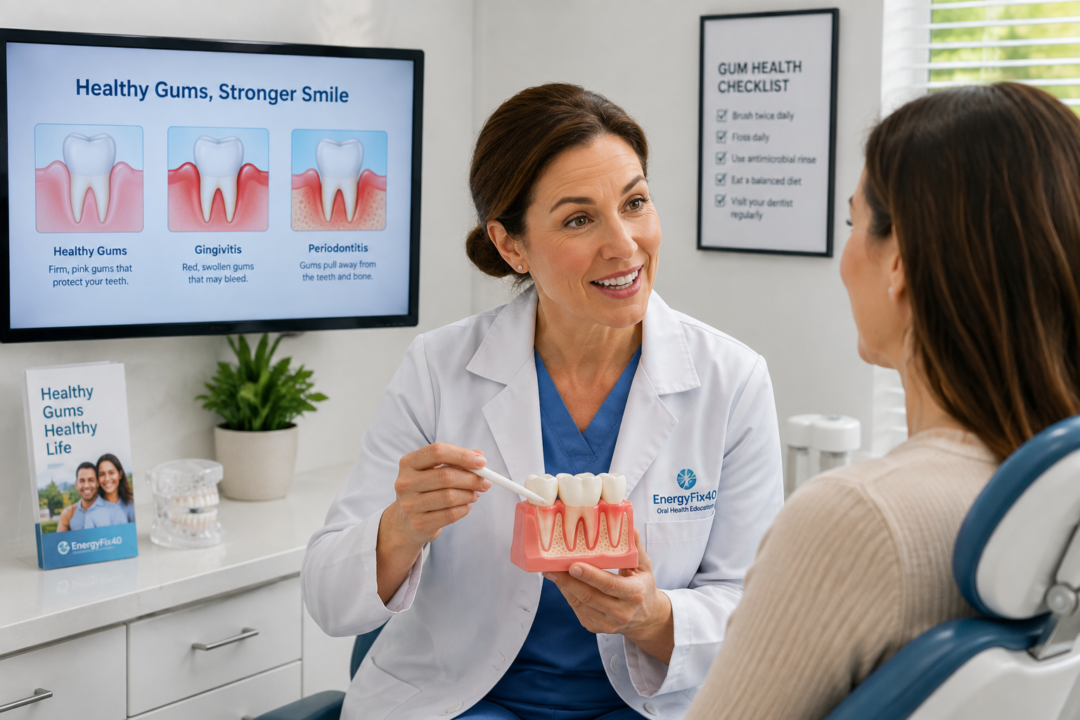
Gum Health Checklist

Use this checklist to review gum appearance, bleeding, tenderness, recession, plaque-control habits and changes that should be discussed with a dental professional. It is an awareness tool and does not diagnose gingivitis or periodontitis.

05

Observe appearance

Notice changes in color, swelling, gumline position and symmetry.

Review cleaning

Check brushing pressure, gumline cleaning and interdental habits.

Track persistence

Record whether bleeding, tenderness or swelling continues over time.

Seek evaluation

Arrange professional care for persistent or worsening changes.

Bleeding gums should not be treated as normal

Occasional irritation can have several causes, but repeated bleeding, redness, swelling or tenderness deserves attention. Continue gentle oral hygiene and arrange a dental evaluation rather than stopping all cleaning around the affected area.

Gum health review progress 0 of 16 completed

16 gum health review actions

Complete the relevant items during your weekly oral health review.

Gum appearance

Look for visible changes without probing the gums.
  • Notice new redness, darkening, pale areas or a color change limited to one location.

    Visual observation
  • Compare both sides of the mouth and note whether swelling is generalized or limited to one tooth.

    Inflammation awareness
  • Notice whether a tooth appears longer or whether more of its root surface seems exposed.

    Recession awareness
  • Record any persistent sore, localized enlargement, unusual patch or area that looks different from nearby tissue.

    Tissue awareness

Symptoms and changes

Record frequency, location and progression.
  • Note how often it occurs, whether it is limited to one area and whether it is becoming more noticeable.

    Bleeding pattern
  • Record spaces that repeatedly bleed when floss or an interdental brush is used gently.

    Between-teeth review
  • Note pain during brushing, eating, touching the area or wearing a denture or oral appliance.

    Comfort review
  • Note symptoms that continue despite normal brushing, tongue cleaning, hydration and interdental care.

    Breath and taste

Daily plaque-control habits

Review technique, consistency and comfort.
  • Use a soft-bristled toothbrush and avoid aggressive horizontal scrubbing that causes discomfort.

    Gentle technique
  • Use floss, interdental brushes or another tool recommended for your tooth spacing and dental work.

    Daily interdental care
  • Follow personalized instructions for areas that trap plaque or require specialized cleaning tools.

    Dental work care
  • Replace visibly worn or damaged bristles and review whether excessive pressure is causing rapid fraying.

    Equipment review

Professional care and follow-up

Do not rely on self-checks alone.
  • Confirm the date of your routine examination, cleaning or periodontal maintenance visit.

    Appointment planning
  • Write down when symptoms began, their location and whether they are becoming more frequent or severe.

    Symptom record
  • Mention smoking, diabetes, pregnancy, medications, dry mouth and changes in general health to the dental team.

    Health history
  • Contact a dental professional when bleeding, swelling, recession, pain or other changes persist or worsen.

    Take action

Gum observations and recommended responses

This table supports awareness only. A dental examination is required to determine the cause of symptoms.

ObservationWhat to recordPractical responseWhen to seek care
Bleeding during cleaning Frequency, location and amount. Continue gentle cleaning and review technique. When bleeding repeats, increases or occurs without cleaning.
Redness or swelling Whether it affects one area or several areas. Improve plaque-control consistency without aggressive scrubbing. When swelling persists, worsens or becomes painful.
Gum recession Which tooth looks longer or has an exposed root. Use gentle brushing and avoid self-treatment of the area. Arrange an evaluation to determine the cause and severity.
Tenderness Triggers, duration and exact location. Avoid traumatic pressure and keep the area gently clean. When pain persists or interferes with eating or brushing.
Loose tooth or bite change Which tooth moved and when the change began. Avoid repeatedly testing the tooth with fingers or tongue. Contact a dental professional promptly.
Localized bump or drainage Size, location, discomfort and any taste change. Do not squeeze, puncture or attempt to drain the area. Arrange prompt professional assessment.

Factors to discuss with your dental professional

These factors do not confirm gum disease, but they may affect risk, symptoms, treatment planning or the frequency of professional care.

Smoking or tobacco exposure

Share current or previous tobacco use because it can affect gum health, healing and treatment outcomes.

Diabetes

Tell the dental team about diabetes, recent health changes and challenges with blood glucose management.

Medications

Some medicines can contribute to dry mouth, gum enlargement, bleeding concerns or other oral changes.

Dry mouth

Reduced saliva can affect comfort, plaque control and the overall oral environment.

Dental restorations

Crowns, bridges, implants, dentures and orthodontic appliances may require specialized cleaning.

Previous periodontitis

A history of periodontitis may require ongoing periodontal maintenance and personalized follow-up.

Gum symptom record

Complete this worksheet online or print it before a dental appointment.

Turn observations into appropriate action

The goal is not to diagnose your gums at home. The goal is to maintain consistent care, recognize changes and communicate useful information to a dental professional.

Clean gently Avoid aggressive brushing while continuing regular plaque control.
Track patterns Record frequency, location, triggers and progression.
Share health changes Mention medications, diabetes, smoking and dry mouth.
Seek professional care Arrange evaluation for persistent, worsening or concerning signs.
Editorial basis: This checklist reflects general patient guidance from recognized oral health authorities concerning plaque control, gingivitis, periodontitis, gum-disease symptoms and professional dental care. It is educational and does not replace diagnosis, periodontal measurements, dental imaging or a personalized treatment plan.
```
Saliva, Comfort and Breath Awareness

Dry Mouth & Fresh Breath Checklist

Use this checklist to review mouth dryness, saliva changes, hydration, breath-related habits, tongue care, medications and persistent symptoms that should be discussed with a dental or healthcare professional.

06
Interactive Symptom & Routine Review

Support moisture, oral comfort and fresher breath with a more complete daily routine

Dry mouth and persistent bad breath may have several contributing factors. Hydration, saliva flow, medications, oral hygiene, tongue coating, gum health, dental disease, diet and health conditions may all be relevant. This checklist helps organize observations without attempting to diagnose the cause.

  • Review dry mouth symptoms and timing.
  • Track hydration and mouth-breathing patterns.
  • Improve tongue and interdental cleaning consistency.
  • Prepare useful information for a professional evaluation.
Moisture review Notice thirst, sticky saliva, nighttime dryness and swallowing discomfort.
Tongue and plaque care Review tongue coating, brushing and cleaning between the teeth.
Symptom tracking Record frequency, triggers, medicines and related oral changes.

Review dryness

Notice when dryness occurs, how long it lasts and whether it affects speaking, chewing, swallowing or sleep.

Review breath patterns

Look for persistent odor or taste changes that continue despite normal daily hygiene.

Improve plaque control

Review brushing, interdental cleaning, tongue care and appliance hygiene.

Identify contributing factors

Record medications, health changes, mouth breathing and other possible influences.

Persistent dry mouth or bad breath deserves professional attention

These symptoms may be related to oral hygiene, gum disease, tooth decay, infections, medications, dehydration, reduced saliva, mouth breathing or health conditions. Do not stop a prescribed medication without guidance from the prescribing healthcare professional.

Dry mouth and breath checklist progress 0 of 20 completed

20 dry mouth and fresh breath review actions

Complete the relevant items and record persistent changes.

Dry mouth symptoms

Review moisture, comfort and saliva changes.
  • Notice whether your mouth frequently feels dry, sticky or uncomfortable during normal daytime activities.

    Daytime symptoms
  • Note whether you wake with a dry mouth, need water overnight or feel unusually dry immediately after waking.

    Nighttime symptoms
  • Notice thick, stringy or sticky saliva, or a feeling that there is not enough saliva to keep the mouth comfortable.

    Saliva awareness
  • Record whether dryness makes speech, eating dry foods, swallowing or wearing dentures more difficult.

    Oral function
  • Note a burning sensation, cracked lips, mouth soreness, tongue discomfort or irritation beneath dentures.

    Comfort review

Hydration and environment

Review daily patterns that may affect oral moisture.
  • Make water easy to access during the day rather than waiting until dryness becomes uncomfortable.

    Hydration habit
  • Notice whether coffee, energy drinks or alcoholic beverages appear to worsen dryness or breath concerns.

    Beverage review
  • Note nasal congestion, sleeping with the mouth open, snoring or dryness that is worse after sleep.

    Breathing pattern
  • Notice whether heating, air conditioning or low humidity appears to worsen nighttime or daytime dryness.

    Environment
  • Record smoking, vaping or other nicotine exposure that may contribute to dryness, irritation or persistent odor.

    Lifestyle factor

Fresh breath and plaque control

Review cleaning beyond the visible tooth surfaces.
  • Brush all tooth surfaces gently and consistently with fluoride toothpaste according to professional guidance.

    Tooth cleaning
  • Use floss, interdental brushes or another recommended tool to remove material that brushing alone may miss.

    Between-teeth care
  • Remove visible coating with a tongue cleaner or toothbrush without scraping aggressively or causing injury.

    Tongue care
  • Follow appropriate instructions for dentures, retainers, aligners or night guards and clean storage containers.

    Appliance hygiene
  • Note breath concerns or taste changes that remain despite brushing, tongue cleaning, hydration and interdental care.

    Breath awareness

Health factors and professional evaluation

Prepare information that may help identify the cause.
  • Record prescription medicines, over-the-counter products and supplements, especially after a new medication or dose change.

    Medication history
  • Prepare information about diabetes, autoimmune conditions, nasal problems, reflux, recent illness or other health changes.

    Health history
  • Note cavities, sensitivity, gum bleeding, swelling, sores, coating, pain, drainage or changes in dental appliances.

    Oral symptom review
  • Write down when symptoms occur, what improves or worsens them and whether they are becoming more frequent.

    Symptom tracking
  • Arrange dental or medical guidance for persistent, worsening, unexplained or function-limiting dryness or breath concerns.

    Take action
```

Dry Mouth and Fresh Breath Observation Table

Use these observations to organize your routine and prepare useful information for a dentist or healthcare professional. Symptoms can have more than one possible cause.

Observation Details to Record Supportive Response When to Seek Guidance
Dry mouth after waking Frequency, need for water, snoring, nasal congestion and whether the mouth is open during sleep. Review nighttime hydration, bedroom humidity and possible mouth breathing. When dryness occurs most mornings, disrupts sleep or continues throughout the day.
Sticky or thick saliva Time of day, medication use, beverage intake and associated difficulty speaking or swallowing. Sip water regularly and discuss suitable saliva-support products with a professional. When the change persists or makes normal oral functions difficult.
Persistent bad breath Duration, tongue coating, gum symptoms, dental pain, diet and whether others have noticed the change. Review brushing, interdental cleaning, tongue care, hydration and appliance hygiene. When odor persists despite a complete and consistent oral-care routine.
White or visible tongue coating Color, thickness, discomfort, taste changes and whether the coating returns quickly after gentle cleaning. Clean the tongue gently without forceful scraping or repeated irritation. When the coating persists, becomes painful or occurs with sores, burning or difficulty swallowing.
Burning or sore mouth Location, duration, triggering foods, dryness, medication changes and visible tissue changes. Avoid irritating products and record the circumstances in which symptoms occur. When burning, soreness or cracking persists or interferes with eating.
Frequent thirst Water intake, nighttime thirst, urination changes, activity, weather and recent health changes. Maintain regular hydration and discuss unexplained persistent thirst with a healthcare professional. When excessive thirst is new, unexplained, persistent or occurs with other symptoms.
Denture discomfort Pressure areas, looseness, irritation, dryness and how long the appliance is worn. Clean the appliance as directed and avoid attempting to reshape it at home. When sores, pain, instability or repeated irritation develops.
New cavities or sensitivity Tooth location, food triggers, dryness pattern and date of the last dental examination. Maintain fluoride-based care and reduce frequent sugar exposure. Arrange a dental examination rather than relying only on sensitivity products.

Factors That May Contribute to Dry Mouth or Breath Changes

These factors do not establish a diagnosis. They help identify topics worth discussing during a dental or medical evaluation.

Prescription Medications

Many types of medicines may be associated with reduced oral moisture. Record medication names, doses and recent changes.

Over-the-Counter Products

Allergy, cold, sleep and other nonprescription products may be relevant. Include them in your medication history.

Mouth Breathing

Nasal congestion, snoring and sleeping with the mouth open may increase dryness, especially after waking.

Dehydration

Illness, heat, physical activity, insufficient fluid intake or increased fluid loss may affect comfort and saliva.

Tobacco and Nicotine

Smoking, vaping and other nicotine exposure may contribute to oral irritation, dryness and persistent odor.

Alcohol and Caffeine

Some people notice greater dryness after frequent coffee, energy drinks or alcoholic beverages.

Gum or Dental Disease

Plaque accumulation, gum inflammation, tooth decay and infection can contribute to persistent breath concerns.

Tongue Coating

Debris and microbial buildup on the tongue may contribute to odor, but aggressive scraping can injure the tissue.

Dentures and Appliances

Dentures, retainers, aligners and night guards require regular cleaning and appropriate storage.

Diabetes

Diabetes and changes in glucose management may be relevant to dryness, gum health and oral infection risk.

Autoimmune Conditions

Certain autoimmune conditions can affect saliva production and may require coordinated medical and dental care.

Cancer Treatment

Radiation involving the head or neck and some cancer treatments may affect salivary function and oral comfort.

Dry Mouth and Breath Symptom Record

Complete this worksheet before a dental or medical appointment. The information is entered only on this page and is not submitted anywhere by this checklist.

Your Daily Moisture and Fresh Breath Action Plan

Focus on consistent oral hygiene, hydration, symptom tracking and professional guidance rather than relying only on products that temporarily cover odor.

Morning Record overnight dryness, drink water, brush thoroughly and clean the tongue gently.
During the Day Keep water available and notice drinks, medicines or environments that worsen symptoms.
After Eating Rinse with water when appropriate and avoid allowing food debris to remain around teeth or appliances.
Evening Brush, clean between the teeth and clean dentures or appliances as directed.
Weekly Review Compare symptom frequency, tongue coating, gum changes, hydration and oral comfort.
Professional Follow-Up Arrange care when dryness, odor, pain, sores or functional difficulty persists or worsens.
Editorial and medical note: This checklist is an educational awareness resource based on general principles of oral hygiene, saliva support, dry-mouth assessment, halitosis evaluation and professional dental care. It does not diagnose xerostomia, halitosis, periodontal disease, dental decay, infection or another medical condition. Persistent symptoms require individualized assessment. Do not stop or alter prescribed medication without consulting the prescribing healthcare professional.
```

Build a Complete Oral Health Routine

Daily checklists are only one part of maintaining a healthier mouth. Explore our complete Oral Health Library with evidence-based guides, oral microbiome education, nutrition resources, prevention strategies, research summaries and practical tools for every stage of life.

🦷 Complete Guides Daily care, gum health, cavities, dry mouth and prevention.
🧬 Oral Microbiome Understand how beneficial bacteria influence long-term oral health.
πŸ“Š Statistics & Research Evidence-based resources built from trusted scientific organizations.
πŸ“š Free Educational Library Interactive checklists, printable resources and clinical explanations.
Explore the Complete Oral Health Library β†’
Preventive Care, Comfort and Healthy Aging

Oral Health After 40 Checklist

Review gum health, exposed roots, dry mouth, medications, restorations, implants, chewing comfort and daily-care changes that may become more important during midlife and later adulthood.

07
Interactive Midlife Oral Health Review

Protect your natural teeth, gums and dental work through every stage of adulthood

Reaching 40 does not automatically mean losing teeth. However, accumulated dental history, medications, exposed root surfaces, reduced saliva, chronic conditions and changes in dexterity can make prevention and professional follow-up increasingly important.

  • Review gums, teeth and exposed root surfaces.
  • Track dryness, sensitivity and chewing changes.
  • Inspect restorations, implants and appliances.
  • Adapt oral-care tools when movement becomes difficult.
Preserve natural teeth Monitor sensitivity, cracks, wear and root exposure.
Review saliva and medicines Track dryness after medication or health changes.
Maintain professional care Follow a personalized examination and maintenance schedule.

Gum health

Review bleeding, swelling, recession, tenderness and changes around implants or restorations.

Medication review

Keep an updated list and record dryness or oral changes after new medicines or dose adjustments.

Dental work

Inspect crowns, fillings, bridges, implants, dentures and oral appliances for changes.

Adapted techniques

Use tools and routines that remain comfortable when grip, vision or mobility changes.

Age alone is not a diagnosis

Oral-health needs vary greatly. Your dental history, current conditions, medications, restorations and ability to perform daily hygiene are more useful than age alone when planning care. Follow individualized recommendations from your dental team.

Oral health after 40 progress 0 of 24 completed

24 oral health review actions

Complete the items that apply to your current routine and dental history.

Teeth and gum review

Observe changes without probing or testing teeth repeatedly.
  • Note bleeding during brushing or interdental cleaning, including its location and frequency.

    Gum awareness
  • Notice teeth that appear longer or root surfaces that have become newly visible.

    Root exposure
  • Record reactions to cold, heat, sweets, touch or biting.

    Sensitivity tracking
  • Record looseness, shifting, new spaces or a bite that feels different.

    Professional evaluation
  • Notice rough edges, flattened teeth, fracture lines or areas that catch food.

    Tooth structure
  • Record sores, lumps, patches, unexplained bleeding or areas that do not heal.

    Tissue awareness

Dry mouth, medicines and health

Record changes rather than stopping treatment independently.
  • Note sticky saliva, thirst, difficulty speaking or needing water overnight.

    Saliva review
  • Include prescriptions, nonprescription medicines and supplements.

    Medication safety
  • Note whether dryness, taste changes or gum changes began after a new medicine or dose adjustment.

    Symptom timeline
  • Tell the dental team about diabetes, cardiovascular disease, autoimmune conditions and other relevant changes.

    Health history
  • Record pain, fatigue, food avoidance or difficulty managing dry foods.

    Daily function
  • Note persistent unusual taste or breath concerns despite complete hygiene.

    Oral environment

Restorations, implants and appliances

Inspect comfort and cleaning access.
  • Record rough edges, food trapping, fractures or discomfort when biting.

    Restoration review
  • Use the recommended floss threader, interdental brush or other professional tool.

    Bridge care
  • Notice bleeding, swelling, drainage, discomfort or difficulty cleaning around implants.

    Implant maintenance
  • Record looseness, pressure areas, sores or difficulty chewing.

    Denture care
  • Follow specific instructions for dentures, retainers and night guards.

    Appliance hygiene
  • Check when implants, dentures or extensive restorations were last professionally reviewed.

    Follow-up planning

Routine, dexterity and professional care

Adapt the method instead of abandoning the habit.
  • Notice hand fatigue, pain, poor grip or difficulty reaching back teeth.

    Dexterity review
  • Consider larger handles, powered brushes or professionally recommended interdental tools.

    Accessible care
  • Use a well-lit location and a stable mirror to improve visibility.

    Visual support
  • Select a method that can be used safely and consistently.

    Daily plaque control
  • Confirm your examination, cleaning or periodontal-maintenance schedule.

    Preventive care
  • Bring your medication list, health changes and oral concerns to the appointment.

    Appointment preparation

Changes to Review After 40

These observations do not diagnose disease. Use them to decide what should be discussed with a dental professional.

ObservationWhat to RecordRoutine ResponseProfessional Follow-Up
Exposed root surfaceLocation, sensitivity and when first noticed.Use gentle brushing and appropriate fluoride care.Ask about recession, root decay risk and treatment options.
Persistent dry mouthTiming, medicines, thirst and swallowing difficulty.Maintain hydration and complete oral hygiene.Request medication and saliva-function review.
Bleeding around an implantFrequency, swelling, discomfort and cleaning difficulty.Continue gentle cleaning without forceful probing.Arrange evaluation if bleeding repeats or worsens.
Denture loosenessPressure areas, sores and chewing difficulty.Keep the appliance clean and avoid home adjustment.Request a professional fit assessment.
Reduced hand controlWhich tasks are difficult or painful.Try adapted handles or easier interdental tools.Ask the dental team to demonstrate alternatives.
Persistent mouth lesionLocation, appearance, duration and discomfort.Avoid repeatedly touching or irritating the area.Arrange professional assessment without unnecessary delay.

Practical Routine Adaptations

Small adjustments may help preserve independence and improve cleaning consistency when grip, vision, mobility or dental complexity changes.

Powered Toothbrush

May reduce the amount of hand movement required. Choose a model that is comfortable to hold and easy to control.

Larger Handle

A wider grip may make a toothbrush easier to hold for someone with hand stiffness or reduced grip strength.

Interdental Brushes

These may be easier than traditional floss for some spaces, but the correct size should be selected carefully.

Better Lighting

Improved bathroom lighting and a stable mirror can make it easier to inspect and clean difficult areas.

Written Routine

A visible morning and evening checklist can support consistency when routines become complex.

Caregiver Support

When assistance is needed, the person should be treated respectfully and involved in decisions whenever possible.

Oral Health After 40 Review Record

Complete this worksheet before your next dental visit. Information entered here is not submitted or stored by EnergyFix40.

Build a Prevention Plan That Changes With You

Healthy aging includes adapting techniques, monitoring medications, caring for existing dental work and seeking professional support when new barriers appear.

Every Morning Review dryness, brush thoroughly and clean removable appliances.
Every Evening Brush, clean between teeth and inspect areas that trap food.
Every Week Review gums, restorations, implants, sensitivity and chewing comfort.
At Every Appointment Share medicines, health changes, symptoms and routine difficulties.
Editorial and medical note: This checklist is an educational resource for preventive oral-health awareness. It does not diagnose gum disease, tooth decay, oral cancer, implant disease, dry mouth or another condition. Individual needs depend on dental history, medications, health status, functional ability and professional examination. Never stop prescribed medication without guidance from the prescribing healthcare professional.
```
Age-Specific and Assisted Oral Care

Children, Seniors & Caregiver Checklists

Use these age-specific checklists to support healthy childhood routines, preserve oral comfort and function during later adulthood, and help caregivers provide respectful, consistent assistance.

08
Three Practical Care Pathways

Adapt oral care to age, ability, independence and individual needs

Oral-care routines should change as skills, health conditions, medications, dental development and functional abilities change. Effective support balances safety, prevention, comfort, dignity and professional guidance.

  • Build supervised childhood brushing habits.
  • Monitor dry mouth, dentures and gum changes in seniors.
  • Preserve independence whenever safely possible.
  • Record barriers and prepare for dental appointments.
Children Supervision, fluoride toothpaste, diet awareness and dental development.
Seniors Natural teeth, saliva, medications, dentures and functional comfort.
Caregivers Respectful assistance, daily observation and coordinated professional care.

Individual recommendations may differ

Children’s fluoride needs, a senior’s dry-mouth treatment, denture care and caregiver techniques should be personalized by a dental or healthcare professional. Do not force oral care, alter prescribed medicines or use swallowing-risk products without appropriate guidance.

Age-specific and caregiver checklist progress 0 of 24 completed

Children’s Oral Health Checklist

Parent- and caregiver-supported habits for developing teeth.

8 actions
  • Help the child brush every morning and evening using a soft-bristled toothbrush that fits comfortably.

    Daily routine
  • For children under 3, use only a smear approximately the size of a grain of rice. For ages 3–6, use a pea-sized amount, unless the child’s dental professional advises differently.

    Fluoride safety
  • Young children usually need an adult to apply the toothpaste, guide the brush and check areas that were missed.

    Adult supervision
  • Ask the dental team when and how to begin flossing or using an age-appropriate interdental method.

    Between-teeth care
  • Reduce repeated exposure to candy, sweet drinks, sticky snacks and frequent sipping between meals.

    Cavity prevention
  • Look for white or brown spots, cavities, broken teeth, swelling, repeated bleeding, pain or difficulty eating.

    Early observation
  • Follow the child’s recommended examination, prevention and fluoride schedule rather than waiting for pain.

    Professional care
  • Ask about an appropriate mouthguard for contact sports or activities with meaningful dental-injury risk.

    Injury prevention

Seniors’ Oral Health Checklist

Support for natural teeth, dentures, comfort and daily function.

8 actions
  • Brush natural teeth gently with fluoride toothpaste and use a handle or powered brush that remains comfortable to control.

    Daily hygiene
  • Use floss, holders, interdental brushes or another professionally recommended method that can be used safely.

    Plaque control
  • Record thirst, sticky saliva, nighttime dryness, taste changes or difficulty speaking, chewing and swallowing.

    Saliva awareness
  • Include prescriptions, over-the-counter medicines and supplements, especially after a recent change.

    Medication review
  • Clean dentures according to professional instructions and note looseness, cracks, pressure areas or recurring sores.

    Denture care
  • Record sores, lumps, red or white patches, unexplained bleeding or areas that do not appear to heal.

    Tissue awareness
  • Note food avoidance, coughing during meals, pain, fatigue, poorly fitting dentures or difficulty managing dry foods.

    Daily function
  • Follow the recommended schedule for natural teeth, gums, implants, dentures and oral-tissue examinations.

    Preventive care

Caregiver Oral Health Checklist

Respectful support for someone who needs partial or full help.

8 actions
  • Describe each step calmly, protect privacy and involve the person in decisions and actions whenever possible.

    Dignity and consent
  • Organize the toothbrush, toothpaste, interdental tool, towel, denture supplies, lighting and waste container.

    Routine preparation
  • Support the head and body comfortably, maintain visibility and avoid positions that increase choking or aspiration risk.

    Safety
  • Encourage independent brushing where possible, then assist with areas that are consistently missed.

    Preserve independence
  • Follow professional cleaning and storage instructions and inspect appliances for damage, buildup and poor fit.

    Appliance care
  • Watch for refusal to eat, facial expressions, swelling, bleeding, sores, broken teeth, odor or changes in behavior.

    Symptom recognition
  • Record refusal, discomfort, dry mouth, swallowing difficulty, damaged appliances and areas that could not be cleaned.

    Care documentation
  • Share medication lists, health conditions, behavioral needs, accessibility barriers and symptom records before the visit.

    Care coordination

Age-Specific Oral Care Comparison

The central goal remains consistent: remove plaque safely, prevent disease, recognize changes and obtain professional care when needed.

Care AreaChildrenSeniorsCaregiver Role
Brushing Adult supervision and a small, age-appropriate amount of fluoride toothpaste. Adapt the handle or brush type when grip and movement change. Encourage participation and assist only where needed.
Interdental care Begin when teeth touch and follow professional instruction. Select floss aids or interdental brushes that can be controlled safely. Use demonstrated techniques and avoid forcing tools into tissue.
Diet and drinks Reduce frequent sugary snacks and sweet drinks between meals. Consider dry mouth, swallowing ability, nutrition and sugar exposure. Coordinate food choices with medical, dental and nutrition needs.
Professional visits Establish preventive care early and follow the recommended schedule. Continue care for natural teeth, gums, implants, dentures and oral tissues. Prepare health details, transportation, accessibility and communication needs.
Warning signs Pain, swelling, broken teeth, eating difficulty or visible tooth changes. Dry mouth, sores, loose teeth, swallowing problems, denture injury or persistent bleeding. Watch for behavioral changes, food refusal, disturbed sleep and resistance to mouth care.

Individual Oral Care Support Record

Use this printable worksheet to prepare a child’s, senior’s or dependent adult’s oral-care plan. Information entered here is not submitted to EnergyFix40.

Build a Safe, Respectful and Repeatable Care Routine

The most effective routine is one that matches the person’s ability, protects comfort and dignity, and can be completed consistently with appropriate professional support.

Prepare Organize supplies, lighting and a safe location before starting.
Explain Describe each step and invite the person to participate.
Assist Provide the minimum safe level of help required.
Observe Notice pain, bleeding, dryness, damage or behavioral changes.
Record Document barriers, symptoms and incomplete care.
Coordinate Share relevant information with dental and healthcare professionals.
Editorial and medical note: This educational checklist reflects general oral-care principles from authoritative public-health and dental resources, including the Centers for Disease Control and Prevention, American Dental Association, National Institute of Dental and Craniofacial Research and National Institute on Aging. It does not replace individualized pediatric, dental, medical, swallowing or disability-related care. Toothpaste amounts, fluoride exposure, assisted brushing techniques, denture care and dry-mouth management should be personalized by qualified professionals.
```
```html
Diet, Saliva and Microbial Balance

Nutrition & Oral Microbiome Checklist

Review sugar frequency, meal timing, hydration, fiber-rich foods, fermented foods, acidic drinks, dry-mouth triggers and daily habits that may influence plaque, saliva, gums, teeth and the oral microbial environment.

09
Interactive Food and Habit Review

Support teeth, gums, saliva and microbial balance through everyday food choices

Diet does not replace brushing, interdental cleaning or dental care. However, what you eat, how often you eat and what you drink can shape the conditions in which oral bacteria grow. This checklist focuses on practical patterns rather than restrictive diets or miracle foods.

  • Review how often sugar reaches the mouth.
  • Increase water and nutrient-dense foods.
  • Track acidic drinks and dry-mouth triggers.
  • Connect eating patterns with oral symptoms.
Sugar frequency Repeated exposure may matter as much as the total amount consumed.
Saliva support Water, chewing and meal structure may affect oral comfort.
Food quality Fiber-rich and nutrient-dense foods can support a balanced routine.

Frequency matters

Repeated snacking and sipping may extend the time teeth are exposed to sugars and acids.

Water supports the routine

Water can support hydration, oral comfort and clearance of food particles.

Whole foods add variety

Vegetables, fruits, legumes, nuts and seeds can support a more balanced eating pattern.

Track personal responses

Notice whether certain foods or drinks worsen dryness, sensitivity, reflux, odor or irritation.

Avoid overly restrictive food rules

Nutrition needs differ according to age, health conditions, medications, allergies, swallowing ability and dental status. Persistent dry mouth, unexplained weight change, chewing difficulty, recurrent cavities or oral pain should be discussed with qualified dental and healthcare professionals.

Nutrition and oral microbiome checklist progress 0 of 24 completed

24 nutrition and oral environment actions

Review your usual pattern rather than judging a single meal.

Sugar and eating frequency

Review repeated exposure throughout the day.
  • Record how many separate times sweets, cookies, candies or sweetened foods reach the mouth during the day.

    Frequency awareness
  • Notice whether soda, sweet tea, sports drinks, energy drinks or sweetened coffee are consumed slowly over long periods.

    Beverage pattern
  • Identify whether eating is organized around meals or occurs continuously throughout the day.

    Meal timing
  • Review breakfast cereals, sauces, flavored yogurt, protein bars and drinks that may contain more sugar than expected.

    Label reading
  • Notice foods that remain around teeth, fillings, braces, bridges, implants or dentures after eating.

    Food retention
  • Replace one frequent sweet drink or snack with water, plain dairy, nuts, vegetables or another suitable alternative.

    Practical change

Hydration and saliva support

Review oral moisture, comfort and beverage choices.
  • Make water the default drink between meals when medically appropriate.

    Hydration
  • Note whether very dry, salty, spicy or crumbly foods become uncomfortable when saliva is reduced.

    Comfort tracking
  • Notice whether coffee, energy drinks or alcoholic beverages appear to worsen dryness, reflux, sensitivity or breath.

    Trigger review
  • Record pain, fatigue, missing teeth, loose dentures or avoidance of fibrous foods because chewing is difficult.

    Oral function
  • Avoid repeatedly exposing teeth to sweet or acidic drinks during the night unless specifically required for medical reasons.

    Nighttime protection
  • Discuss ongoing dryness, swallowing difficulty, recurrent cavities or mouth burning with dental and healthcare professionals.

    Professional care

Fiber-rich and nutrient-dense foods

Build variety without labeling foods as perfect or forbidden.
  • Add leafy greens, carrots, broccoli, peppers or other vegetables that match chewing ability and dietary needs.

    Plant variety
  • Whole fruit generally provides more fiber and is usually consumed less continuously than juice.

    Fruit choice
  • Beans, lentils, oats and other whole-grain foods can increase dietary variety when suitable for the individual.

    Fiber pattern
  • Choose forms that are safe for chewing and swallowing and avoid them when allergies or dental conditions make them unsuitable.

    Nutrient density
  • Review dairy or fortified alternatives according to dietary, medical and allergy needs.

    Mineral support
  • Select eggs, fish, poultry, dairy, beans, tofu or other appropriate sources to support overall nutrition.

    Balanced meals

Fermented foods, acids and personal tolerance

Review benefits, added sugar and possible irritation together.
  • Yogurt, kefir and other fermented foods may add dietary variety, but their sugar, acidity and personal tolerance should also be considered.

    Fermented foods
  • Compare plain and sweetened yogurt, kefir or probiotic drinks before assuming all fermented products are low in sugar.

    Product comparison
  • Record soda, citrus drinks, sports drinks, energy drinks, flavored waters and vinegar-based drinks.

    Erosion awareness
  • Avoid holding acidic drinks in the mouth or sipping them continuously for hours.

    Exposure reduction
  • Record irritation, reflux, sensitivity, dryness, altered taste or odor that repeatedly follows specific foods or drinks.

    Personal response
  • Continue twice-daily fluoride brushing, daily interdental care and regular dental visits regardless of dietary improvements.

    Complete prevention

Nutrition Pattern Comparison

This table compares common patterns rather than labeling individual foods as always healthy or always harmful.

Pattern Potential Oral Impact More Supportive Alternative What to Track
Sweet drinks sipped for hours Repeated sugar and acid exposure. Water between meals and shorter exposure periods. Frequency, duration and tooth sensitivity.
Continuous grazing Frequent food exposure and less recovery time. More structured meals and planned snacks. Number of eating occasions each day.
Sticky sweet snacks Food may remain around teeth and dental work. Less retentive snacks that match dietary needs. Food trapping and areas that are difficult to clean.
Low water intake May worsen oral discomfort when hydration is inadequate. Keep water available when medically appropriate. Thirst, sticky saliva and nighttime dryness.
Highly sweetened fermented products Fermentation does not remove the effect of added sugar. Compare labels and consider lower-sugar versions. Serving size, added sugar and frequency.
Limited food variety May reduce fiber and nutrient diversity. Add suitable vegetables, legumes, whole grains and proteins. Chewing barriers, preferences and tolerated textures.

Practical Daily Meal Pattern

This is a flexible planning example, not a medical diet. Adjust foods, portions and textures to personal health needs, preferences and professional guidance.

Morning

Choose a balanced meal with protein, fiber and limited added sugar. Make water available and complete morning oral hygiene.

Lunch

Include vegetables, a protein source and a suitable whole-food carbohydrate. Avoid prolonged sipping of sweet drinks.

Snacks

Plan snacks rather than grazing continuously. Consider whole fruit, plain dairy, nuts or vegetables when appropriate.

Evening

Finish eating with enough time to complete brushing and interdental cleaning before sleep.

Food, Drink and Oral Symptom Record

Use this worksheet to identify patterns before a dental, medical or nutrition appointment. Information entered here is not submitted to EnergyFix40.

Build a Sustainable Oral Nutrition Routine

Focus on repeatable improvements: fewer prolonged sugar exposures, more water, greater food variety and consistent oral hygiene.

Plan Meals Reduce unplanned grazing and repeated sweet exposure.
Choose Water Make water the usual drink between meals when appropriate.
Add Variety Include vegetables, legumes, proteins and suitable whole foods.
Read Labels Compare added sugar in drinks, yogurts, bars and sauces.
Track Symptoms Record dryness, sensitivity, irritation and food trapping.
Keep Cleaning Maintain fluoride brushing, interdental care and dental visits.
Editorial and medical note: This checklist is an educational nutrition and oral-health resource. It does not diagnose oral dysbiosis, nutrient deficiency, diabetes, dry mouth, dental erosion, gum disease, food allergy or another condition. The oral microbiome is complex, and no individual food, fermented product, probiotic or supplement can guarantee a healthier microbial balance. People with medical conditions, swallowing difficulty, allergies, restrictive diets or unexplained weight changes should seek individualized professional guidance.
```
Printable Oral Health Tools

Printable Oral Health Checklists and Worksheets

Print individual checklists for daily routines, dental appointments, gum health, dry mouth, healthy aging, caregiving and nutrition. These resources are designed for personal, educational and professional support.

10
Free Educational Printables

Turn digital guidance into practical routines you can see, track and share

Printed checklists can support habit building, appointment preparation, caregiving communication and symptom tracking. Select the most relevant resource rather than printing every checklist at once.

  • Print only the checklist you need.
  • Use completed sheets during dental visits.
  • Keep sensitive health details private.
  • Replace old copies when routines change.
Printer-friendly Sections are formatted for simple home or office printing.
Appointment-ready Bring records and questions to dental appointments.
Education-friendly Useful for families, caregivers, teachers and health educators.

Protect personal health information

Printed worksheets may contain medication lists, symptoms, appointment dates or medical details. Store completed copies securely and avoid leaving them in shared or public spaces.

Choose a Printable Resource

Each button opens the corresponding checklist section. From there, use the orange print button to print that checklist and its worksheet.

Daily Oral Health Checklist

A foundational routine covering brushing, interdental cleaning, tongue care, hydration and daily observation.

  • Morning and evening actions.
  • Interactive progress tracking.
  • Simple daily routine format.
Open Daily Checklist

Morning and Night Routine

Two separate checklists for creating consistent start-of-day and bedtime oral-care routines.

  • Independent progress bars.
  • Morning and evening comparison.
  • Habit-building structure.
Open Routine Checklists

Weekly Oral Health Checklist

A weekly review of supplies, symptoms, dental appliances, habits and professional-care planning.

  • Weekly planner table.
  • Supply and symptom review.
  • Printable notes area.
Open Weekly Checklist

Dental Visit Preparation

Prepare medication lists, symptoms, questions, health changes and appointment logistics.

  • What-to-bring checklist.
  • Appointment worksheet.
  • Suggested questions.
Open Appointment Checklist

Gum Health Checklist

Track bleeding, swelling, recession, plaque-control habits and professional gum care.

  • Gum observation table.
  • Risk-factor review.
  • Symptom worksheet.
Open Gum Checklist

Dry Mouth and Fresh Breath

Review dryness, saliva changes, tongue coating, persistent breath concerns and possible contributing factors.

  • Twenty-item checklist.
  • Symptom record form.
  • Daily moisture action plan.
Open Dry Mouth Checklist

Oral Health After 40

Review gums, exposed roots, medications, dry mouth, restorations, implants and changing dexterity.

  • Twenty-four review actions.
  • Dental work assessment.
  • Adapted-care suggestions.
Open After 40 Checklist

Children, Seniors and Caregivers

Three age- and ability-specific checklists covering supervision, assisted care, dentures and daily support.

  • Children’s checklist.
  • Seniors’ checklist.
  • Caregiver support record.
Open Age-Specific Checklists

Nutrition and Oral Microbiome

Track sugar frequency, hydration, meal timing, fermented foods, acidity and oral symptoms.

  • Twenty-four nutrition actions.
  • Food and symptom record.
  • Daily meal-planning guide.
Open Nutrition Checklist

How to Use These Printable Checklists

A checklist is most helpful when it leads to a specific action. Select one resource, complete it honestly and review the result instead of collecting unused printouts.

1
Choose Select the checklist that matches the current need.
2
Complete Mark completed habits and record relevant symptoms.
3
Review Identify one or two realistic priorities for improvement.
4
Share Bring relevant completed records to a dental appointment.

Printable Resource Selection Guide

Use this table to quickly identify the best checklist for a specific situation.

Resource Best Used For Suggested Frequency Useful to Share With
Daily Checklist Establishing consistent home-care habits. Daily or during habit-building periods. Family members, caregivers or dental educators.
Morning and Night Routine Separating daytime and bedtime responsibilities. Daily. Families, children and caregivers.
Weekly Review Supplies, symptoms, planning and reflection. Once each week. Household members or caregivers.
Dental Visit Preparation Organizing health history and questions. Before each appointment. Dentist, hygienist or healthcare professional.
Gum Health Monitoring bleeding, swelling and recession. Weekly or when changes appear. Dentist, hygienist or periodontist.
Dry Mouth and Fresh Breath Identifying patterns and contributing factors. Daily for one to two weeks. Dentist, physician or pharmacist.
Oral Health After 40 Reviewing accumulated dental and health changes. Every few months or before dental visits. Dental and healthcare professionals.
Age-Specific and Caregiver Supervised or assisted oral care. Daily routine with periodic review. Families, caregivers and care teams.
Nutrition and Oral Microbiome Tracking sugar, drinks, meal timing and symptoms. Daily for one week or during dietary review. Dentist, physician or registered dietitian.

Print the Complete Resource Library

The button below opens your browser’s print window for this printable resource directory. For cleaner results, print individual checklists directly from their own sections.

Individual Printing Best for one specific routine, symptom record or appointment.
Complete Directory Best for educators, clinics and caregiver-resource folders.
Editorial and use note: These printable checklists are educational tools and do not replace professional diagnosis, treatment or personalized preventive care. Users may print them for personal, classroom, caregiver, nonprofit educational or clinical-support use. Completed forms may contain private health information and should be stored securely. Commercial republication, modification or redistribution should follow the citation and permission policy provided in the next section.
" + "" );printWindow.document.close();printWindow.focus();window.setTimeout(function () { printWindow.print(); }, 350); }sectionPrintButtons.forEach(function (button) { button.addEventListener( "click", function () { const targetId = button.getAttribute( "data-print-target" );if (targetId) { printSelectedSection(targetId); } } ); });if (mainPrintButton) { mainPrintButton.addEventListener( "click", function () { window.print(); } ); } }if (document.readyState === "loading") { document.addEventListener( "DOMContentLoaded", initializePrintableResources ); } else { initializePrintableResources(); } })();
```
Use, Attribution and Republication

Citation and Use Policy for Oral Health Checklists

EnergyFix40 encourages responsible educational use of these oral health checklists. This policy explains how readers, teachers, caregivers, clinics, journalists, researchers and website publishers may cite, print, share or request permission to reuse the materials.

11
Transparent Educational Use Policy

Share these resources responsibly while preserving context, accuracy and attribution

The checklists may be printed and shared for many personal, educational and noncommercial purposes. Attribution helps readers identify the original source, verify updates and understand that the materials are educational rather than diagnostic.

  • Personal and classroom printing is permitted.
  • Journalists and educators may cite the resource.
  • Material should not be presented as medical diagnosis.
  • Commercial republication may require permission.
Free personal use Readers may print and use the checklists for their own routines.
Educational sharing Teachers, caregivers and nonprofit educators may share with credit.
Link to the source Online references should point readers to the original page.

Printing

Individual users may print the resources for personal, family, classroom or caregiver use.

Citation

Journalists, writers and researchers may cite the page using the examples provided below.

Professional use

Clinics and educators may use printed copies as supplementary educational tools.

Republication

Full commercial republication, rebranding or resale requires written permission.

Attribution does not imply endorsement

Citing EnergyFix40 does not mean that EnergyFix40 endorses a website, publication, product, clinic, organization or commercial service. Users must not suggest sponsorship, partnership, medical approval or professional endorsement unless a written agreement exists.

Uses Generally Permitted Without Prior Approval

These uses are allowed when the material remains accurate, unaltered and properly attributed.

  • Printing a checklist for personal or household use.
  • Sharing a printed copy with a family member or caregiver.
  • Using a limited number of copies in a classroom, workshop or nonprofit educational session.
  • Providing a checklist to a patient as supplementary education in a dental or healthcare setting.
  • Linking directly to the original checklist page from another website, article, newsletter or digital resource.
  • Citing a short excerpt, title, definition or checklist concept in a news article, school assignment or research discussion.
  • Sharing the original page on social media with clear attribution.

Required Attribution

Attribution allows readers to identify the original source and locate the most recent version.

When reproducing a permitted excerpt, screenshot, printed checklist or educational handout, include the following information whenever reasonably possible:

  • The resource title: β€œOral Health Checklists: Daily, Weekly and Age-Specific Guides.”
  • The publisher name: EnergyFix40.
  • A visible link to the original checklist page for online use.
  • The date the resource was accessed when used in research, journalism or formal educational work.
  • A statement that the resource is educational and does not replace professional dental care.

Modification and Adaptation

Changes can create confusion about authorship, medical context and accuracy.

  • Users may add personal notes to a printed checklist for individual use.
  • Teachers and caregivers may add scheduling notes or instructions that do not alter the health information.
  • Translations, branded versions, redesigned versions and substantial adaptations require written permission before publication or distribution.
  • Modified versions must not be presented as the original EnergyFix40 resource.
  • Medical disclaimers, source attribution and important safety statements must not be removed.

Uses That Require Permission or Are Restricted

These activities may create commercial, copyright or medical concerns.

  • Selling the checklists, worksheets or substantially similar reproductions.
  • Uploading complete copies to another website as replacement content.
  • Removing EnergyFix40 attribution or replacing it with another organization’s branding.
  • Using the resources to advertise or imply endorsement of a supplement, dental product or commercial treatment.
  • Presenting any checklist as a diagnostic test, medical device or substitute for professional evaluation.
  • Including the materials in a paid course, subscription, commercial app, book or downloadable product without permission.
  • Using automated systems to copy, scrape or republish substantial portions of the page.

Updates, Corrections and Version Control

Online resources may change as new evidence or editorial corrections become available.

  • Online users should link to the original page rather than host an outdated full copy.
  • Educators and clinics should periodically confirm that printed copies reflect the current version.
  • Material corrections may be made without changing the page URL.
  • Users who identify a possible error may submit feedback through the EnergyFix40 contact page.
  • Significant corrections should be documented according to the site’s editorial and corrections policies.

How to Cite This Resource

Select the format that best matches the publication, assignment or professional context.

Recommended Web Citation

EnergyFix40. β€œOral Health Checklists: Daily, Weekly and Age-Specific Guides.” EnergyFix40, 2026. Accessed [Month Day, Year]. https://energyfix40.com/oral-health-checklists/

Suggested APA-Style Citation

EnergyFix40. (2026). Oral health checklists: Daily, weekly and age-specific guides. https://energyfix40.com/oral-health-checklists/

Suggested On-Page Attribution

Source: EnergyFix40, β€œOral Health Checklists: Daily, Weekly and Age-Specific Guides.” Used for educational purposes. This resource does not replace professional dental advice.

Usage and Permission Guide

This table provides a practical summary. Written permission may still be requested when the intended use is unclear.

Intended Use Status Main Requirement Additional Guidance
Personal printing Allowed Keep the material for personal or household use. Store completed forms securely.
Classroom handouts Allowed Retain attribution and educational disclaimer. Use a reasonable number of copies for the activity.
Dental clinic handouts Allowed Present as supplementary education. Individual clinical advice should be provided separately.
News or research citation Allowed Cite the title, publisher, URL and access date. Use brief excerpts rather than reproducing the complete page.
Social media sharing Allowed Link to the original page. Do not imply endorsement of a product or service.
Translation for publication Permission Required Request written approval before distribution. The translation must preserve meaning and disclaimers.
Rebranded clinic version Permission Required Explain branding, audience and distribution. EnergyFix40 attribution may not be removed without agreement.
Paid course or commercial product Permission Required Obtain a written commercial-use agreement. State whether the material is bundled, modified or resold.
Full duplicate on another website Restricted Link to the original page instead. Duplicate publication may create copyright and update problems.
Resale without permission Not Permitted Do not sell or license the materials independently. Contact EnergyFix40 to discuss legitimate commercial use.

Need Permission for a Special Use?

Contact EnergyFix40 before translating, rebranding, republishing, selling or including the checklists in a commercial product, publication, app, training program or sponsored campaign.

Include in your request Organization name, intended audience, material requested, planned format, distribution method and whether access will be paid.
Request Citation or Reuse Permission
Policy note: This use policy is intended to clarify responsible educational use and does not transfer ownership or waive applicable copyright rights. Written permission may include additional conditions depending on the scale, format, audience and commercial nature of the proposed use. EnergyFix40 may update this policy as the resource library expands.
```
Questions, Evidence and Editorial Transparency

Oral Health Checklists FAQ

Find answers about using, printing and completing the EnergyFix40 oral health checklists, followed by the authoritative scientific and public-health sources used to support this educational resource.

12
Evidence-Informed Educational Resource

Clear answers for safer, more consistent oral-care routines

These checklists are designed to help readers organize daily care, recognize changes, prepare for appointments and communicate more effectively with dental professionals. They are not diagnostic tests and should not be used to delay necessary care.

12 practical questions Use, printing, frequency, privacy and professional care.
Authoritative sources CDC, ADA, NIH, NIDCR and healthy-aging resources.
Transparent methodology References are organized by subject and institutional authority.

How to use this FAQ

Open any question below to review the answer. The guidance is general and may need to be adapted according to age, medical history, medications, dental work, swallowing ability and professional recommendations.

Are the oral health checklists free to use?

Yes. Readers may use and print the checklists for personal, household, caregiver, classroom and many noncommercial educational purposes. Attribution should remain visible when a checklist is shared with other people.

How often should I complete the daily checklist?

The daily checklist can be used every day while establishing a routine. Once the routine becomes consistent, it may be used periodically as a review tool rather than as a permanent requirement.

Can a checklist tell me whether I have gum disease?

No. A checklist may help you record bleeding, swelling, recession, discomfort or other changes, but it cannot diagnose gingivitis, periodontitis or another condition. Diagnosis requires an appropriate dental examination.

Should children use the same checklist as adults?

Children generally need age-appropriate instructions and adult supervision. The children’s checklist includes guidance on supervised brushing, appropriate toothpaste amounts, sugar exposure, dental development and sports protection.

Can caregivers complete the checklist for another person?

Yes, when the person needs assistance. Caregivers should preserve dignity, explain each step, involve the person whenever possible and provide only the level of help required for safe and effective care.

Are the completed forms sent to EnergyFix40?

No. Information entered into the printable worksheet fields is intended for the reader’s personal use and is not submitted to EnergyFix40 by these HTML forms. Printed or saved copies may contain sensitive information and should be stored securely.

Can I print only one checklist section?

Yes. The Printable Resources section provides buttons for opening and printing individual checklist sections. Printing one relevant section usually produces a clearer and more useful result than printing the entire page.

Can I bring a completed checklist to my dentist?

Yes. A completed checklist can help organize symptoms, medication changes, questions, dry-mouth patterns, dietary exposures and home-care difficulties before an appointment. It should support, not replace, direct discussion and examination.

Does dry mouth always happen because of aging?

No. Dry mouth is not considered an inevitable or normal part of aging. It may be associated with medications, dehydration, medical conditions, treatments or other causes and should be assessed when persistent.

Can diet alone rebalance the oral microbiome?

No single food or diet can guarantee a balanced oral microbiome. Food choices, sugar frequency, hydration and meal patterns may influence the oral environment, but brushing, interdental cleaning, saliva, medical factors and professional care also matter.

Should I stop a medication that appears to cause dry mouth?

No. Do not stop, reduce or change a prescribed medicine without guidance from the prescribing healthcare professional. Record the symptom and discuss possible management options with your dentist, physician or pharmacist.

When should I contact a dental professional?

Arrange professional evaluation when you notice persistent pain, swelling, bleeding, broken teeth, loose dental work, recurrent sores, unexplained oral patches, difficulty chewing or swallowing, worsening dry mouth or another continuing change.

  • Do not rely on checklist completion when symptoms are worsening.
  • Contact an appropriate professional sooner when symptoms are severe or affect eating, drinking or normal daily function.

A completed checklist is a starting point, not a diagnosis

Use the information to identify patterns and prepare questions. Professional examination remains necessary for diagnosing and treating oral disease.

Educational Use Only
Evidence and Source Transparency

Scientific References and Authoritative Resources

The references below support the general prevention, nutrition, aging, dry-mouth, caregiver and pediatric oral-health principles used throughout this checklist library.

Last reviewed: July 2026

Institutional authority

Priority is given to government health agencies, recognized dental organizations and NIH resources.

Evidence relevance

Sources are selected according to their direct relevance to each checklist topic.

Version review

References and recommendations should be reviewed when source guidance is updated.

Balanced interpretation

Educational recommendations avoid presenting limited evidence as proven treatment.

General Oral Hygiene and Prevention

Brushing, interdental cleaning, fluoride and preventive habits.

  1. Centers for Disease Control and Prevention β€” About Oral Health

    Public-health overview of oral disease prevention, including twice-daily brushing and daily interdental cleaning.

    Review CDC resource
  2. Centers for Disease Control and Prevention β€” Oral Health Tips for Adults

    Guidance on fluoride toothpaste, brushing, cleaning between teeth, sugary foods and preventive dental care.

    Review adult oral-health guidance
  3. American Dental Association β€” Home Oral Care

    ADA overview of home-care practices, brushing, interdental cleaning and dietary considerations.

    Review ADA home-care resource
  4. National Institute of Dental and Craniofacial Research β€” Oral Health in America: Advances and Challenges

    Comprehensive NIH report addressing oral-health status, prevention, disparities, research and public-health challenges in the United States.

    Review Oral Health in America

Children’s Oral Health

Supervised brushing, fluoride toothpaste and childhood prevention.

  1. Centers for Disease Control and Prevention β€” Oral Health Tips for Children

    Guidance for parents and caregivers on twice-daily brushing, fluoride toothpaste, supervision and preventive dental care.

    Review children’s oral-health guidance
  2. Centers for Disease Control and Prevention β€” About Dental Fluorosis

    Includes guidance on small toothpaste amounts for young children and the importance of adult supervision.

    Review fluoride toothpaste guidance

Nutrition, Sugar and Oral Health

Dietary patterns, sugar frequency and oral-disease risk.

  1. American Dental Association β€” Nutrition and Oral Health

    Scientific overview of dietary patterns, free sugars, consumption frequency, dental caries and oral-health considerations.

    Review ADA nutrition resource
  2. World Health Organization β€” Nutrition

    General evidence-based nutrition information supporting balanced dietary patterns and long-term health.

    Review WHO nutrition overview

Dry Mouth and Saliva

Causes, symptoms, professional assessment and supportive care.

  1. National Institute of Dental and Craniofacial Research β€” Dry Mouth

    NIH information about dry-mouth causes, symptoms, complications, diagnosis and management.

    Review NIDCR dry-mouth guidance
  2. American Dental Association β€” Xerostomia (Dry Mouth)

    Professional overview of xerostomia, contributing factors and approaches used to support oral comfort and disease prevention.

    Review ADA xerostomia resource
  3. NIDCR β€” Dry Mouth and Older Adults: Information for Caregivers

    Caregiver-focused resource addressing common dry-mouth causes among older adults and strategies for obtaining appropriate help.

    Review caregiver dry-mouth resource

Healthy Aging and Caregiver Support

Oral care during later adulthood, functional changes and assisted hygiene.

  1. National Institute on Aging β€” Taking Care of Your Teeth and Mouth

    Healthy-aging guidance on natural teeth, dentures, dry mouth, oral hygiene and assistance for older adults who need help.

    Review NIA oral-care guidance
  2. National Institute on Aging β€” Teeth and Mouth

    NIH healthy-aging resource covering oral hygiene and changes involving chewing, swallowing, taste and oral comfort.

    Review NIA teeth and mouth resources
  3. American Dental Association β€” Aging and Dental Health

    Professional overview of oral-health conditions and care considerations that may become more common during aging.

    Review ADA aging resource
  4. NIDCR β€” Older Adults and Oral Health

    Educational resource addressing natural teeth, gum health, dry mouth, oral function, dentures and professional dental care in later life.

    Review older-adult oral-health resource

How the Evidence Is Used

The checklists translate broad prevention and self-observation principles into practical actions. They do not convert general guidance into personalized treatment plans.

Prevention Prioritize established hygiene and professional-care principles.
Observation Help readers record changes without making a diagnosis.
Communication Prepare useful questions and records for dental appointments.
Limitations Avoid claims that food, products or checklists can cure disease.

Medical Disclaimer

This page is provided for general educational purposes only and is not a substitute for diagnosis, treatment or individualized advice from a dentist, physician, registered dietitian, pharmacist or other qualified professional. Seek appropriate care for persistent pain, swelling, bleeding, dry mouth, oral sores, swallowing difficulty, dental injury or another concerning change. Do not stop or change prescribed medication based on this page.

↑ Return to Checklist Menu
```

Continue Your Oral Health Journey

You've completed the Oral Health Checklists Library.Now take the next step by exploring our comprehensive Oral Health Library, where you'll find expert guides, scientific evidence, oral microbiome research, prevention strategies, nutrition resources, statistics and practical recommendations designed to help you make informed decisions about lifelong oral health.

🦷 Prevention Guides

Daily habits, gum health, cavities, dry mouth and healthy aging.

🧬 Oral Microbiome

Evidence-based explanations of beneficial bacteria and oral balance.

πŸ“ˆ Research Library

Scientific summaries, statistics, evidence tables and educational tools.

πŸ“₯ Printable Resources

Checklists, worksheets and reference materials for families, caregivers and healthcare discussions.

Visit the Complete Oral Health Library β†’
Evidence-based educational content β€’ Continuously updated β€’ Free access