The oral microbiome is the community of
microorganisms that lives inside the mouth, together with their
genes, biological activities and interactions with oral tissues.
Bacteria are the most widely studied members, but the oral
environment may also contain fungi, viruses, archaea and other
microscopic organisms.
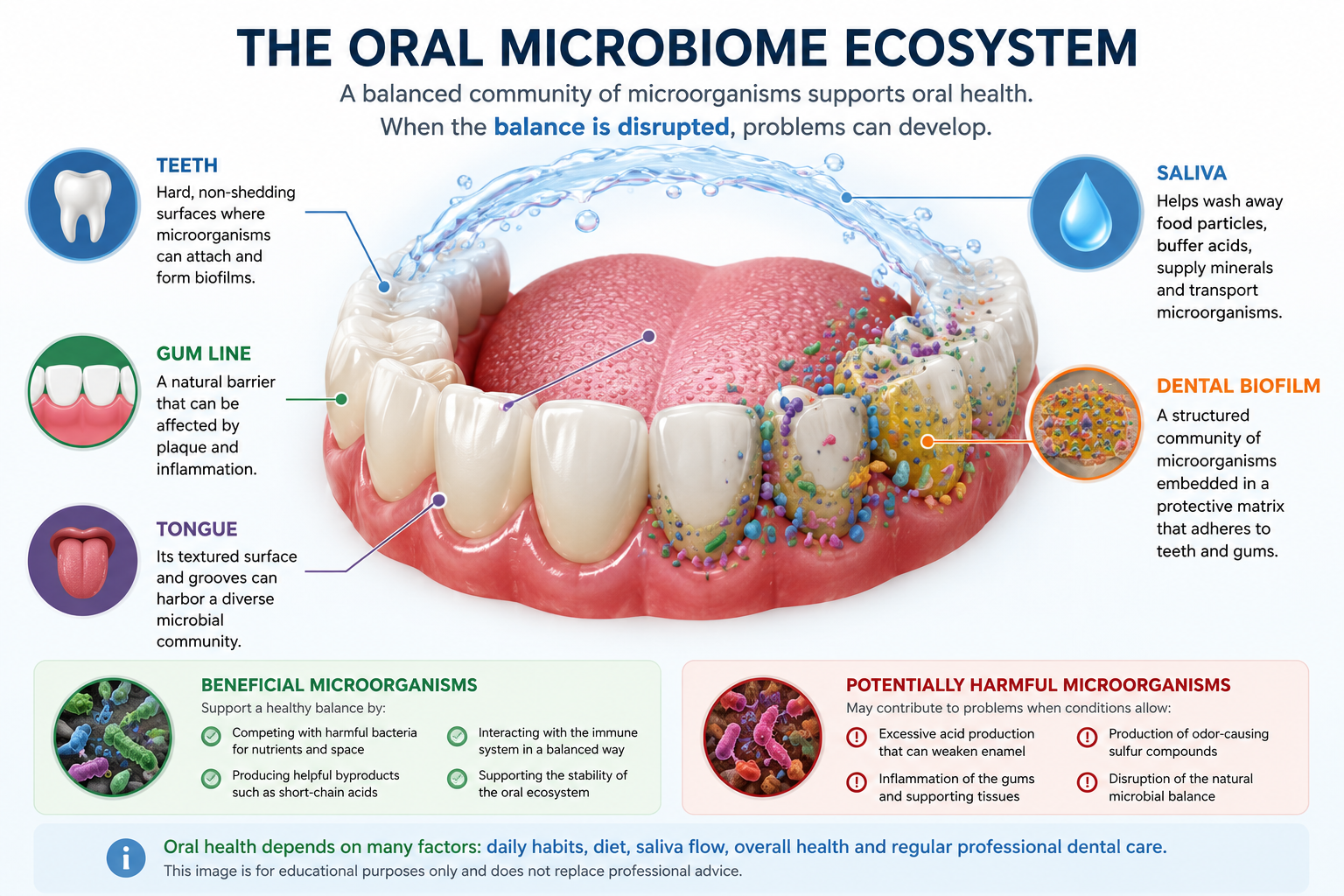
These organisms are not simply floating randomly in saliva. They
occupy specific environments, often called
ecological niches. The surfaces of the teeth, the
tongue, the gums, the cheeks, the palate, saliva and the areas beneath
the gumline each provide different physical and chemical conditions.
A tooth, for example, is a hard and non-shedding surface. This allows
microorganisms to remain attached and gradually form organized
communities. The tongue is soft and textured, containing grooves and
small structures that may retain microorganisms, shed cells and
food-derived material.
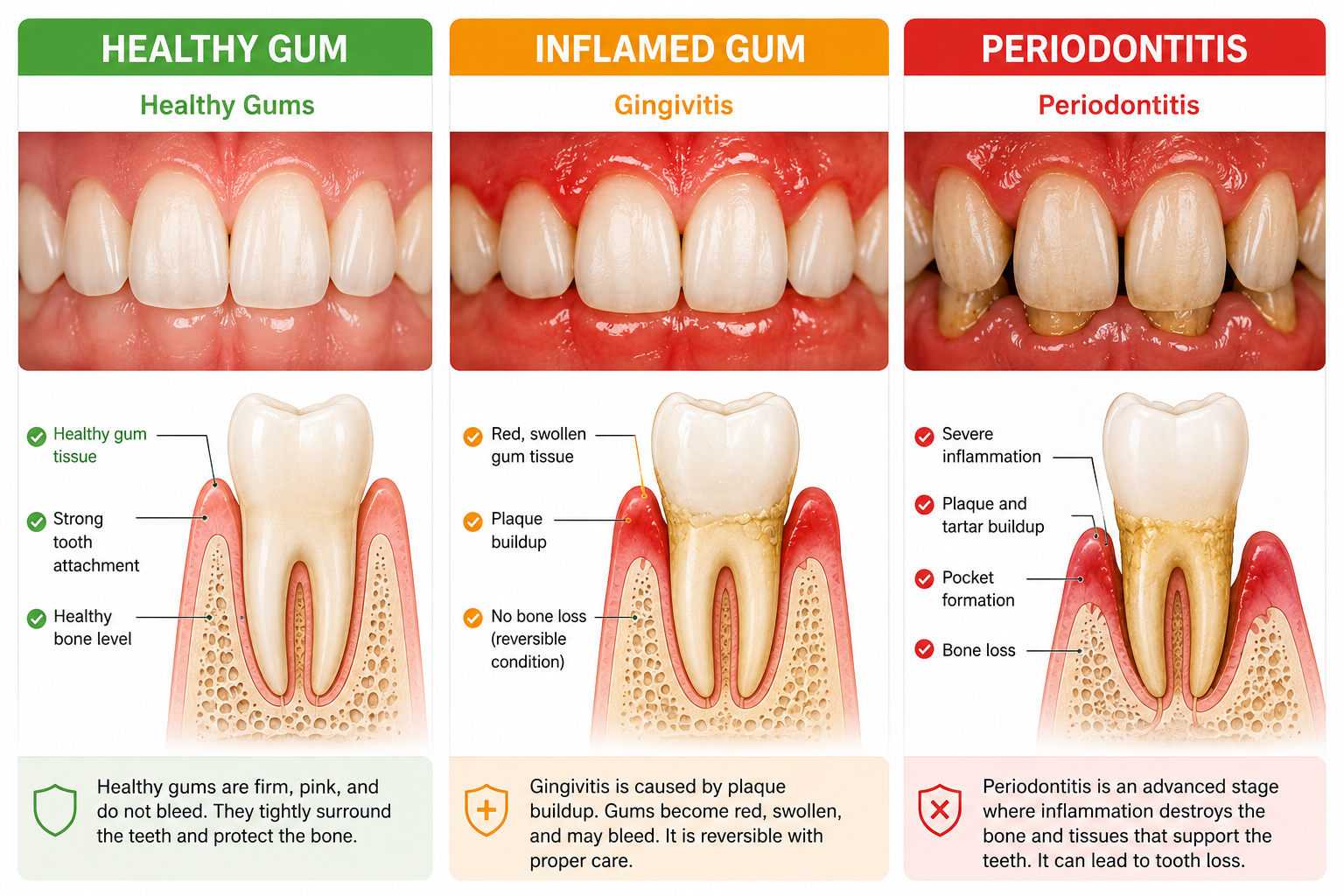
The area beneath the gumline provides another distinct habitat. It
can have lower oxygen levels and different nutrient sources from the
exposed surfaces of the teeth. If inflammation and periodontal
pockets develop, these environmental conditions may change further.
Saliva connects these different locations. It continuously transports
microbial cells, proteins, minerals, nutrients and immune-related
components throughout the mouth. It also influences acidity,
lubrication and the ability of oral surfaces to recover after eating
and drinking.
Because each habitat is different, there is no single identical
microbial community throughout the entire mouth. The organisms found
on the tongue may differ from those found in dental plaque, saliva or
beneath the gums.
The oral microbiome is also different from person to person. Age,
diet, saliva production, medications, smoking, oral hygiene, health
conditions, dental restorations and previous treatments can all
influence which microorganisms are present and how active they
become.
This diversity is normal. A healthy mouth is not a sterile mouth.
Many microorganisms can coexist with the body without producing
disease. Problems are more likely to develop when the environment
begins favoring microbial activities associated with excessive acid
production, persistent inflammation or tissue damage.