Top 7 Signs Your Oral Microbiome Is Out of Balance
July 11, 2026 | by By EnergyFix40 Editorial Team
ORAL MICROBIOME HEALTH GUIDE
Top 7 Signs Your Oral Microbiome Is Out of Balance
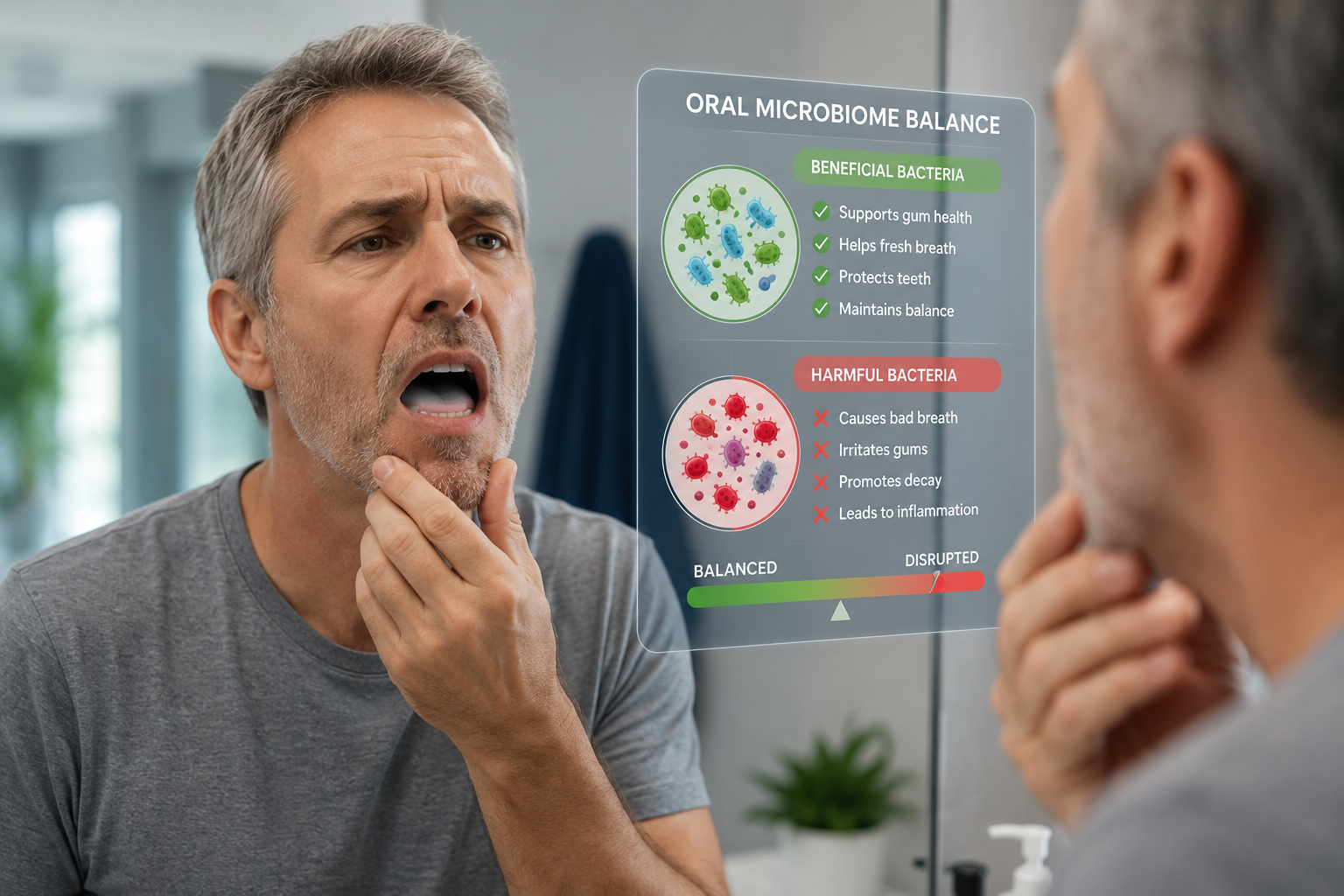
Persistent bad breath, bleeding gums, a coated tongue, frequent cavities,
and dry mouth may be more than isolated problems. They can be warning signs
that the bacterial ecosystem inside your mouth is no longer working in harmony.
!
Your mouth contains a complex community of microorganisms. When beneficial
and harmful bacteria fall out of balance, the effects may appear across your
teeth, gums, tongue, breath, and overall oral comfort.
In this evidence-based guide, you will discover:
✓
The seven most common signs of oral microbiome imbalance
✓
Why bad breath and bleeding gums may be connected to oral dysbiosis
✓
How saliva, biofilm, diet, medications, and daily habits affect oral bacteria
✓
Practical ways to support fresher breath, healthier gums, and stronger teeth
START WITH THE COMPLETE GUIDE
Learn How to Support a Healthier Oral Microbiome After 40
Explore our comprehensive pillar guide covering oral probiotics, beneficial
bacteria, gum health, fresh breath, daily hygiene, nutrition, and long-term
strategies for protecting your smile.
Educational guide • Science-informed • Designed for adults 40+
```
Understanding Your Oral Ecosystem
Could Your Mouth Be Warning You About a Microbial Imbalance?
Most people think of oral health in simple terms: brush twice a day, floss,
avoid too much sugar, and visit the dentist regularly. While these habits are
essential, they are only part of the picture. Your mouth is also home to a
complex living ecosystem made up of bacteria, fungi, viruses, and other
microorganisms. Together, these microscopic communities form what scientists
call the oral microbiome.
Many of these microorganisms are harmless, and some may even help protect your
teeth and gums. Problems can begin when environmental pressures allow certain
harmful species to become more dominant. This disturbed state is often
described as oral dysbiosis. It does not necessarily mean that
one specific bacterium is responsible for every symptom. Instead, it means that
the overall microbial community may no longer be functioning in a balanced way.
Persistent bad breath, bleeding gums, frequent cavities, a coated tongue, dry
mouth, tooth sensitivity, and recurring irritation may sometimes appear as
separate concerns. However, they can also share common underlying influences,
including dental plaque, changes in saliva, diet, smoking, medication use,
stress, inconsistent hygiene, and shifts in the oral bacterial environment.
Recognizing these warning signs early may help you take more informed action.
It can encourage better daily care and help you understand when professional
dental evaluation may be needed. This guide explains the seven common signs
that may be associated with an oral microbiome under stress, along with the
biological processes that can connect them.
What Is the Oral Microbiome?
The oral microbiome is the community of microorganisms living throughout
your mouth. These organisms can be found on your teeth, gums, tongue,
cheeks, tonsils, palate, and inside dental plaque. Different areas of the
mouth provide different conditions, so the bacteria living on the tongue
may not be identical to those found near the gumline or between the teeth.
Your oral microbiome is not automatically unhealthy simply because bacteria
are present. In fact, it is impossible and undesirable to eliminate every
microorganism from the mouth. A healthy oral environment depends less on
sterility and more on maintaining a stable relationship between microbes,
saliva, immune defenses, oral tissues, and daily habits.
Beneficial or neutral organisms may compete with potentially harmful species
for nutrients and attachment sites. Saliva also helps regulate this ecosystem
by washing away food particles, buffering acids, delivering minerals, and
supporting the natural repair of enamel. When these systems work together,
the mouth is better equipped to tolerate daily exposure to food, beverages,
acids, and changing environmental conditions.
Why Microbial Balance Matters
Microbial balance matters because oral diseases often develop through
interactions between bacteria and the surrounding environment. For example,
frequent sugar exposure can encourage acid-producing bacteria. Reduced
saliva can make it harder to neutralize those acids. Plaque accumulation can
allow microbial communities to become more organized and resistant to normal
cleansing.
In a balanced mouth, no single group of microorganisms is allowed to dominate
without resistance. In an imbalanced mouth, however, conditions may favor
bacteria associated with enamel demineralization, gum irritation, unpleasant
odors, or inflammatory responses.
Key point: oral health depends not only on which bacteria are
present, but also on where they live, how active they become, what nutrients
they receive, and how effectively saliva and hygiene control them.
What Happens When Dysbiosis Begins?
Dysbiosis can begin when the conditions inside the mouth repeatedly favor
harmful microbial activity. This may happen gradually. A person may first
notice more plaque, a different taste, mild gum bleeding, or breath that does
not remain fresh after brushing.
As plaque matures, bacteria can form a structured biofilm that attaches to
teeth, the tongue, and the gumline. Inside this biofilm, microorganisms
interact, exchange nutrients, and become more difficult to remove. If the
biofilm is not disrupted regularly, it may contribute to acid production,
inflammation, and changes in the surrounding tissues.
Dry mouth can accelerate this process because saliva is one of the mouth's
main natural defense systems. Medications, dehydration, age-related changes,
mouth breathing, smoking, and certain health conditions may reduce salivary
flow. When saliva decreases, bacteria and food debris may remain in contact
with oral surfaces for longer periods.
Dysbiosis should not be self-diagnosed from a single symptom. Bad breath, for
example, may have several causes, while tooth sensitivity may result from
enamel erosion, gum recession, decay, or other dental problems. Persistent
symptoms deserve professional assessment, especially when pain, swelling,
loose teeth, sores that do not heal, or ongoing bleeding are present.
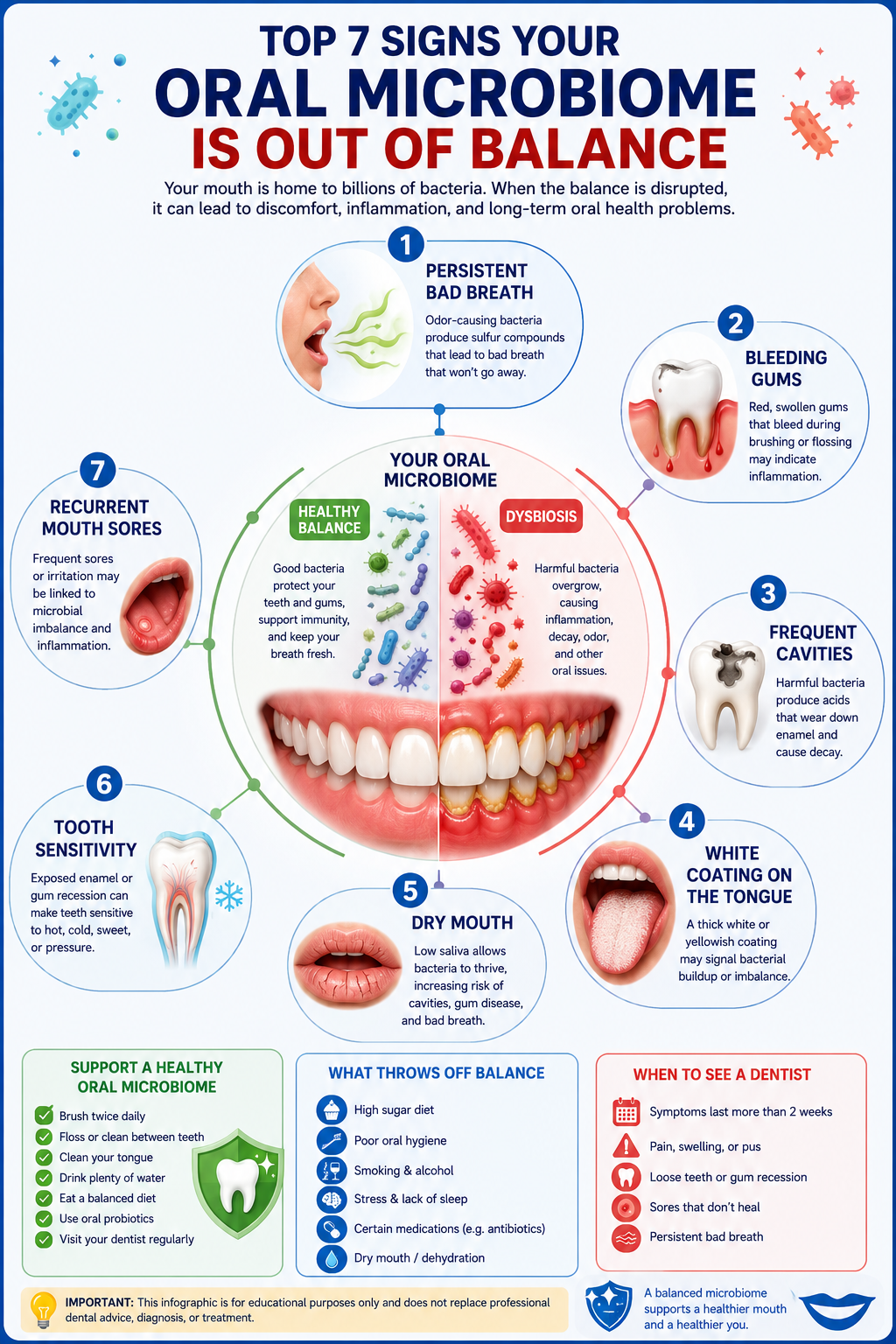
Overview of the 7 Warning Signs
The following signs do not prove that your oral microbiome is out of balance,
but they may indicate that the oral environment is under stress. The most
common warning signs include:
1
Persistent Bad Breath
Ongoing odor may be associated with tongue biofilm, gum inflammation,
dry mouth, or sulfur-producing bacteria.
2
Bleeding or Irritated Gums
Bleeding during brushing or flossing may indicate plaque accumulation
and an inflammatory response near the gumline.
3
Frequent Cavities
Recurring decay may be influenced by acid-producing bacteria, frequent
sugar intake, low saliva, or inadequate plaque control.
4
A White or Coated Tongue
A persistent coating may contain bacteria, food debris, dead cells, and
other material trapped between the tongue's surface structures.
5
Dry Mouth
Low saliva may reduce natural cleansing, acid buffering, mineral
delivery, and microbial control.
6
Tooth Sensitivity
Sensitivity may accompany enamel wear, gum recession, decay, exposed
dentin, or other changes in the oral environment.
7
Recurring Mouth Irritation or Sores
Repeated irritation may reflect trauma, stress, immune factors,
nutritional issues, infection, or other causes that require evaluation.
In the next section, we will examine each warning sign in more detail and
explain how biofilm, bacteria, saliva, inflammation, and daily habits may
contribute to these changes.
```
Recommended Reading
Continue Learning About Your Oral Microbiome
Explore these evidence-based guides to better understand how beneficial
bacteria, daily habits, and oral probiotics may support healthier gums,
fresher breath, and long-term oral wellness.
Top 7 Signs Your Oral Microbiome Is Out of Balance
Your oral microbiome is constantly changing in response to food, hydration,
saliva, hygiene, medications, stress, and lifestyle habits. A single symptom
does not prove that oral dysbiosis is present, but several recurring signs may
suggest that the environment inside your mouth is favoring plaque accumulation,
acid-producing bacteria, inflammation, or reduced natural protection.
The following seven warning signs are commonly associated with changes in the
oral environment. They may also result from dental disease, infection, tissue
irritation, medication side effects, or other health conditions. Persistent,
painful, or worsening symptoms should always be evaluated by a dentist or
qualified healthcare professional.
1
Persistent Bad Breath
Bad breath that returns quickly after brushing may be one of the most
noticeable signs that the oral environment is under stress. In many cases,
odor-producing bacteria accumulate on the tongue, between the teeth, and
around the gumline. These microorganisms can break down proteins and release
volatile sulfur compounds, which are strongly associated with unpleasant
breath.
Dry mouth, gum inflammation, food debris, poorly cleaned dental appliances,
smoking, and an untreated dental infection may make the problem worse.
Because bad breath can have several causes, masking it with strong mouthwash
may provide only temporary relief without addressing the underlying source.
2
Bleeding Gums
Gums that bleed during brushing or flossing often indicate irritation near
the gumline. When plaque remains in place, bacterial byproducts may activate
an immune response. This can lead to redness, tenderness, swelling, and
bleeding.
Occasional bleeding may happen after a change in flossing habits, but
repeated bleeding should not be considered normal. It may be an early sign
of gingivitis or another gum condition. The longer inflammatory plaque
remains undisturbed, the greater the risk that the problem may progress.
3
Frequent Cavities
Cavities develop when acids repeatedly remove minerals from tooth enamel.
Certain oral bacteria produce these acids when they metabolize fermentable
carbohydrates, especially sugars and refined starches. If acid attacks occur
frequently and saliva does not have enough time to restore balance, enamel
may gradually weaken.
Frequent cavities can be influenced by snacking patterns, low saliva,
inadequate fluoride exposure, crowded teeth, inconsistent cleaning, and
existing dental work that traps plaque. They may suggest that the microbial
environment is repeatedly shifting toward acid production.
4
White Coating on the Tongue
A thin tongue coating can be normal, especially after sleeping. However, a
thick or persistent white coating may contain bacteria, food particles,
dead cells, and other debris trapped between the tongue's tiny surface
structures.
Poor tongue cleaning, dehydration, mouth breathing, smoking, dry mouth, and
certain medications can contribute to this buildup. A white tongue may also
have other causes, including fungal overgrowth or tissue changes, so a
coating that does not improve, causes discomfort, or appears in patches
should be professionally examined.
5
Dry Mouth
Saliva is one of the mouth's most important natural defense systems. It
helps wash away food debris, dilute bacterial acids, support enamel repair,
lubricate tissues, and limit excessive microbial growth. When saliva
production drops, the oral ecosystem may become less stable.
Dry mouth can be associated with dehydration, mouth breathing, stress,
smoking, age-related changes, and many commonly used medications. People
with reduced salivary flow may experience sticky saliva, difficulty
swallowing dry food, altered taste, bad breath, more plaque, or an increased
risk of cavities.
6
Tooth Sensitivity
Sharp discomfort from cold, heat, sweetness, or touch may occur when dentin
becomes exposed. This can happen through enamel erosion, gum recession,
cavities, cracks, aggressive brushing, or tooth grinding.
Although sensitivity is not caused by the microbiome alone, an acidic oral
environment and ongoing gum inflammation may contribute to the conditions
that expose sensitive tooth surfaces. New, localized, or severe sensitivity
should be assessed because it may indicate decay, a damaged restoration, or
another problem requiring treatment.
7
Recurrent Mouth Sores
Mouth sores may result from accidental biting, sharp dental edges, stress,
nutritional deficiencies, immune responses, viral infections, or sensitivity
to certain products. Changes in the oral environment may influence tissue
irritation and healing, but recurrent sores are not a specific test for
microbial imbalance.
Any sore that lasts longer than approximately two weeks, returns frequently,
enlarges, bleeds, or interferes with eating should be examined by a dental
or medical professional. Persistent oral lesions should never be ignored.
Why These Symptoms Are Connected
These warning signs may appear in different parts of the mouth, but many share
the same underlying influences. Plaque accumulation can contribute to gum
inflammation, odor, and acid production. Reduced saliva can increase dryness,
tongue coating, cavities, and discomfort. Frequent sugar exposure may provide
fuel for acid-producing bacteria, while smoking and stress can affect tissue
health and healing.
In other words, oral symptoms often overlap because the teeth, gums, tongue,
saliva, immune system, and microbial communities function as one connected
ecosystem. Improving only one symptom without addressing the wider environment
may lead to incomplete or temporary results.
Biofilm Explained
Dental plaque is not simply loose food debris. It is an organized microbial
biofilm that adheres to teeth, dental restorations, the tongue, and areas near
the gumline. Within this sticky structure, microorganisms can communicate,
share nutrients, and create protective conditions that make the community
harder to remove.
This is why regular mechanical cleaning matters. Toothbrushing, interdental
cleaning, and gentle tongue cleaning physically disrupt the biofilm before it
matures. Mouthwash may support a broader routine, but it does not reliably
replace the mechanical removal of plaque from difficult surfaces.
Saliva's Protective Role
Saliva helps regulate oral pH, clears sugars, supplies calcium and phosphate,
lubricates tissues, and supports natural antimicrobial defenses. Healthy
salivary flow helps prevent the mouth from remaining acidic for extended
periods after eating.
When saliva is reduced, plaque may become more concentrated and the mouth may
have greater difficulty recovering after meals. Drinking water, chewing
sugar-free gum when appropriate, limiting tobacco, and discussing medication-
related dryness with a healthcare professional may help support a healthier
oral environment.
Balanced Oral Environment vs. Oral Environment Under Stress
Area
More Balanced Environment
Environment Under Stress
Breath
Generally neutral after routine cleaning
Odor returns quickly or remains persistent
Gums
Firm, comfortable, and not routinely bleeding
Redness, tenderness, swelling, or bleeding
Teeth
Stable enamel with controlled plaque levels
Frequent decay, acid exposure, or plaque buildup
Tongue
Light natural coating that clears easily
Thick, persistent, or uncomfortable coating
Saliva
Comfortable moisture and normal lubrication
Sticky, dry, or reduced salivary flow
Oral Comfort
Minimal irritation or unexplained sensitivity
Recurring sensitivity, soreness, or irritation
This comparison is educational and does not replace a professional dental
diagnosis.
```
Explore the Oral Health Library
Understand the Causes Behind Oral Microbiome Imbalance
The signs of oral dysbiosis are often connected to plaque, harmful bacterial
activity, dry mouth, gum inflammation, diet, medications, and daily habits.
Explore these related guides to build a more complete understanding of your
oral ecosystem.
What Scientific Studies Reveal About Oral Microbiome Balance
Research increasingly describes the mouth as a dynamic ecosystem rather than
a collection of isolated bacteria. Oral health depends on interactions among
microorganisms, saliva, dental surfaces, gum tissues, immune defenses, diet,
medications, and everyday behavior. When this environment repeatedly favors
acid-producing or inflammation-associated organisms, the microbial community
may shift from a relatively stable state toward oral dysbiosis.
Dysbiosis is not diagnosed from one bacterial species or one symptom. It
describes an ecological change in which the activity and proportions of
microorganisms become less compatible with oral health. This helps explain why
bad breath, cavities, gum irritation, tongue coating, and dry mouth may sometimes
occur together.
🧬
Oral Microbiome
The oral microbiome includes communities living on the teeth, tongue,
gums, cheeks, palate, and dental restorations. Each location provides a
different environment, which means microbial composition can vary
throughout the mouth.
⚖️
Oral Dysbiosis
Dysbiosis may develop when frequent sugar exposure, poor plaque control,
smoking, reduced saliva, medications, or inflammation consistently change
the oral environment. The goal is not sterility, but a more stable and
resilient microbial ecosystem.
🦠
Dental Biofilm
Dental plaque is an organized biofilm attached to oral surfaces. Inside
this structure, microorganisms communicate, share nutrients, and become
more resistant to natural cleansing. Brushing and interdental cleaning
help by physically disrupting this biofilm.
🛡️
Immune System and Inflammation
Oral bacteria interact continuously with immune defenses. When plaque
remains near the gums, bacterial products may trigger an inflammatory
response, producing redness, swelling, tenderness, and bleeding.
💧
Healthy Saliva
Saliva clears food particles, buffers acids, lubricates tissues, supplies
minerals, and contains antimicrobial components. Reduced salivary flow can
increase vulnerability to cavities, odor, irritation, and microbial
overgrowth.
🔬
Oral Probiotics
Researchers are studying selected probiotic strains for their potential to
compete with undesirable organisms and influence inflammatory activity.
Results vary by strain, dose, delivery method, and condition, so probiotics
should be viewed as an adjunct—not a replacement for dental care.
01
Nutrition and the Oral Microbiome
Every meal temporarily changes the conditions inside the mouth. Food affects
bacterial nutrients, oral acidity, salivary flow, and plaque activity.
Frequency often matters as much as quantity because repeated snacking can
create repeated acid challenges throughout the day.
Sugar
Oral bacteria can metabolize sugars and other fermentable carbohydrates,
producing acids that lower plaque pH. Frequently sipping sweet drinks or
eating sugary snacks gives acid-producing organisms repeated access to
fuel and reduces the time available for enamel recovery.
Fiber-Rich Foods
Vegetables, fruits, legumes, and whole foods contribute nutrients and may
require more chewing, which can stimulate saliva. Fiber is not a cure for
dysbiosis, but a balanced eating pattern is generally more supportive
than one dominated by refined carbohydrates and frequent sweets.
Fermented Foods
Yogurt, kefir, and other fermented foods may contain live cultures, but
they are not automatically equivalent to clinically studied oral
probiotics. Choose unsweetened options when possible and remember that
benefits depend on the organisms present and whether they remain viable.
Hydration
Water supports normal saliva production and helps clear loose food
particles. Regular hydration may be especially valuable for people who
exercise, breathe through the mouth, consume caffeine, or take medications
associated with dryness.
02
Lifestyle Factors That Can Disrupt Oral Balance
Smoking
Tobacco exposure can reduce tissue healing, alter immune responses,
contribute to dry mouth, and increase the risk of gum disease. It may
also mask visible bleeding even while periodontal damage progresses.
Alcohol
Alcohol can contribute to oral dryness, especially when intake is
frequent or combined with dehydration. Sweet or acidic alcoholic drinks
may also increase exposure to sugars and acids.
Stress
Chronic stress may influence immune function and make people more likely
to grind their teeth, neglect oral care, snack frequently, smoke, or
experience recurrent mouth irritation.
Sleep
Poor sleep can affect immune regulation and daily habits. Snoring and
mouth breathing may also leave the mouth dry overnight, contributing to
morning breath, tongue coating, and discomfort.
Rx
Antibiotics and Oral Flora
Antibiotics can be essential for treating specific bacterial infections,
but they may also affect bacteria beyond the intended target. Temporary
changes in the oral and intestinal microbiota may occur during or after a
course of treatment.
Antibiotics should always be taken exactly as prescribed and should never
be stopped, saved, or shared without professional guidance. They do not
replace treatment for plaque, cavities, gum disease, or dental abscesses
when procedures are required. Anyone who develops persistent coating,
unusual taste, irritation, or other symptoms after treatment should consult
a dentist or healthcare professional.
03
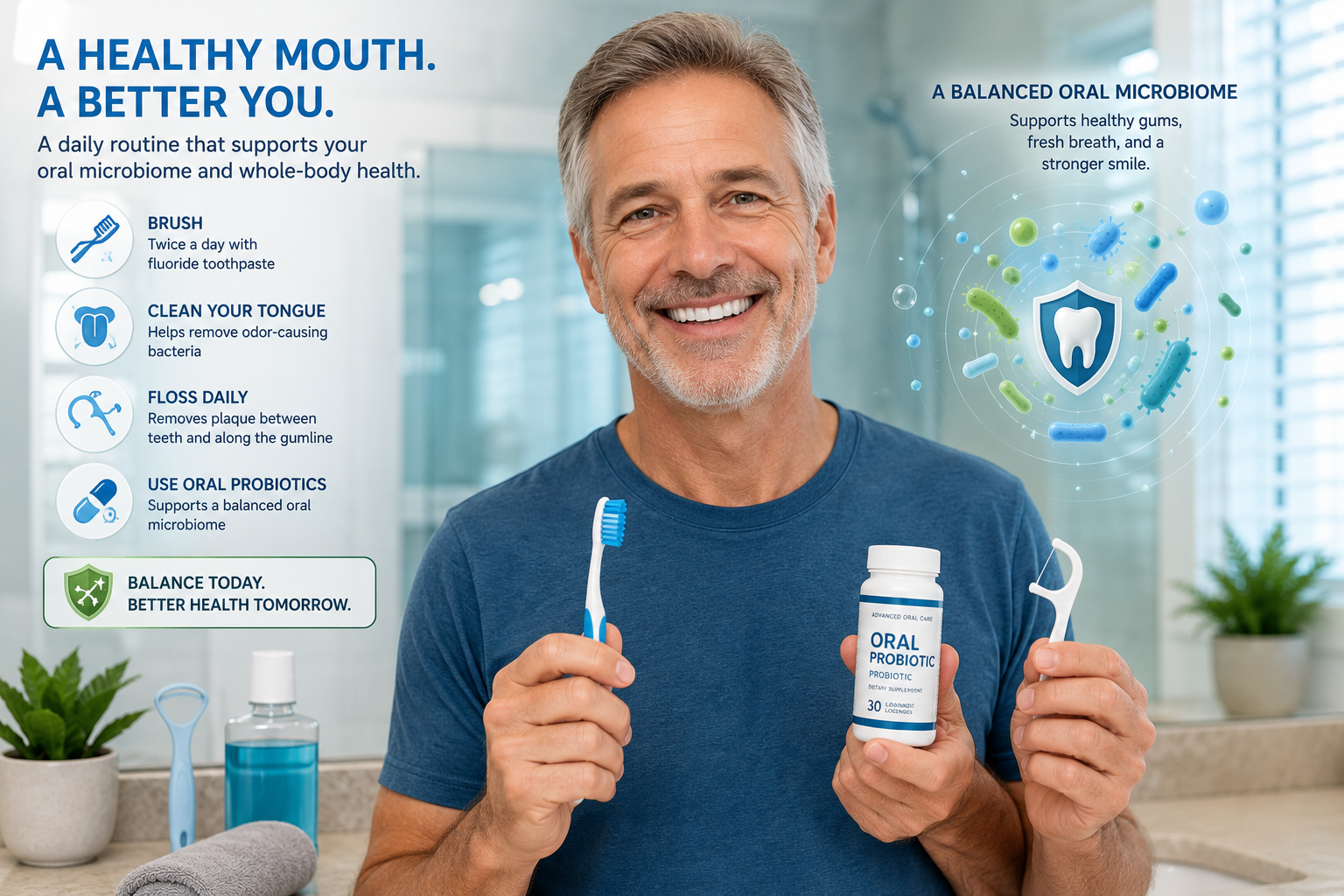
A Daily Routine That Supports Microbial Balance
Brush twice daily:
use fluoride toothpaste and clean gently for approximately two minutes.
Clean between the teeth:
use floss, interdental brushes, or another dentist-recommended method.
Clean the tongue gently:
reduce accumulated coating without scraping aggressively.
Drink water regularly:
especially after meals, caffeine, exercise, or prolonged speaking.
Limit frequent sugar exposure:
keep sweet foods and beverages closer to mealtimes rather than sipping or
snacking throughout the day.
Use additional products appropriately:
mouthwash, sugar-free gum, dry-mouth products, and oral probiotics should
complement—not replace—brushing, interdental cleaning, and dental visits.
✓
Save This List
Oral Microbiome Prevention Checklist
✓ Brush morning and night
✓ Clean between teeth daily
✓ Clean the tongue gently
✓ Use fluoride toothpaste
✓ Drink enough water
✓ Reduce frequent sugary snacks
✓ Avoid smoking and tobacco
✓ Moderate alcohol consumption
✓ Address persistent dry mouth
✓ Replace worn toothbrushes
✓ Attend regular dental exams
✓ Investigate symptoms that persist
Who May Benefit Most From Paying Attention to Oral Balance?
Everyone benefits from a healthy oral environment, but some people may need
extra attention. This includes adults over 40, people with persistent dry
mouth, frequent cavities, bleeding gums, chronic bad breath, dental implants,
braces, dentures, a history of antibiotic use, or medications that reduce
saliva.
People with limited dexterity, tobacco exposure, irregular dental care, or
dietary patterns high in frequent sugars may also have greater difficulty
controlling plaque. Oral probiotics or other supportive products may be
discussed with a dental professional, but they should not delay diagnosis or
established treatment.
Seek professional care:
Arrange an evaluation for persistent bleeding, swelling, significant pain,
loose teeth, fever, pus, difficulty swallowing, or an oral sore that does not
heal within approximately two weeks.
```
Frequently Asked Questions
Frequently Asked Questions About the Oral Microbiome
Scientists continue to learn more about the oral microbiome every year. While many
questions remain under investigation, current evidence already helps explain how
daily habits, saliva, plaque, nutrition, and oral hygiene influence the bacterial
communities living inside the mouth.
1. What is oral dysbiosis?
Oral dysbiosis refers to an imbalance within the community of microorganisms living
inside the mouth. Instead of a diverse and relatively stable ecosystem, certain
microbes may become more dominant under conditions such as poor plaque control,
frequent sugar exposure, smoking, reduced saliva, or inflammation. Dysbiosis is
considered an ecological shift rather than the presence of one harmful bacterium.
2. Can the oral microbiome recover naturally?
In many cases, improving daily oral hygiene, reducing frequent sugar intake,
staying hydrated, avoiding tobacco, and receiving appropriate dental care can
help create conditions that support a healthier oral environment. Recovery depends
on the underlying cause and varies from person to person.
3. Does mouthwash kill good bacteria?
Some antimicrobial mouthwashes reduce a broad range of microorganisms rather than
targeting only harmful species. They should be used according to professional
recommendations and should never replace brushing, flossing, tongue cleaning, and
routine dental care.
4. Can oral probiotics help?
Researchers continue studying specific probiotic strains for their potential role
in supporting microbial balance, fresh breath, and gum health. Evidence is
promising for some applications, but results vary depending on the strain,
formulation, dosage, and individual circumstances. Oral probiotics are generally
considered a complementary strategy rather than a substitute for dental treatment.
5. How long does it take to rebalance oral bacteria?
There is no single timeline. Some people notice improvements in breath or comfort
within weeks after improving their oral care routine, while other changes require
longer-term plaque control and professional dental treatment. The underlying cause
plays an important role.
6. Does sugar feed harmful bacteria?
Many oral bacteria can metabolize sugars and fermentable carbohydrates,
producing acids that contribute to enamel demineralization. Frequent exposure to
sugary snacks and beverages is generally more harmful than occasional
consumption during balanced meals.
7. Why does my tongue stay white?
A white coating may result from bacteria, food debris, dead cells, dry mouth,
mouth breathing, smoking, or insufficient tongue cleaning. Persistent white
patches, pain, or lesions should be evaluated by a dentist or physician because
they may have causes unrelated to oral microbiome imbalance.
8. Can antibiotics disrupt oral bacteria?
Yes. Antibiotics may temporarily alter microbial communities while treating
bacterial infections. They should always be taken exactly as prescribed and only
when medically indicated. Never stop or share antibiotics without professional
guidance.
9. Is bleeding gums always a sign of disease?
Not always. Occasionally gums may bleed after beginning flossing or brushing
more effectively. However, persistent bleeding, swelling, tenderness, or gum
recession should never be ignored because they may indicate gingivitis,
periodontal disease, or another condition requiring professional care.
10. When should I see a dentist?
Seek professional evaluation if you experience ongoing bad breath, recurring
mouth sores, persistent gum bleeding, loose teeth, significant tooth sensitivity,
swelling, pus, severe pain, or oral lesions lasting longer than approximately two
weeks.
Final Thoughts
Your mouth contains one of the most diverse microbial ecosystems in the human
body. Rather than trying to eliminate every bacterium, modern research emphasizes
the importance of maintaining a balanced environment where beneficial
microorganisms, saliva, healthy tissues, and everyday habits work together.
Persistent bad breath, bleeding gums, frequent cavities, dry mouth, tongue
coating, tooth sensitivity, and recurring mouth irritation should never be viewed
in isolation. Although these symptoms can have many different causes, they may
also reflect broader changes occurring throughout the oral ecosystem.
Fortunately, supporting a healthier oral microbiome often begins with consistent
daily habits. Brushing twice each day, cleaning between the teeth, gently
cleaning the tongue, staying hydrated, limiting frequent sugar exposure, avoiding
tobacco, and maintaining regular dental appointments remain among the most
important evidence-based strategies for long-term oral health.
Scientists also continue investigating how oral probiotics may contribute to a
balanced microbiome. While research is encouraging in several areas, these
products should complement—not replace—professional dental care and established
oral hygiene practices.
The earlier potential problems are recognized, the easier they may be to manage.
Paying attention to changes inside your mouth today can help protect your smile,
comfort, and confidence for years to come.
Continue Your Oral Health Journey
Discover the Complete Guide to a Healthier Oral Microbiome
If you want to learn more about beneficial oral bacteria, healthy gums, fresh
breath, saliva, nutrition, oral probiotics, and practical daily habits that
support long-term oral wellness, explore our comprehensive pillar guide created
specifically for adults over 40.
Keep Learning About Oral Health & the Oral Microbiome
Building a healthier oral microbiome goes beyond brushing your teeth.
Continue exploring our most popular evidence-based guides to better
understand oral bacteria, gum health, fresh breath, and healthy aging.
Looking for an Easy Way to Add Oral Probiotics to Your Daily Routine?
ProDentim is an oral probiotic supplement created for adults who want to
complement brushing, flossing, tongue cleaning, hydration, and regular
dental care with a convenient daily product.
✓
Simple daily format
Designed to fit into an existing oral-care routine.
✓
Oral probiotic formula
Features ingredients selected for oral wellness support.
✓
Made for long-term consistency
Intended as a supplement to—not a replacement for—daily hygiene.
Visit the Official Product Page
Check Current Availability, Package Options, and Product Details
Review the official information before purchasing and decide whether the
product fits your personal oral-care goals.
✓ Secure official page✓ Current package information✓ Product details available
Important: ProDentim is a dietary supplement, not a dental
treatment. Individual experiences vary. It should not replace brushing,
flossing, fluoride toothpaste, professional diagnosis, or recommended dental
care. Consult a qualified healthcare professional before using supplements,
especially if you have a medical condition, take medication, are pregnant,
nursing, or have known allergies.
```
Evidence-Based References
Scientific References
This article is based on scientific literature, clinical guidance, and educational
resources from internationally recognized organizations and peer-reviewed journals.
The references below provide additional information about the oral microbiome,
oral dysbiosis, dental biofilm, saliva, periodontal health, oral probiotics, and
healthy aging.
National Institutes of Health (NIH)
Research and educational resources on oral health, the oral microbiome,
salivary function, and systemic health.
Scannapieco FA, Dongari-Bagtzoglou A.
Dysbiosis revisited: Understanding the role of the oral microbiome
in the pathogenesis of gingivitis and periodontitis.
Medical Note:The information presented in this article is intended solely for educational
purposes and should not be interpreted as medical or dental advice. Scientific
knowledge regarding the oral microbiome continues to evolve, and individual
health conditions require professional evaluation by a qualified dentist or
healthcare provider.