Most people think of oral health as a simple matter of brushing, flossing, and visiting the dentist. However, your mouth is also home to a complex living ecosystem made up of bacteria, fungi, viruses, and other microorganisms. Together, these organisms form what scientists call the oral microbiome.
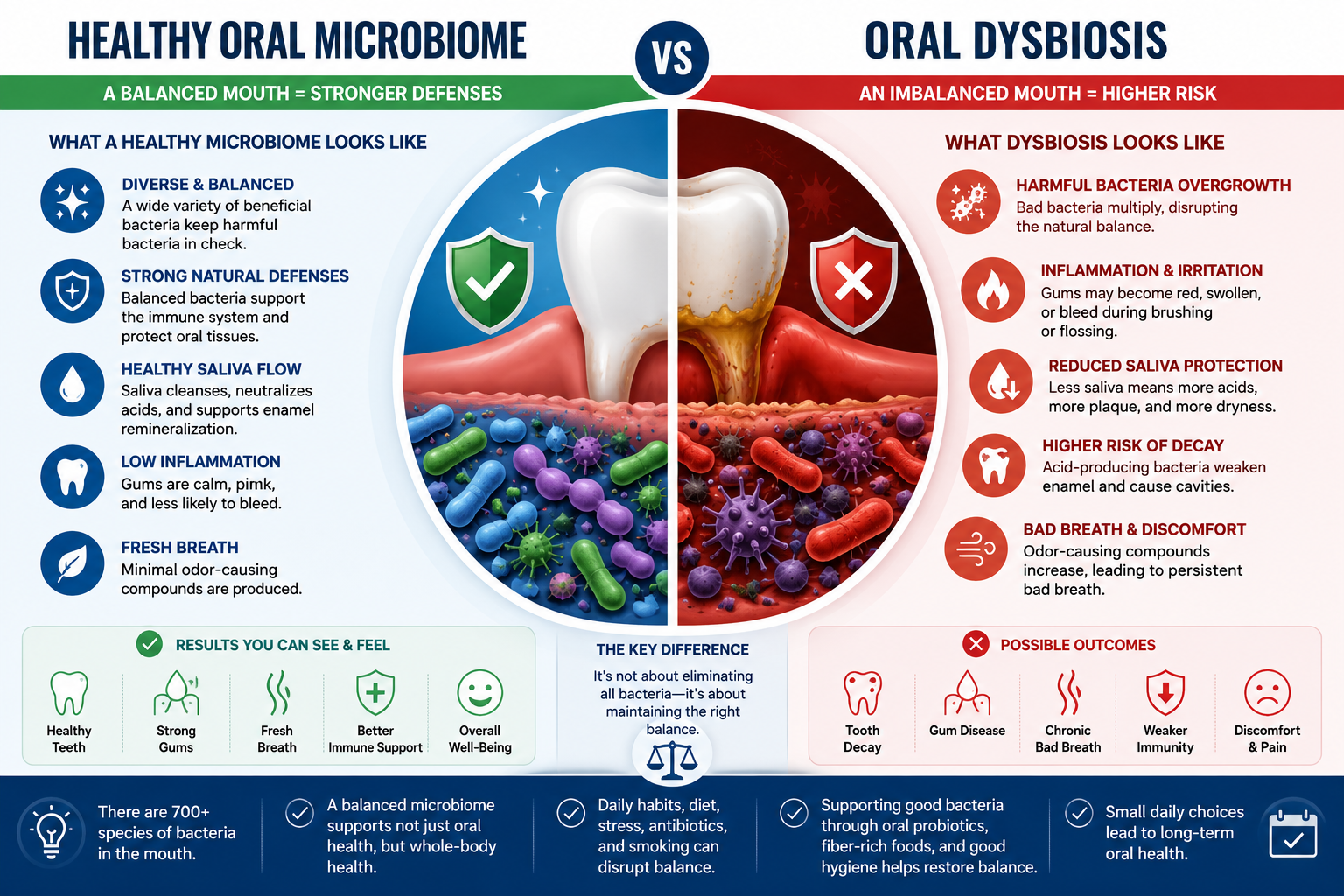
When this ecosystem remains balanced, many microorganisms help protect the teeth, gums, tongue, and soft tissues of the mouth. They compete with potentially harmful bacteria, interact with saliva, support the natural immune response, and contribute to an environment that is less favorable to excessive plaque buildup.
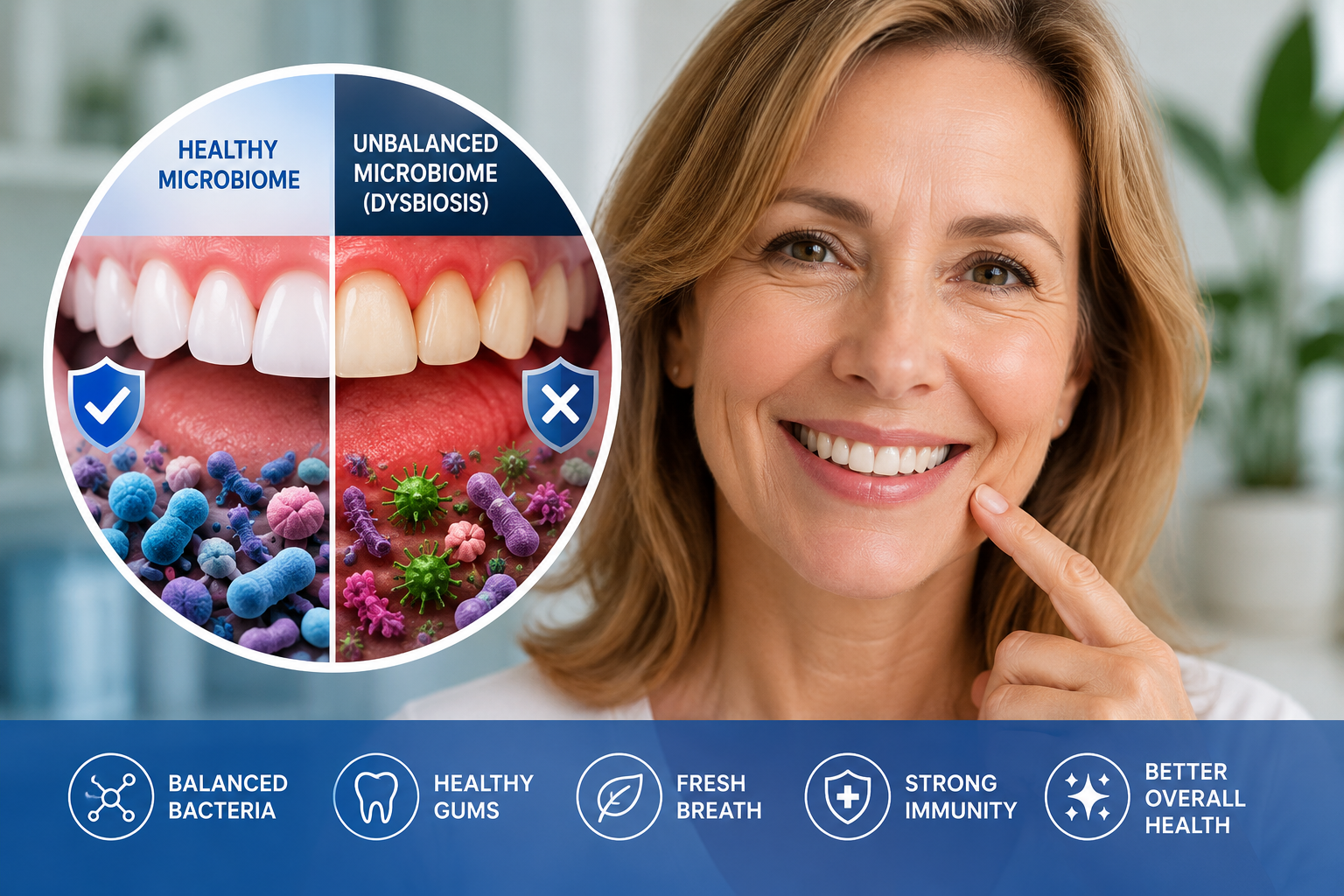
Problems may begin when the microbial community shifts in an unhealthy direction. This disruption is often called oral dysbiosis. Instead of beneficial and neutral organisms helping keep one another under control, certain harmful bacteria may become more dominant. Over time, this imbalance may be associated with persistent bad breath, gum irritation, recurring cavities, tongue coating, dry mouth, and other warning signs.
These symptoms do not automatically prove that your oral microbiome is out of balance. Many dental and medical conditions can cause similar changes. Still, recognizing patterns may help you understand why some oral problems keep returning even when you brush regularly or use mouthwash.
In this guide, you will discover the top seven signs your oral microbiome may be out of balance, why these warning signs often appear together, and which daily habits may help support a healthier oral environment.
What Is the Oral Microbiome?
The oral microbiome is the entire community of microorganisms that live inside your mouth. These organisms can be found on the teeth, gums, tongue, cheeks, tonsils, dental surfaces, and within saliva.
Your mouth provides several unique habitats. The tongue has a rough surface where microorganisms can collect. Teeth provide hard surfaces where bacterial communities can form structured layers known as biofilms. The gumline contains protected areas where plaque may accumulate if it is not disrupted through effective oral hygiene.
Not all oral bacteria are harmful. Many are harmless, while others may contribute to a more stable environment by competing for nutrients and space. Oral health depends less on completely eliminating bacteria and more on preventing disease-associated organisms from becoming overly dominant.
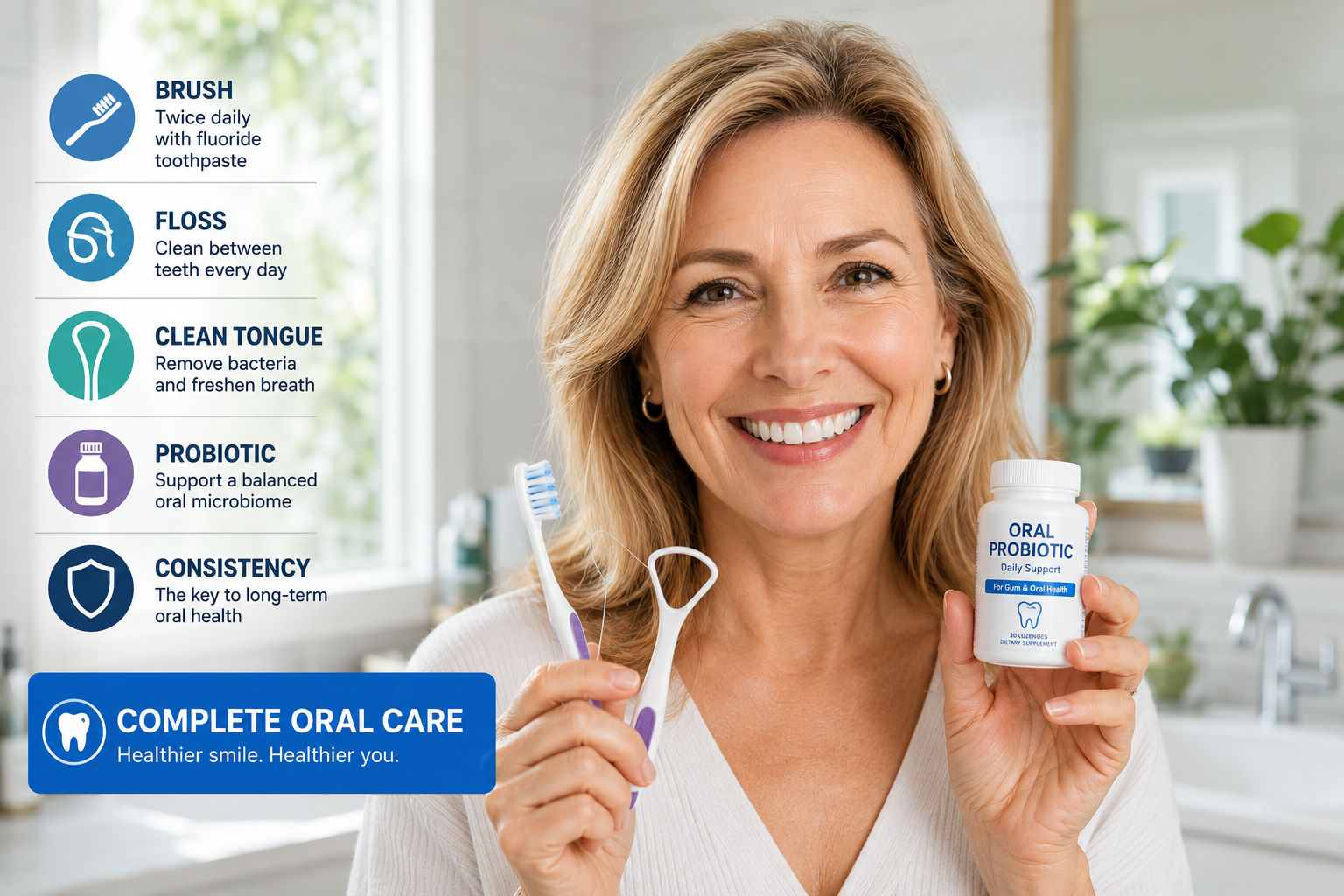
The goal of daily oral care is not to remove every microorganism. It is to control plaque, protect the teeth and gums, support saliva, and maintain a healthier microbial balance.
Why Oral Microbiome Balance Matters
A balanced oral microbiome may help maintain conditions that support healthy teeth and gums. Beneficial and neutral microorganisms compete with bacteria associated with tooth decay, gum inflammation, and unpleasant breath.
When balance is disrupted, harmful organisms may gain greater access to nutrients, especially when the diet frequently includes sugar or refined carbohydrates. Some bacteria produce acids that can weaken tooth enamel, while others release compounds that may irritate gum tissues or contribute to bad breath.
Saliva is one of the most important regulators of this environment. It helps wash away food particles, neutralize acids, deliver minerals to enamel, and prevent the mouth from becoming excessively dry. This is why medications, dehydration, mouth breathing, stress, and certain health conditions that reduce saliva flow may also influence the oral microbiome.
Balance also matters because oral symptoms often develop gradually. A person may first notice morning breath, mild gum bleeding, or a coated tongue. If the underlying environment remains unfavorable, additional symptoms may appear over time.
Why Scientists Focus on Dysbiosis
Researchers use the term dysbiosis to describe a disruption in the normal microbial community. In oral health, dysbiosis does not necessarily mean that one harmful bacterium suddenly appears. It often means that the proportions and behavior of the microbial community have changed.
This concept has changed how scientists think about dental problems. Tooth decay and gum disease are no longer viewed only as infections caused by a single microorganism. Instead, researchers study how diet, saliva, hygiene, inflammation, medications, age, smoking, and other factors influence entire bacterial communities.
The dysbiosis model may also help explain why mouthwash alone does not always solve recurring oral problems. A temporary reduction in bacteria may improve freshness, but it may not correct low saliva flow, frequent sugar exposure, poor tongue cleaning, gumline plaque, or other conditions that allow imbalance to return.
Overview of the 7 Warning Signs
The signs of oral imbalance can vary from person to person, but seven symptoms are especially important to recognize:
Breath odor that quickly returns after brushing or mouthwash.
Gums that bleed, swell, or feel irritated during brushing or flossing.
Recurring decay despite a regular brushing routine.
Reduced saliva, sticky tissues, or frequent thirst.
Discomfort from cold, hot, sweet, or acidic foods.
A recurring white, yellowish, or thick layer on the tongue.
Mouth tissues that appear to recover slowly after irritation or treatment.
One isolated symptom may have many possible explanations. However, when several of these warning signs appear together or repeatedly return, it may be helpful to look beyond surface-level solutions and consider the overall health of the oral environment.
Want to Understand How Your Oral Microbiome Affects Your Teeth, Gums, and Breath?
Explore our complete 2026 oral health guide to learn how bacteria, saliva, nutrition, oral probiotics, and daily habits work together to support a healthier mouth.
Read the Complete Oral Health Guide